News
-
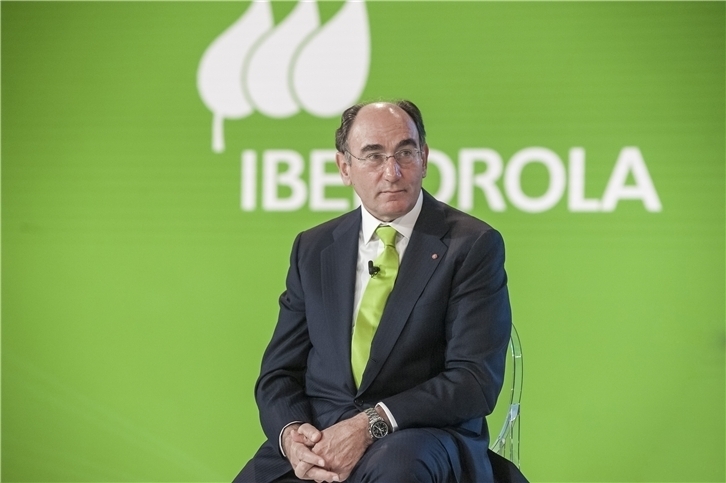
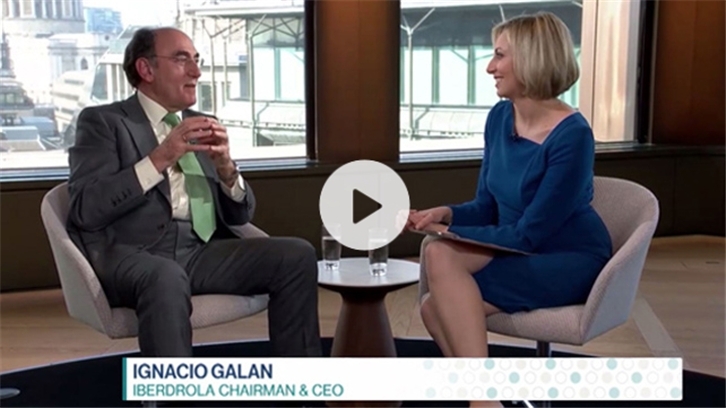
14/05/2018Ignacio Galán talks about success, leadership, team spirit and the future on Bloomberg TV READ MORE
-
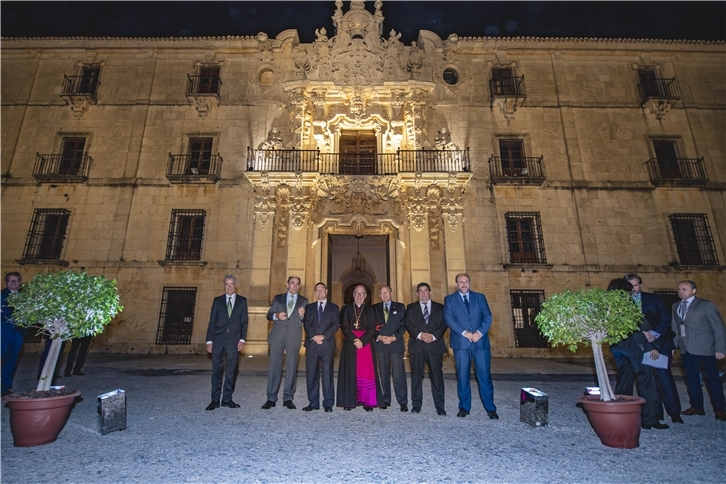
09/05/2018Iberdrola inaugura la iluminación exterior del Monasterio de Uclés, en Cuenca Iberdrola ha inaugurado hoy la nueva iluminación exterior de la portada principal de la fachada sur del Monasterio de la Orden de Santiago en Uclés, Cuenca, tras realizar un proceso de renovación de la iluminación ornamental que resalta, por un lado, el volumen de la fachada y, por otro, los detalles arquitectónicos de este monumento del año 1735. El presidente de Iberdrola, Ignacio Galán, junto con el obispo de Cuenca, José María Yanguas; el presidente de la Junta de Comunidades de Castilla-La Mancha, Emiliano García-Page; y el secretario de Estado Director del Centro Nacional de Inteligencia, Félix Sanz Roldán, han asistido al encendido de esta iluminación. Se han instalado luminarias de tecnología LED que reducen la potencia total en un 55%, lo que supone disminuir el gasto energético y reducir las emisiones de CO2 a la atmósfera. En el transcurso de su intervención, Ignacio Galán ha destacado que “la luz es un elemento tan intangible como imprescindible en cualquier conjunto arquitectónico. Gracias ella, los ucleseños, los catellanomanchegos y todos los visitantes podrán apreciar verdaderamente los volúmenes del trabajo esculpido, la textura de las paredes y cada uno de los detalles de la ornamentación de esta fachada, uno de los mejores ejemplos barrocos que se conservan”. El diseño de iluminación ornamental de esta portada churrigueresca, atribuida a Pedro de Ribera, combina un alumbrado por inundación que destaca el volumen general de la fachada y una iluminación puntual que resalta los detalles arquitectónicos de la misma. La combinación de ópticas y temperaturas de color de los proyectores seleccionados ayudan a la puesta en valor de sus elementos singulares. Esta iniciativa, a la que Iberdrola ha destinado alrededor de 100.000 euros, también incluye la iluminación de la torre del homenaje del Castillo de Albar Llana, antigua fortaleza de origen árabe situada frente al monasterio. Iberdrola, comprometida con la comunidad El presidente de Iberdrola ha recalcado también el compromiso de la empresa con esta comunidad autónoma, donde cuenta con más de 2.700 MW instalados en energías limpias y el 99% de su producción está libre de emisiones. Galán ha destacado que esta relevante presencia “se ha traducido, en los últimos años, en un impacto económico de cerca de 3.500 millones de euros, destinados a inversiones, contribución fiscal y compras a cerca de 400 empresas de la región”. Iberdrola materializa su compromiso con la cultura a través de una importante labor de mecenazgo, del apoyo a nuevas formas de expresión artística y la colaboración en la restauración del legado cultural. Dentro de este área, cuenta con un programa de iluminaciones de edificios singulares que es una de sus iniciativas más destacadas en la conservación del patrimonio histórico-artístico. Este proyecto de la compañía en Castilla-La Mancha se suma a otros que ha llevado a cabo en los últimos años, entre los que destacan las iluminaciones de la antigua Mezquita del Cristo de la Luz, la sinagoga Santa María la Blanca y la Torre de la Iglesia de Santo Tomé, en Toledo, la iglesia de San Antonio Abad, en El Toboso, así como el proyecto de iluminación de la Ribera del río Tajo a su paso por Toledo. READ MORE
-
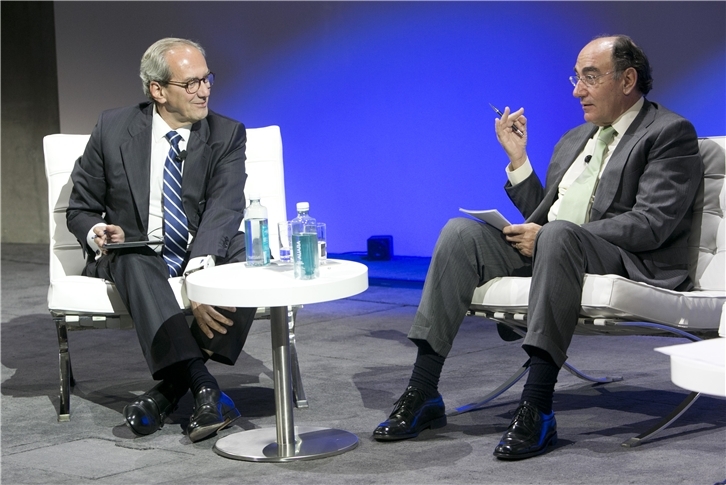
09/05/2018Ignacio Galán emphasised that the environment offers an opportunity for creating wealth, jobs and wellbeing The Chairman of Iberdrola, Ignacio Galán, took part this morning in the panel discussion Why are companies including climate change in their strategies? that formed part of the BBVA Sustainable Finance Forum, organised by the bank at its Madrid headquarters and opened by the Vice-President of the Government, Soraya Sáenz de Santamaría, and the Chairman of BBVA, Francisco González. In his contribution, Galán said that a commitment to a sustainable future is compatible with company value creation and that, in addition to being a moral imperative, it is also an opportunity for growth and the creation of wealth, jobs and prosperity. Iberdrola is a good example of this: in 2001 it decided to make a pioneering commitment to clean energies, smart grids and storage, areas in which it has since invested 95 billion Euros. After implementing this strategy, the company has gone from occupying 20th place in the world ranking of power companies by market capitalisation to become the fourth worldwide and the first in Europe that is completely private. It has also multiplied its asset base by six and tripled its net profits, which has allowed it to gradually increase its dividends, in line with its results. Ignacio Galán also noted that the leap to an efficient, low carbon economy must involve all the stakeholders - from producers to domestic and industrial consumers - both public and private. During this transition, the role of the electricity sector will be key, as the Chairman of Iberdrola explained: “The International Energy Agency predicts a growth in world electricity demand of 60% by 2040 and an investment of 20 trillions of dollars. We are in the right sector. In a recent report, the European Commission and the Spanish Expert Commission on energy transition posited the increasing importance of electricity, and a greater contribution from renewables in meeting the environmental goals.” A stable, predictable regulatory framework Galán emphasised the need for a stable, predictable regulatory framework under which companies will be able to make the investments required for the decarbonisation and electrification of the economy. In this regard, he asserted that mobilising this huge investment will require collective, coordinated action by governments, the private sector and society as a whole. In addition, he stated that the financial sector must play an important part in the transition to a low carbon economy, both because of its role in mobilising capital for sustainable investments and because of the increasing demand for information on the actions taken by companies to tackle climate change, which means that the criterion of sustainability must be included among business opportunities. According to Ignacio Galán, “Those companies that best manage the risks and opportunities arising from climate change, but also those providing more information in a more transparent manner will be the ones preferred by investors, leading to the mobilisation of capital for sustainable investments.” Iberdrola was the first Spanish company to issue a green bond, in April 2014. Since then, the group has performed 10 transactions of this kind, becoming the world’s leading corporate issuer of green bonds in both 2016 and 2017. It currently has around 7.4 billion Euros in green financing, including a 600 million dollar bond issued by its US subsidiary AVANGRID in 2017. Iberdrola was also the first Spanish company to launch a hybrid green bond and last year it became a pioneer in the banking market by being the first Spanish company to underwrite a green loan, namely with BBVA and for the sum of 500 million Euros. It also attained this position in Latin America, when, on 20th April, Iberdrola Mexico underwrote the region’s first corporate green loan, for 400 million dollars. In addition, at the beginning of the year, Iberdrola signed the largest credit deal in the world under sustainability criteria, for 5.3 billion Euros, with a reference interest rate differential linked to the reduction of the group's emissions intensity. The company also recently defined its Framework for Green Financing for the process of issuance, monitoring and external assurance, to guarantee investors the transparency and integrity of the criteria used. This financing strategy fits into the inclusion by Iberdrola of the United Nations 2030 Agenda and Sustainable Development Goals (GDS) in all the company’s actions. The company is focusing its efforts on goals 7 and 13 (Affordable and Clean Energy, and Climate Action) but also strives, both directly and indirectly, to support compliance with all the other goals. READ MORE
-
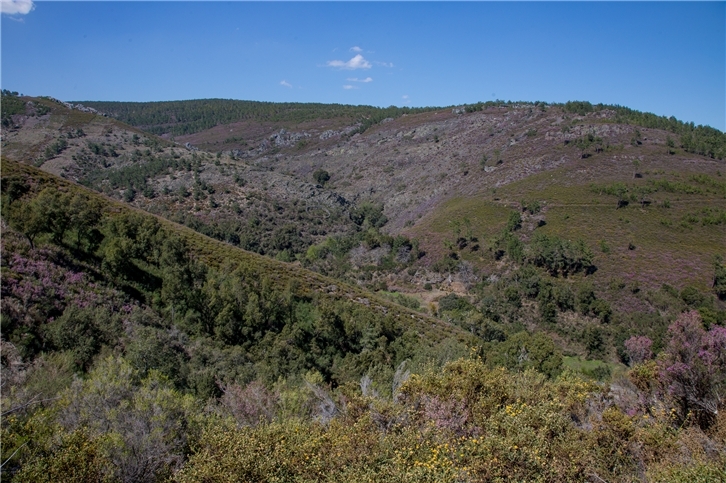
30/04/2018Iberdrola invests 1.84 million euros in Tresminas, adding value to its candidacy as a UNESCO World Heritage Site As part of the construction of the large Tâmega Hydroelectric Complex, Iberdrola is promoting visits to the Tresminas Roman gold mining site, a project that is part of the compensation actions carried out by the electricity company. Through the investment of 1.84 million euros in the Tresminas Mine Complex, Iberdrola is demonstrating its commitment to the economic, social, cultural and environmental development of the communities where it operates. The company is collaborating with Vila Pouca de Aguiar Town Council and the North Portugal Regional Department of Culture in the historical, archaeological and heritage enhancement of the region. The investment started in 2016 and is expected to continue until 2023. This contribution complies with the EIS (Environmental Impact Statement) and aims to enhance the value and disseminate information on the former Tresminas mining area. The investment is applied in different essential development areas such as: safety, scientific research, conservation, land management and planning and the promotion of tourism. In addition, the investment made by Iberdrola allows a series of actions to be carried out that benefit the Tresminas Mine Complex, making it possible for it to be declared an Archaeological Park in the future, which will safeguard the materials associated with Roman mining and the landscaping of the area. The company has allocated, between 2016 and the end of 2018, some 850,000 euros that, throughout this year, will be translated into actions including: funding the technical team; on-going historical, geological and fauna and flora studies of Tresminas; acquiring equipment for visiting the mining cuts and galleries, their cleaning and/or unblocking; the construction of the support building and structures and equipment to permit driving in the mining cuts and galleries. Tresminas and its nomination as a UNESCO World Heritage Site In Roman times, the Tresminas Mine Complex was one of the largest gold exploration sites in the conventus bracaraugustanus primary deposit and one of the largest in the north west of the Peninsula. It is estimated that between the 1st and 3rd centuries A.D. about 25 tonnes of pure gold were mined in Tresminas, which involved the excavation of millions of tonnes of rock in open-cast cuttings. Tresminas also forms part of the municipality of Vila Pouca de Aguiar's strategic pillars in terms of cultural tourism. The development of the municipality is based on the enhancement and spreading of information on this archaeological site and its heritage elements. The efforts made over the last few months, both at the local and regional level following the enhancement of the heritage and tourism value of Tresminas, have resulted in an increase in the number of visitors to the region. In addition, these results have been supported by activities in cross-border partnership with Las Médulas, a UNESCO World Heritage Site since 1997 and one of the most important and well-known Roman mines, in the El Bierzo region in Spain. The candidacy is being nominated jointly, in a common cultural project, which aims to enhance the value of the Iberian Peninsula's Roman mining legacy. In 2017, this cooperation protocol between the Municiipality of Vila Pouca de Aguiar and the Las Médulas Foundation was supported by organisations such as– the Direção Regional de Cultura do Norte and the Castilla y León regional government's General Directorate of Cultural Heritage. This alliance aims to further strengthen the candidacy of this area of Portugal as a UNESCO World Heritage Site. It is another example of Iberdrola's commitment to environmental conservation and the preservation of social welfare. The company is in this way consolidating its role as a world leader in the production of clean energy - a goal that was recently highlighted in Portugal with almost 70 hours of continuous electricity production solely from renewable energy sources. Iberdrola in Portugal Iberdrola is developing the large Tâmega Hydroelectric Complex in Portugal, which involves the construction of three dams: Alto Tamega, Daivoes and Gouvaes. In addition, it operates three wind farms, with a nominal capacity of 92 MW, which generate 200 GWh/year of electricity from renewable sources. The company also operates in the free energy market in Portugal, through the sale of electricity and it has more than 170,000 customers in this sector. Iberdrola is one of the national leaders in industrial customers, with a market share of over 16% and it currently has over 1,000 employees. The Tâmega Hydroelectric Complex is one of the most important hydroelectric projects undertaken in Europe in the past 25 years. This system will have an installed capacity of 1,158 MW and an estimated annual production capacity of 1,760 GWh. The work, which will continue until 2023, has already begun on the Tâmega River and it will involve an investment of over 1.5 billion euros. Iberdrola's objective is to contribute to growth and the development of the region around the project over the next few years. It is expected that during the construction of the developments around 40,000 direct and indirect jobs will be created. In addition, when construction is finished, an operations and maintenance team will be created for the power plants, which will be staffed with local people. One of Iberdrola's top priorities in its projects is to form teams with employees in the areas where the projects are carried out. READ MORE
-
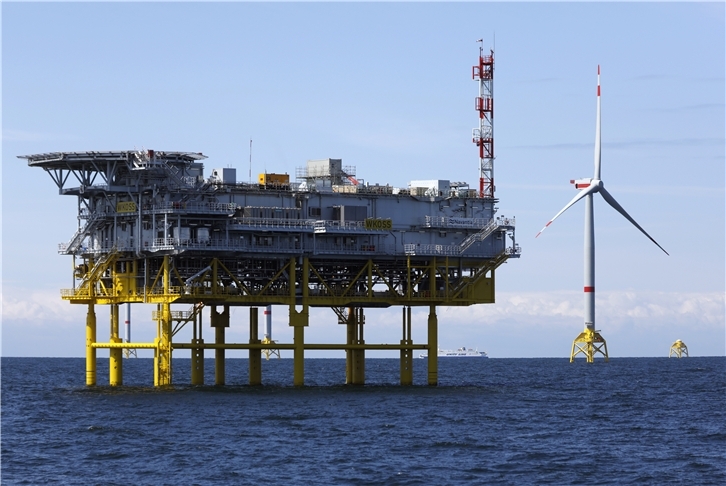
27/04/2018Iberdrola has won 486 megawatts in the second offshore wind power tender in Germany. Iberdrola has been awarded the construction of two offshore wind farms in German waters in the Baltic Sea, totalling 486 megawatts (MW), following the second public tender organised by the Federal Network Agency (Bundesnetzagentur). This is about the Baltic Eagle (476 MW) and Wikinger Süd (10 MW) projects. Iberdrola will develop these wind power farms at the same time to maximise cost efficiency and economies of scale. For Iberdrola’s chairman, Ignacio Galán, “the results of the tender consolidate the company’s position as a world leader in renewable energy and one of the biggest offshore wind power promoters and operators in the world.” Both facilities, together with Wikinger wind power farm, in front of Rügen island, with 350 MW of installed power, will form an offshore complex of almost 850 MW and will be the largest offshore wind power project of the Baltic Sea and the largest performed by Iberdrola to date. To develop these new projects, Iberdrola has the benefit of the invaluable experience it gained developing Wikinger, the construction of which was a resounding success, as were the first few months of operation. It must be highlighted that Spanish suppliers such as Navantia, Windar or Siemens Gamesa have benefited in this project from the construction of their main components, creating hundreds of direct and indirect jobs and relaunching the shipping sector in the South and North of Spain. Galán affirmed that “Iberdrola has the knowledge, experience and human team necessary to continue growing in a business area that is central to our company, as we stated in our 018-2022 Prospects”. These projects also contribute visibility to the company’s growth over the next decade”. Ignacio Galán added that: “Together with Wikinger, Baltic Eagle and Wikinger Süd wind farms will increase the offshore wind power capacity of Iberdrola in Germany to almost 850 MW, which will mean thousand million Euros’ investment and will make the country a key area for Iberdrola group”. One project concentrating Iberdrola’s key strategies Iberdrola’s chairman pointed out that these projects “reflect Iberdrola’s key strategies: the commitment to technological innovation to develop efficient renewable energy, the commitment to reduce emissions to fight against climate change, and a positive economic, environmental and social impact in all of the territories where we are present.” With these projects, Iberdrola is ratifying its commitment to developing renewable energy, which is indispensable for making progress in the energy transition towards a decarbonised model and the fight against climate change. Iberdrola’s renewable power capacity as at 31 March 2018 is over 29,000, MW and two thirds of the Group's total generation capacity is entirely emission-free. The new complex, combined with Wikinger, will save 1.65 million tons of CO 2emissions each year. The three wind farms will supply the power equivalent to 45% of the total of consumption of the Federal State of Mecklemburg-Western Pomerania. This significant proportion of clean energy will help Germany fulfil its emission-reduction objectives. READ MORE
-
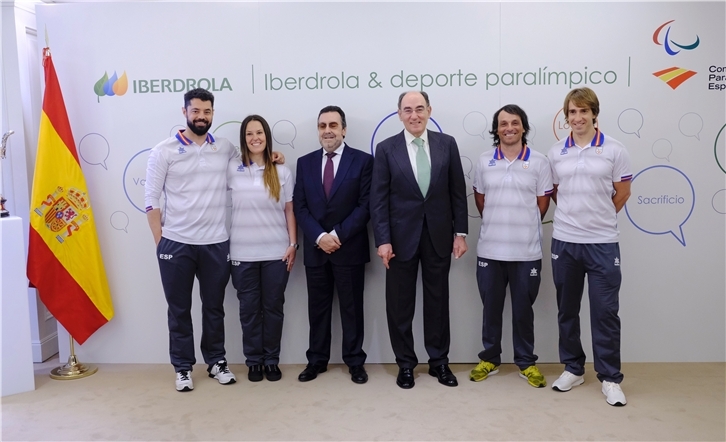
26/04/2018Iberdrola will continue its support for Paralympic sport at the Tokyo 2020 Games Today, at the company's offices in Madrid, Iberdrola Chairman Ignacio Galán met the four athletes who represented Spain at the 12th Paralympic Winter Games in PyeongChang. During the meeting he confirmed the company's commitment to Paralympic sport. Galán assured them that “Iberdrola is proud to be linked with the Spanish Paralympic Team, with which we share the same values, based on effort, teamwork and constant sacrifice”. The athletes who attended the meeting included the medallists Jon Santacana and Miguel Galindo, who won silver in the super combined alpine skiing; Astrid Fina, who won bronze in the cross-country snowboarding event and Víctor González, who was participating in his first Olympic Games in the snowboarding event and finished in twelfth place. The meeting was also attended by the President of the Spanish Paralympic Committee, Miguel Carballeda, and the leader of the expedition, César Carlavilla. Through this visit the delegation wanted to express its gratitude to Iberdrola for its uninterrupted support over the past 12 years. The company sponsors the Spanish Paralympic Team through the ADOP Plan, an initiative by the Paralympic Committee. Iberdrola's collaboration contributes to providing the sportsmen and women with the best possible conditions to be able to prepare and successfully participate in the different competitions. In addition, since 2010, the company has awarded nine annual university scholarships to Paralympic athletes with the aim of improving their professional training in order to facilitate their future integration into the labour market. Thanks to this commitment, Iberdrola received the Olimpia Award in 2013, as part of the National Sports Awards. The National Sports Awards are presented by the Sports Council to recognize the sportsmen and women, associations and organisations that have provided outstanding stimulus and support for sporting activities. The Olimpia category specifically distinguishes the support and promotion of sport among people with disabilities. With these initiatives, Iberdrola helps to achieve the United Nations' Sustainable Development Goals (SDG), which it has made part of its corporate strategy. The company specifically focuses its efforts on meeting goals 10 (reducing inequalities), 4 (quality education) and 17 (promoting partnerships between the private sector and public administrations). READ MORE
-
25/04/2018Eurofirms y Logopat, nuevos inquilinos en el edificio EurocomSur de Iberdrola Inmobiliaria en Málaga Eurofirms y Logopat se han convertido en nuevos inquilinos del edificio EurocomSur de Málaga, propiedad de Iberdrola Inmobiliaria. Ambas compañías ubican en este inmueble sus nuevas sedes en la ciudad andaluza, donde comparten espacio con otros inquilinos como son los consulados del Reino de Arabia Saudí, Reino Unido, Alemania, Stanton Fisher, la Junta de Andalucía, Vía Célere, ICCS, Aedas Homes e Iberdrola, entre otros. Eurofirms es una empresa española de recursos humanos, creada en 1991 y con más de 95 oficinas por todo el territorio nacional y Portugal. Con más de 500 empleados y 3.500 clientes, la compañía se ha convertido en un referente en su sector en España. Por su parte, Logopat es un laboratorio de anatomía patológica que da servicio a consultas médicas y centros privados de todo el país. Especialista en estudios de citología, biopsias, inmunohistoquímica, PCR, HPV, k-ras y EGFR, es uno de los laboratorios más avanzados de España. El recientemente renovado edificio EurocomSur es un inmueble exclusivo de oficinas de 7.316 metros cuadrados de superficie, distribuidos en siete plantas (planta baja más otras seis adicionales) y 79 plazas de aparcamiento subterráneo. Incluye además locales comerciales y se ubica en el número 2 de la calle de Mauricio Moro Pareto, en el centro de Málaga. Su localización, junto a la estación de tren María Zambrano, la estación de autobuses y los centros comerciales Vialia y Larios, hacen de este edificio un lugar perfecto para el desarrollo de las funciones diarias de oficina y/o atención al público. La renovación de EurocomSur se ha acometido en dos fases: en la primera, se ha remodelado la fachada y la zona de recepción, mientras que en la segunda se ha realizado un completo restyling del atrio central y de las plantas. Gracias a estos trabajos, el inmueble presenta un exterior remozado y numerosas mejoras en su interior que, unido a una vigilancia de 24 horas, a unos servicios únicos en la zona y a una modulación en base a las necesidades del inquilino, hacen de él uno de los edificios de oficinas más representativos del centro de Málaga. Este no es el único activo que la filial de Iberdrola tiene en Málaga, donde dispone del complejo de oficinas Málaga Business Park, de 18.000 metros cuadrados, en el Parque Tecnológico de Andalucía, y del centro comercial Málaga Factory, en el complejo Málaga Nostrum. Iberdrola Inmobiliaria es una empresa que ofrece una amplia cartera de productos, que abarca desde la primera vivienda al residencial turístico, oficinas, naves industriales y centros comerciales. Actualmente, la empresa tiene una cartera de patrimonio en explotación superior a los 200.000 metros cuadrados de superficie bruta alquilable. READ MORE

-
24/04/2018Iberdrola improves its net profit to €838 million in the first quarter Iberdrola obtained a net profit of €838 million in the first quarter of the year, representing a 1.2% increase on the same period of last year. This result was driven by the improvement in ordinary net profit, which increased by 28.5% to €769.9 million, which more than made up for the €255 million of capital gains recognised in the first three months of 2017. The group’s gross operating profit (EBITDA) came to €2.3235 billion, 24% more than in the same period of 2017. The good operating performance of all the businesses offset the negative impact of the exchange rate and allowed all areas to grow: generation and retail (+51.6%), networks (+17.5%) and renewables (+13.9%). Greater investment effort Investments also increased, by 14.1%, to reach €1.1853 billion. Of this, 40% was for networks, 37% for renewable energy and 23% for generation and retail, in accordance with Iberdrola’s Strategic Outlook for 2018-2022. In this, the group envisages carrying out investments worth €32 billion over the period, more than 90% of which are earmarked for regulated activities or those with long-term contracts. So far in 2018, the company has commissioned 1,905 new megawatts (MW) of renewables and contracted generation, of a total of 7,790 MW currently in development which will be operational by 2020, as well as another 1,301 MW for 2022. The group’s operating efficiency has also continued to improve, thanks to growth and cost containment, and at the end of March the efficiency ratio was 25%, as a result of the improvement – 80 basis points – in the relationship between net operating costs and gross margin. The positive effects of the efficiency plan implemented in 2017 will be felt basically from the second quarter on. Operating cash flow amounted to €1.8771 billion in the three months to the end of March, representing an increase of 12.9% compared with the same period of last year. The US subsidiary Avangrid, which is listed on the New York stock exchange and in which Iberdrola holds an 81.5% stake, posted net profit of US$243 million (+7%), confirming its adjusted EPS forecast for 2018 of between US$2.22 and US$2.50 per share. Neoenergia, the Brazilian subsidiary of which Iberdrola holds 52.45% of the capital, obtained a net profit of 288 million reals, which is almost double that of the first quarter of 2017 (+98%). Results by business: all areas improved The quarter was marked by good performances from all the businesses. Group EBITDA to the end of March was €2.3235 billion, representing an increase of 24% relative to the same period of last year. More than 75% of this result came from regulated businesses and businesses with long-term contracts. The networks business posted EBITDA of €1.2 billion (+17.5%), with improvement in all countries except the UK, where it was affected by fluctuations in the value of the sterling pound. The renewables area also performed positively, with an increase of 13.9% in its EBITDA, to €603.5 million. This growth was driven by improved wind conditions and the increase in installed capacity, to 29,275 MW (+5%), including the offshore wind farm in Germany, Wikinger, in operation since last December. The generation and retail business also increased its results, driven by the operating recovery in Spain and the UK thanks to the return to normal of the weather conditions experienced in those countries compared with the first quarter of 2017. Iberdrola reaffirms its forecasts for 2018 First quarter results clearly reflect the positive impact already as a result of the new investments undertaken by the company, the efficiency plans and the return to normal of operating conditions in Spain and the UK, which offset the negative effect of the exchange rate. In this context, Iberdrola can anticipate EBITDA of more than €9 billion and net profit of close to €3 billion for full year 2018. These results will be underpinned by strong growth in all businesses: new tariff frameworks in the US and Brazil and efficiency plans will boost the networks business; new operating capacity, higher output and an increase in hydroelectric reserves and wind conditions will improve the performance of the renewables area, while generation and retail activities will benefit from the positive effects of the increased demand, the new capacity, and higher output. New edition of ‘Iberdrola Flexible Remuneration’ Following the resolution of the AGM held on 13 April last, with an attendance of 76.1 % and average support of more than 98.5% for all the agenda items, the Iberdrola Board of Directors has approved the execution of a new edition of the ‘Iberdrola Flexible Remuneration’ scheme (scrip dividend). On this occasion Iberdrola shareholders will be able to receive, in July, an amount of €0.183 gross per share – €0.153 gross per share plus €0.03 gross per share in cash. Thus total remuneration charged to 2017 will come to €0.323 gross per share, an increase of 4.2% compared with the previous year. As a new feature in this year’s edition of “Iberdrola Flexible Remuneration”, shareholders will be able to receive their remuneration entirely in cash or put the free allocation rights on the market, instead of receiving paid-up shares of the Company. As a result, the possibility of transferring to Iberdrola free-of-charge allocation rights at a fixed guaranteed price in whole or in part disappears. The group also continues to move ahead with its programme of buying back shares for subsequent cancellation, which was also approved by the General Shareholders’ Meeting, with a view to holding the total number of shares at 6.24 billion. The cancellation will be carried out at the end of June and will amount to 3.08% of the capital (198,374,000 shares). READ MORE