Climate action
Iberdrola, global leader in climate action
Climate change Decarbonisation
At the Iberdrola Group, we are leading the way towards a decarbonised and resilient economy through a sustainable and efficient business model based on electrification, the development of smart grids, renewable energy and energy storage solutions. Climate action is one of the pillars of our strategy for profitable growth and long-term value creation.
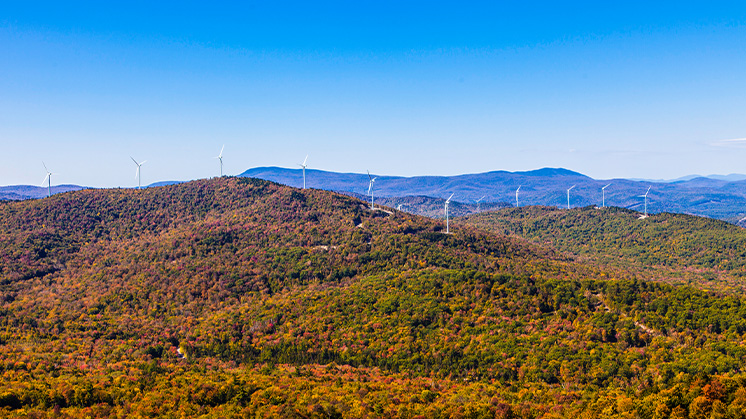
Committed to ambitious and urgent climate action
At Iberdrola, we are consolidating a sustainable energy model underpinned by the development of renewable energy, the electrification of the economy, smart grids and energy storage solutions. Our commitment to innovation and climate action has established us as a global benchmark in clean energy generation and the development of sustainable energy infrastructure.
Our Climate Action Plan sets specific targets to decarbonise our activities: achieving Scope 1 CO₂ equivalent emissions neutrality by 2030 and net zero CO₂ equivalent emissions across all scopes before 2040.
Key elements of the Climate Action Plan
Objectives
- 2030
Scope 1 emissions neutrality
Direct emissions (generation and other activities) and indirect emissions from electricity transmission and distribution (T&D) losses and own consumption
- By 2040
Net zero emissions across all scopes (1, 2 and 3)
Scopes 1 and 2 (indirect emissions from electricity network losses and own consumption) and 3 (other indirect emissions over which the group does not have control or direct influence (e.g. sale of gas, purchase of electricity for sale to the end customer, generation of electricity for third parties, suppliers))
Drivers
-

100% renewable energy
All energy from zero-emission sources
-

100% smart networks
More robust and 100% digitalised electricity networks
-

Green procurement
100% green energy
Suppliers – joint emissions reduction projects and the use of green products
-

Green solutions for customers
Offering green products and solutions, including electrification and green hydrogen
Alliances for green and decarbonised technologies
Values
-

Positive for society
Economy, industry and employment
Inclusive transition
Universal access to competitively priced energy
-

Positive for nature
Net positive impact on biodiversity by 2030
Circular economy model
Tools
-
 Climate governance
-
 Risk and opportunity management
-
 Technological and business innovation
-
 Alliances and collaboration
-
 Green finance

Near-term and long-term science-based emissions reduction targets aligned with a 1.5°C pathway and validated against the SBTi Corporate Net-Zero Standard.
 Key elements of the Climate Action Plan
Iberdrola has approved science-based emission reduction targets in the short and long term with the Science Based Target (SBTi) initiative.
Climate action, a priority axis of our strategy
Our By-Laws assign responsability for climate action to the Board of Directors. The Group's highest governing body is responsible for approving and updating a climate action plan that enables the company to meet its environmental targets, as well as reporting annually on its climate action
In addition, the Climate Action Policy establishes the framework for Iberdrola's strategy and business model, aligned with the Paris Agreement and the 2030 Agenda. We continue to take a leading role, both directly and by building partnerships, raising awareness of the impacts, challenges and benefits of climate action, and contributing to a carbon-neutral and sustainable future.
One of the key priorities set out in the Climate Action Policy is the electrification of the economy. To this end, the Group supports regulatory initiatives that promote, for example, electric mobility and heat pumps, the “polluter-pays” principle, the removal of subsidies for high-emission technologies or sectors, the assessment of climate-related risks and, more broadly, the development of a genuine, global and sustainable energy model.
The content of the Climate Action Policy, which has also been endorsed by shareholders at the General Meeting, is aligned with the recommendations of the TCFD (Task Force on Climate-related Financial Disclosure) External link, opens in new window., a benchmark platform on climate reporting, which sets out guidelines for integrating climate change into internal strategic planning and decision-making processes, as well as in the analysis, management and reporting of long-term risks.
We are moving towards net zero emissions
As a strategic pillar in achieving these goals, our climate action is underpinned by the Group's investment plan, which is based on innovative initiatives aimed at decarbonising the energy mix, increasing its resilience and consolidating our leadership in renewable energy, smart grids, efficient energy storage and the deployment of decarbonisation solutions for customers.
 36
gCO2/kWh emissions intensity (1)

87 %
of the owned installed capacity is emissions-free

45,906
GWh of renewable energy production
 45,830
MW owned capacity in renewables

2,621
MW of offshore wind power in operation, key to the Group's growth

5.336
billion euros of new sustainable financing
Source: Data as of the end of the first half of 2026. Information extracted from the ‘Results Report 2026 First Half’.
(1) Reported figures exclude discontinued operations. Own CO2 emissions, including these operations, amounted to 49 gCO2/kWh in H1 2026 and 50 gCO2/kWh in H1 2025.
At Iberdrola, we are also committed to green and sustainable financing —we are the world's largest issuer of green bonds— and to innovation in clean energy. We also play an active role in climate summits and various alliances advocating ambitious climate action, with COP30 in Belém being our most recent key engagement. In addition, we work to raise public awareness of climate change and contribute to sustainable development, efforts recognised by numerous international indices. In line with this commitment, we support various initiatives, including World Energy Day.
Managing the risks and opportunities of climate change
Improving climate resilience involves assessing how climate change will create new risks or opportunities or alter existing ones. Building resilient systems involves, first and foremost, a technological transformation towards a decarbonised economy, thus avoiding worst-case scenarios and taking advantage of the opportunities offered by the energy transition. Thus, the Iberdrola Group's Climate Action Policy includes, among its priority lines of action, the analysis of the risks and opportunities arising from climate change, as well as physical risks, and the integration of climate science and adaptation and resilience criteria, to reduce or avoid the potential impacts of climate change on the activity. I
At Iberdrola, we monitor and manage the impacts of climate change through an ongoing analysis process based on climate science and its application to the company's standard procedures, following an approach that encompasses planning, implementation, monitoring and continuous improvement. This analysis concludes that, although risks exist, Iberdrola's business model can be considered resilient to climate change. For more information about how we manage risks and opportunities, see our latest Consolidated Non-Financial Information Statement and Sustainability Reporting [PDF].
Main climate risks
Climate change brings with it various risks, which to a large extent are not new risks for Iberdrola. These risks, which are included in the general risk control and management policy and are therefore monitored periodically, may be grouped into the following.
- Transition risks, associated with the risks that may arise during the gradual global decarbonisation process, including regulatory, market, technological and reputational changes, litigation and fluctuations in demand, among others.
- Physical risks, arising from potential material impacts on facilities as a result of future changes in climate variables. These include chronic risks, such as rising temperatures, rising sea levels and changes in precipitation patterns, as well as acute risks associated with increases in the frequency and intensity of extreme weather events, such as heatwaves, hurricanes and floods.
Other risks may arise from these risks, such as credit deterioration of counterparties, suppliers, banks, others, social phenomena, humanitarian crises, impacts on crops and fisheries, refugee crises, epidemics and increased competition for financial resources.