What is energy storage
Energy storage: the key to a decarbonised future
Energy efficiency Energy storage Decarbonisation
Efficient energy storage is a fundamental pillar of the energy transition: allowing flexible renewable energy production and guaranteeing its integration into the grid. Find out which storage systems are the most efficient and which ones promise to drive the much-needed transition towards a decarbonised electricity system.
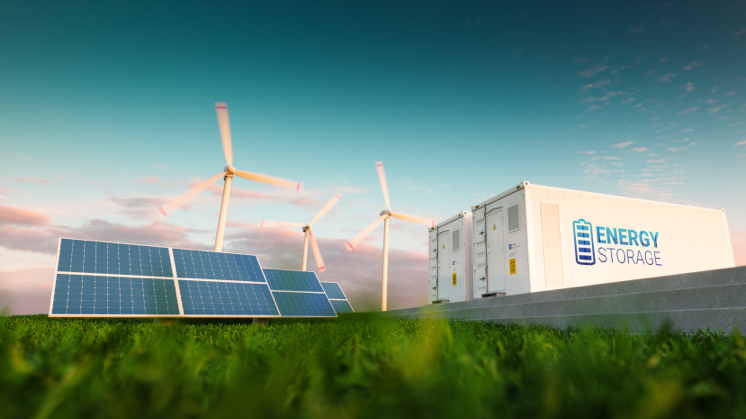
Energy storage, in addition to integrating renewables, brings efficiency savings to the electrical grid.
Electricity can be easily generated, transported and transformed. However, up until now it has not been possible to store it in a practical, easy and cost-effective way. This means that electricity needs to be generated continuously according to demand and, consequently, renewable energies require supporting storage systems for their integration, to avoid drops in clean energy during supply troughs and to provide greater efficiency and security to the electrical grid.
As the share of renewable sources in the energy mix grows, as is the case with wind and solar energy, improved electrical energy storage is vital to support these technologies, ensuring that electrical grids can be balanced and can contribute to the maximisation of every green megawatt generated.
What is energy storage for?
The real usefulness of energy storage is closely linked to the great challenge of renewable energies: as non-dispatchable sources, their production does not always coincide with periods of peak demand. This is where storage makes sense, as it allows more renewable energy to be integrated into the system by capturing the energy generated during periods of higher production and making it available to the grid when it is actually needed. This ability to shift energy from periods of high generation to periods of high demand by storing it – for example, during the middle of the day when solar generation is high – and releasing it in the late afternoon or at night when demand rises, also helps reduce the curtailment of clean electricity that would otherwise occur during periods of low demand, when renewable generation exceeds consumption.
This function as a "cushion" between generation and demand provides flexibility to the electricity system, giving it leeway to absorb the variations inherent to sources that are intermittent by nature. And that same flexibility translates, in turn, into an improvement in the stability and quality of supply: technologies with very fast response times, such as batteries or supercapacitors, make it possible to respond to power peaks or minor disruptions without compromising grid balance.
All of these benefits are also passed on to the end-user level, as storage favors electrification and self-consumption through solutions such as virtual batteries, allowing domestic consumers to also make the most of the energy they generate. In this way, energy storage acts as a common thread running through the entire supply chain, from large grid-connected installations down to the home, reinforcing at each link the viability of a more renewable, flexible and efficient electricity system.
Storage and electricity networks
Beyond its role in integrating renewables, energy storage has become a key element in the daily operation of electricity networks. One of its most direct uses is demand peak management: by accumulating energy during periods of lower consumption and releasing it when demand surges, storage prevents the network from having to be sized – and therefore invested in – solely for those specific peaks, thereby optimising the use of existing infrastructure.
This ability to modulate available energy at any given moment is also the foundation for supporting grid stability: fast-response systems, such as batteries, help maintain the balance between generation and consumption and cushion frequency or voltage fluctuations that could compromise proper system operation. This stability is particularly relevant as the weight of distributed generation grows, the integration of which is favoured when storage acts as an intermediary between variable production and demand that does not always match in time or location.
All of this also results in improved resilience against incidents: having energy reserves distributed across the network makes it possible to better respond to supply outages, unexpected demand peaks or isolated failures, reducing the impact on end users. And this set of functions finds its best ally in digitalisation, as storage complements network digitalisation: only with intelligent monitoring and control systems is it possible to decide in real time when to charge or discharge each storage asset, maximising its value for the grid and for the electricity system as a whole.
Main energy storage systems
Electricity, by its very nature, requires conversion into another form of energy, such as mechanical or chemical energy, in order to be stored efficiently and recovered when needed. Storage systems can add value at each and every link in the supply chain. Depending on their capacity, energy storage systems are divided into:
- large-scale storage, which is used in locations operating at GW scales, as is the case, for example, with stand-alone batteries;
- storage in networks and generation assets, operating at MW scales. This type of storage is found connected to the distribution network at a solar plant or a wind farm;
- end-user level storage, which is used at the residential level and operates at kW scales. Examples of this type of storage include virtual batteries and, in general, are facilitators of photovoltaic self-consumption.
Energy storage technologies
Large-scale (GW)
Reversible hydroelectric (pumping) and thermal storage

Storage in the grid and in generation assets (MW)
Cells and batteries, capacitors and superconductors, and flywheels

End user (KW)
Batteries, superconductors and flywheels

 SEE INFOGRAPHIC: Energy storage technologies [PDF]
Currently, the following list shows the ways to accumulate energy and the main technologies that allow efficient energy transformation and storage:
-

Hydroelectric pumped storage
The most efficient large-scale storage system in operation. This is a cost-effective and proven technology that provides stability to the electrical system and can generate significant levels of clean energy with rapid response times.
-

Compressed air
These facilities have a reversible motor that, during periods of excess energy, ambient air is stored at high pressures in underground cubicles. It is a mechanical storage system comparable in capacity to hydroelectric pumping.
-

Thermal storage
It consists in accumulating energy in materials that allow it to be retained and released in a controlled manner, through methods ranging from cooling through ice accumulation to exposure to extremely high temperatures.
-

Supercapacitor
This is a device capable of storing large amounts of electrical energy in the form of electrostatic charges, meaning there are no chemical reactions. Supercapacitors can be charged or discharged in a matter of seconds, thus being ideal for responding to energy peaks or brief supply interruptions.
-

Flywheels
This is a mechanical storage system consisting of a metal disc that starts to spin when a torque is applied to it, then, with the action of braking the wheel applying a firm braking torque, electrical energy is conserved in kinetic form.
-

Batteries
This is a device that stores energy in chemical compounds capable of generating electrical charge. There are many types, such as lead-acid batteries, lithium ion or nickel cadmium batteries. The main advantages of batteries are their rapid response (milliseconds), their ease of installation and scalability and, finally, the multiple benefits they can bring to renewable assets to which they connect.
-

Hydrogen fuel cells
This is a type of continuous chemical storage. It differs from batteries in that it is supplied continuously with hydrogen from the outside allowing its constant use. There are other types of fuel cells, but hydrogen is the most commonly-used fuel.


Lithium batteries: a key technology for today's storage
In recent years, the renewable energy sector has seen lithium-ion batteries as the solution to its main challenge: storing generated energy. As one of the smallest elements on the periodic table, lithium has high electrochemical potential and can store large amounts of energy. Currently, both the low weight and high efficiency of these batteries make them an ideal solution, and there was only one hurdle preventing lithium batteries from becoming the main storage technology for renewables: their high cost.
That barrier, however, is now behind us. According to the latest price survey by BloombergNEF (BNEF), the cost of lithium-ion battery packs has dropped by 93% since 2010 to reach a record low average of $108/kWh in 2025. In the stationary storage segment, the drop has been even steeper: the price fell to $70/kWh in 2025 – no less than 45% lower than the previous year – making it the cheapest application among all those using lithium batteries.
This reduction in cost has driven energy storage installations to multiply worldwide. According to BloombergNEF, stationary storage could reach a cumulative capacity of 2.9 TW / 10.5 TWh in 2036, an evolution reflecting the accelerated growth of this technology on a global scale.
Lithium, and specifically LFP (lithium iron phosphate) chemistry, remains the dominant technology today: it accounted for more than 90% of new stationary storage deployments in 2025, according to the International Energy Agency. However, alternatives are beginning to consolidate within this leadership: sodium-ion batteries, for example, already have real-world grid deployments – such as a 400 kW / 1 MWh system near Bremen (Germany) or pilot projects by NTPC in India – offering a complementary option in applications where cost, safety or material availability outweigh energy density.
Emerging solutions for long-duration storage
While lithium-ion batteries dominate short-duration storage today thanks to their rapid response times and scalability, another set of technologies exists designed to cover very different needs: retaining energy for hours, days or even weeks, which is essential to offset the seasonality of renewables or to guarantee supply during prolonged low-generation scenarios.
Hydroelectric pumped storage remains the most established benchmark: it is the most efficient large-scale storage technology in operation, with proven cost-effectiveness and fast response times that make it a pillar of stability for the electricity system. With a similar philosophy, but without relying on topography, compressed air offers comparable capacity by storing excess energy as high-pressure air in underground caverns to release it when the grid requires it.
Alongside these mechanical solutions, hydrogen is emerging as one of the alternatives with the greatest potential for the long term: unlike batteries, it allows for continuous supply, as it is permanently fed from the outside, making it particularly suitable for applications requiring extended autonomy. Thermal storage, for its part, addresses the challenge from another angle, accumulating energy in materials capable of retaining and releasing heat or cold in a controlled manner, ranging from ice accumulation to exposure to extreme temperatures.
Added to these established technologies are emerging chemistries gaining ground precisely in the long-duration segment. Flow batteries stand out for decoupling power from storage capacity, making them especially competitive when large volumes of energy are needed over many hours. And sodium-ion batteries, although still in an earlier stage of deployment, are beginning to consolidate as a complementary option to lithium in applications where cost, safety or material availability carry more weight than energy density, as pilot projects in Germany and India already demonstrate.
It should be noted that, taken together, these technologies do not compete with each other so much as complement one another, covering different time horizons and specific needs within an electricity system increasingly dependent on intermittent renewable sources.
Global cumulative energy storage installations
- GW
- 1,200
- 1,000
- 800
- 600
- 400
- 200
- 0
- 2018
- 2020
- 2022
- 2024
- 2026
- 2028
- 2030
- 2032
- 2034
- 2036
- 2038
- 2040
- Other
- Australia
- Germany
- South Korea
- France
- India
- Japan
- Southeast Asia
- United States
- United Kingdom
- Latin America
- China
Source: BloombergNEF.
According to the BloombergNEF (BNEF) forecast mentioned above, the stationary storage market will reach a cumulative capacity more than double what was projected in 2019 for stationary storage and electric transport combined in 2040. This confirms that battery demand is growing well above previous estimates. This trend, in addition to supporting the energy transition, represents a major opportunity for battery manufacturers and companies extracting their components, such as lithium, cobalt and nickel.
Iberdrola's commitment to energy storage
At Iberdrola, we are positioning energy storage as one of the key levers for electrification and decarbonisation. We are global leaders in hydroelectric pumped storage, with 4.2 GW installed and projects such as La Muela II or the Tâmega Complex, making it the most efficient technology today for large-scale storage.
To this scale, we are adding batteries attached to renewable generation sites, installed alongside solar plants and wind farms to maximise their output, and stand-alone batteries, which operate independently to bridge the gap between generation and demand in real time.
All of this forms part of a strategy combining storage and reinforced infrastructure to move towards the decarbonisation of the system, supported by smart grids that facilitate the integration of renewables, sustainable mobility and self-consumption.