News
-
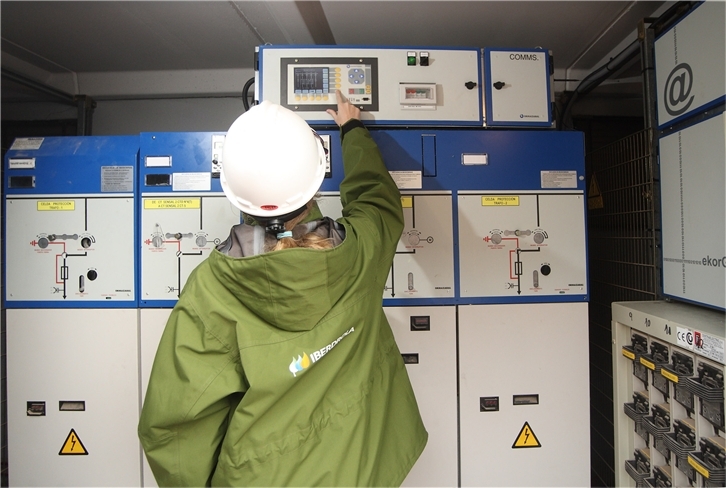
27/12/2018Iberdrola completes the digitisation of its distribution networks for the intelligent use of electricity Iberdrola has completed the process of digitising its distribution network with the installation of 10.7 million digital meters in Spain and their supporting infrastructure, as well as the adaptation of around 90,000 transformation centres, to which remote management, supervision and automation capabilities have been added. This digitisation process has meant an investment of €2 billion. This transformation to an intelligent infrastructure in the networks means the company is moving forward in its strategy of energy transition. It is contributing to the decarbonisation of the economy, improving the efficiency of the network, optimising demand management and promoting the integration of more renewables and electric mobility. This means it is also responding to new trends in relations with its customers, who are demanding more personalised products and services and a more active management regarding how energy is consumed. Customers are more involved The network’s digitisation means the electricity consumer is in a position to know in real time about, among other information, their consumption curves, as well as their demand for maximum power, or the way in which their electricity consumption is distributed. This allows for a more efficient use of electricity, being able to decide on the rate type that best suits their profile and way of life. Iberdrola uses international standards and robust, maximum security encryption algorithms that guarantee the authentication, confidentiality and privacy of every one of its digital devices by means of unique user name and password identification. Furthermore, the digital meters use high-security cryptographic keys, in accordance with international standards, ensuring data packages leave encrypted and authenticated. Greater efficiency and quality of supply Customers are not the only ones offered possibilities by digitisation, but also the electrical system, since smart networks use remote management which allows for just that, quick and remote management of everything related to the point of supply and services. An automated and digitised network has a very positive effect on the efficiency of the service and the quality of supply by reducing incidents and how long they last. In addition, more information is available to detect fraud and minimise losses, as well as to increase the security of both employees and providers who work on the network. To manage and store all this information which the new smart meters provide, Iberdrola has updated its systems and has developed applications based on big data technology. 10 advantages of smart grids * They facilitate a more efficient and sustainable power supply * They allow a higher level of security and quality of supply * They detect anomalies before they occur * They allow you to get more precise information on electrical consumption and to personalise your use * They contribute to giving you greater control over the use of energy * They encourage a more client-active role in decision making * They facilitate new business models * They reduce the environmental impact * They make it possible for the introduction of more renewables * They foster sustainable mobility with the integration of the electric car. READ MORE
-
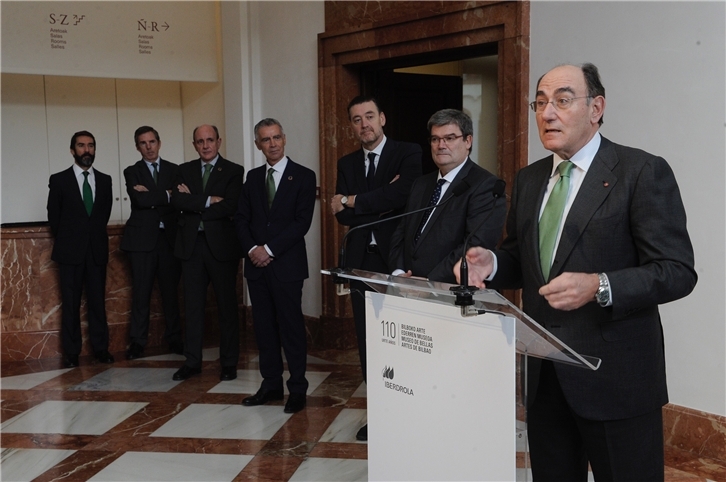
17/12/2018Iberdrola sponsors the environmental restoration of the West Gallery and the Christmas lights on the Old Building of the Museo de Bellas Artes in Bilbao. Since its creation, Iberdrola has been firmly committed to preserving and maintaining cultural and artistic heritage. It is within this scope of action that the collaboration with Bilbao’s Museum of Fine Arts came into being, which includes sponsorship of the Conservation and Restoration programme, the creation of a training and research grant and the restoration of artworks, among other initiatives. Thanks to Iberdrola’s sponsorship, work has been done in recent months on the environmental restoration of the glass gallery attached to the opaque brick façade of the Old Building, which since 2001 has linked both buildings of the museum. More recently, work has started on the Christmas lighting on the original façade of the Old Building, designed to mirror the original entrance. The inauguration was attended by Juan Mari Aburto, Bilbao’s mayor and chairman of Fundación Museo de Bellas Artes de Bilbao; Ignacio Galán, chairman and chief executive officer of Iberdrola; Fernando García Sánchez, chairman of Fundación Iberdrola España; Ramón Castresana, director of Fundación Iberdrola España; Miguel Zugaza, director of Museo de Bellas Artes de Bilbao, and Luis María Uriarte, the architect behind the museum’s last renovation project. READ MORE
-
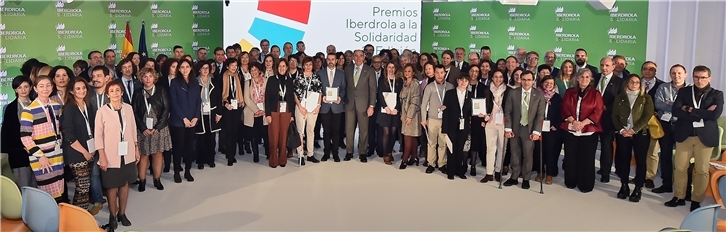
11/12/2018Ignacio Galán presented the Iberdrola Solidarity Awards to Fundación Tomillo, Asocide, Proyecto Hombre and Aspanion Today, Iberdrola has held its Solidarity Conference in which the group's chairman, Ignacio Galán, presented the Iberdrola Solidarity Awards in recognition of the work carried out by some of the associations that work with the company. The Tomillo Foundation received the End Poverty Award for its project in the Madrid neighbourhood of Los Olivos , which promotes the proper education and development of children and young people with various difficulties. The Spanish Association of the Deaf and Blind (Asocide) was recognised in the Reduce Inequality category for its work in assisting the integration of people with this type of functional diversity by providing interpretation and support services in their daily lives. The Iberdrola Health and Wellbeing Prize was awarded jointly to Proyecto Hombre and Aspanion. In this way, the company wished to recognise the work carried out by both organisations in the field of children's health, in the case of Aspanion, for the support they provide to the families of child patients in Valencia’s La Fe Hospital, and in the case of Proyecto Hombre for its drug and alcohol addiction treatments and its work on preventing the abuse of new technologies by young people. The Iberdrola Solidarity Conference was inspired by the United Nations' Sustainable Development Goals (SDG). For this reason, Iberdrola’s chairman and representatives from the participating associations were accompanied by the Spanish Government's High Commissioner for the 2030 Agenda for Sustainable Development, Cristina Gallach. During his speech, Ignacio Galán stressed the contribution of public and private organisations towards fulfilling the 2030 Agenda: “The link between business and society must be unbreakable," he said. Furthermore, the chairman of Iberdrola described social responsibility as a "fundamental part" of the company's strategy and highlighted the role of companies as a "force for social change". To this end, he gave the example of Iberdrola's Social Programme, which since its launch eight years ago, has promoted over 500 initiatives in areas such as child protection, social inclusion and in improving the living conditions of sick people, which has benefited over 200,000 people. As its chairman recalled, Iberdrola has incorporated the SDG into its strategy and focuses its efforts on two of them: affordable, reliable, sustainable and modern energy for all (SDG 7) and urgent action to combat climate change and its impacts (SDG 13). Moreover, the company actively encourages multilateral partnerships to achieve the proposed goals (SDG 17) and it contributes to fulfilling other objectives: end poverty (SDG 1), healthy lives and well-being (SDG 3), gender equality (SDG 5), inclusive and sustainable economic growth (SDG 8), reduce inequalities (SDG 10), inclusive, safe, resilient and sustainable cities and communities (SDG 11) conserve and protect ecosystems (SDG 14 and 15). For her part, Cristina Gallach highlighted "the importance of the work of the social organisations that contribute to the development and improvement in the quality of life of the most vulnerable people around the world”. The Government's High Commissioner for Agenda 2030 added: "Recognising the excellent work done by civil society organisations is undoubtedly even more compelling since the 2008 financial crisis. According to a study, the importance of the Third Sector in Spain is reflected in the almost 30,000 entities involved in it, in the more than seven million people who are served annually, in the 10.5 billion euros they manage and in the more than two million people, including volunteers and employees, who work daily in it.” Objective: to consolidate alliances to advance the 2030 Agenda The Iberdrola Solidarity Conference also included five working groups that met throughout the morning to analyse specific points of the United Nations 2030 Agenda for Sustainable Development. Specifically, around 60 members of organisations such as ActionAid, Save the Children, the Spanish United Nations Global Compact Network, the Spanish Cancer Association (AECC) and the Down Syndrome Foundation of Madrid, among others, discussed: * End child poverty (SDG 1): according to the National Statistics Institute, over 2.6 million children in Spain (31.3%) are at risk of poverty or social exclusion. The participants in this group analysed the key role of education and the promotion of protective spaces for these groups. * Reduce inequality within and among countries (SDG 10): the group focused on social inclusion for people with disabilities, in which both personal autonomy –and closely related labour inclusion– play a fundamental role. * Healthy lives and well-being (SDG 3): the participants studied this point from two perspectives: the well-being of children and their families, and the prevention and treatment of addictions. In the first case, they stressed the importance of psychosocial support for people around children with serious illnesses, while in the second they worked on the challenge of including the gender perspective in the problem of addictions, as well as the need to monitor new pathologies derived from the use of technologies. * Global partnerships to achieve sustainable goals (SDG 17): the group identified the 2030 Agenda "as the most important global challenge" and demanded financial resources to build not only alliances but also technical and institutional capacities, reinforced by the drive for innovation. Representatives of Iberdrola also took part in all the groups; the Foundation made a commitment to reinforcing its contribution to the different points by working closely with associations and charitable organisations. Thus, by building alliances, the company will continue to moving towards fulfilling the United Nations 2030 Agenda. As part of the Iberdrola Solidarity Conference, the company organised a charity market in its corporate offices in Madrid. The company's employees took part and their contributions will go to the Down Occupational Centre in Madrid . About Iberdrola Iberdrola is a global energy leader, the number one producer of wind power, and one of the world’s biggest electricity utilities by market capitalisation. The group is present in numerous countries and supplies energy to over 100 million people mainly in Spain, the United Kingdom (Scottish Power), the USA (AVANGRID), Brazil (Neoenergia) and Mexico. With a workforce of 34,000 and assets in excess of €110 billion, it posted revenues of over €31.263 billion and a net profit of €2.804 billion in 2017. Iberdrola is leading the transition towards a sustainable energy model through investments in renewable energy, smart grids, large-scale energy storage and digital transformation, offering the most advanced products and services to its customers. Thanks to its commitment to clean energy, Iberdrola is one of the companies with the lowest emissions and an international benchmark for its contribution to the fight against climate change and for sustainability. READ MORE
-
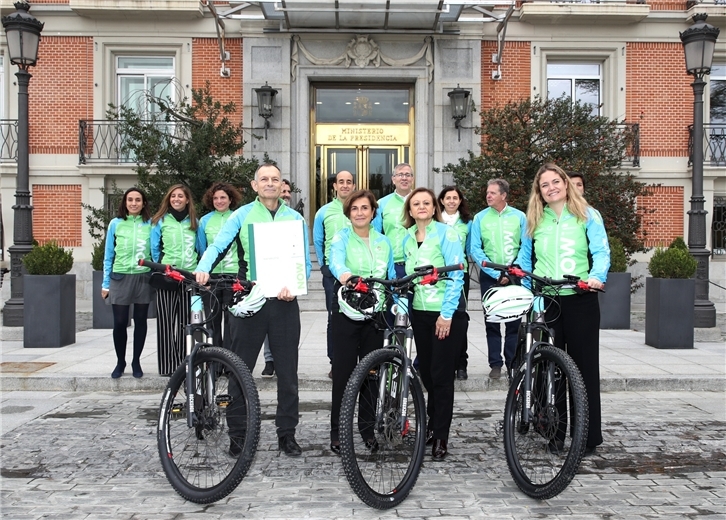
22/11/2018Moving for Climate NOW starts its journey to COP 24 by delivering its Manifesto against climate change to Cristina Gallach The cycling team of Moving for Climate NOW, an initiative promoted by the Spanish United Nations Global Compact Network and Iberdrola , has been received this morning at the Moncloa Palace by the Spanish government's High Commissioner for Agenda 2030, Cristina Gallach. During the meeting, the participants presented Gallach with the Manifesto they will take to the Climate Summit (COP 24) to be held from 2 to 14 December in Katowice (Poland). The CEO of Iberdrola España, Ángeles Santamaría, and the Spanish United Nations Global Compact Network vice-president, Víctor Viñuales, were present at the event, as representatives of the organisations promoting this initiative, which is now on its third iteration. Ángeles Santamaría affirmed that "the energy transition towards decarbonisation will require everyone to contribute, along with courage in decision making, constancy in execution and sensitivity towards vulnerable communities, so as not to leave anyone behind. It's technically and economically possible, it's an opportunity and, moreover, there's a demand from society that demands future answers. For his part, Víctor Viñuales explained that "climate is one of the pillars of the United Nations Agenda 2030 and it is a challenge that we cannot face individually. Collective action through alliances reinforces our chances of success, so our goal with this initiative is to expand the level of commitment reached to the largest possible number of stakeholders”. The vice-president of the Spanish United Nations Global Compact Network added that "to contribute to the Sustainable Development Goals (SDG), we need collective action, government commitment, private sector drive, awareness and metrics". Moving for Climate NOW brings together over 40 participants from different countries and organisations, who will travel more than 600 kilometres by electric bicycle with the common objective of making society aware of the need to act urgently against climate change using all the mechanisms available. The bicycle rally will depart from Vienna on Monday, 26 November, and pedal to Katowice (Poland), the city that hosts this year's Climate Summit, where they will arrive on Sunday 2 December. Upon arrival, the members of Moving for Climate NOW will deliver the initiative's Manifesto to the United Nations Executive Secretariat for Climate Change. The document focuses on the Talanoa Dialogue , a space for conversation designed to encourage the participation of governments and civil society, with the aim of taking stock of the joint work carried out so far to achieve the climate objectives agreed at the Paris Summit in 2015. Iberdrola is the only Spanish company and the only energy company taking part in the debates in the technical phase of this Dialogue. The Moving for Climate NOW Manifesto states that "the Katowice Climate Summit is going to be very important because now is the time to finalise the main elements of the Paris Agreement and implement the conclusions of the Talanoa Dialogue to inform future climate action, also taking into account the conclusions and guidelines of the IPCC special report on the impacts of global warming of 1.5 oC and the magnitude of the measures required". It also calls for a just transition that pays special attention to vulnerable communities and leaves no one behind, and in which the energy sector plays a key role, contributing to the development of a model based on clean energy, sustainable mobility and energy efficiency. The third ‘Moving for Climate NOW’ Moving for Climate NOW is now in its third iteration, after pedaling to the Marrakech Climate Summit in 2016 (COP 22) and Bonn in 2017 (COP 23). This time, the cycle rally will depart from Vienna (Austria) on Monday 26 November and arrive in Katowice (Poland) on Sunday 2 December, after travelling more than 600 kilometres on electric bicycles. The team is made up of over 40 people from different organisations and countries, in line with UN Agenda 2030 SDG 17 (partnerships to achieve the goals). In this third Moving for Climate NOW the cycling team will be joined by representatives from associations such as the International Energy Agency (IEA) and the International Renewable Energy Agency (IRENA), government bodies such as the Spanish Office for Climate Change and the Biodiversity Foundation, initiatives such as Sustainable Energy for All (SEforALL) and the International Institute for Sustainable Development (IISD), non-governmental organisations such as ActionAid and The Climate Reality Project and university centres such as the Pontificia Comillas University and the Federal University of Rio de Janeiro, among others. As on previous occasions, the rally will comply with gender parity, in line with compliance with SDG 5. The Spanish United Nations Global Compact Network The United Nations Global Compact is the biggest voluntary corporate sustainability initiative in the world. It has two objectives: on the one hand, to implement 10 universally accepted principles to promote corporate social responsibility (CSR) in the areas of human rights, labour standards, the environment and the fight against corruption in companys' activities and strategies. And on the other hand, to get the private sector to contribute to the objectives of the United Nations, currently the Sustainable Development Goals (SDG). At the international level, it has over 13,000 signatories. In Spain, it has more than 2,600 signatories, which makes it the country with the largest presence in the initiative. The Global Compact is working for sustainable development through multistakeholder and public-private alliances. As a United Nations initiative, it pursues the organisation's development goals, the main one being the fight against climate change, which is essential for the development of people, societies, the planet, prosperity and justice. About Iberdrola Iberdrola is a global energy leader, the number one producer of wind power, and one of the world’s biggest electricity utilities by market capitalisation. The group is present in numerous countries and supplies energy to over 100 million people mainly in Spain, the United Kingdom (Scottish Power), the USA (AVANGRID), Brazil (Neoenergia) and Mexico. With a workforce of 34,000 and assets in excess of €110 billion, it posted revenues of over €31.263 billion and a net profit of €2.804 billion in 2017. Iberdrola is leading the transition towards a sustainable energy model through investments in renewable energy, smart grids, large-scale energy storage and digital transformation, offering the most advanced products and services to its customers. Thanks to its commitment to clean energy, Iberdrola is one of the companies with the lowest emissions and an international benchmark for its contribution to the fight against climate change and for the sustainability of the planet. Almost two decades ago, Iberdrola realised that climate change was a real challenge for humanity that required urgent action. It also realised that the electricity sector was key to providing solutions to combat this global problem. In this context, a few years ago Iberdrola launched its Action Plan on Climate Change, which focuses on four main areas: playing a leading role in major international organisations and business coalitions, active involvement in international negotiations on the United Nations Framework Convention on Climate Change, implementation of a Social Awareness Plan with internal and external measures and implementation of internal actions for climate change mitigation and adaptation. The High Commissioner for Agenda 2030 Under the direct authority of the president of the government, a high commissioner for Agenda 2030 has been created, with the rank of undersecretary, who is responsible for coordinating actions to comply with the United Nations Agenda 2030 and, in particular, to carry out the following functions: a) Monitor the actions of the competent bodies in the General State Administration in fulfilling the objectives of sustainable development and Agenda 2030. b) Promote the preparation and implementation of the plans and strategies necessary for Spain to comply with Agenda 2030. c) Evaluate, verify and disseminate the progress made in meeting the objectives of Agenda 2030. d) Collaborate with the Ministry of Foreign Affairs and Cooperation in Spain's international dialogue on the global implementation of Agenda 2030.e) Promote the development of the information and statistical systems necessary to accredit progress in achieving the objectives of Agenda 2030. Society as a whole is called upon to participate in order to achieve the 17 Sustainable Development Goals: central government, regional and local governments, civil society and the private sector, in order to fulfil the new global social contract without leaving anyone behind. A Spain that has achieved the SDG by 2030 will be the country we all dream of. For this reason, Agenda 2030 is already at the centre of our vision for state and government action. It represents a way of acting in the world. READ MORE
-
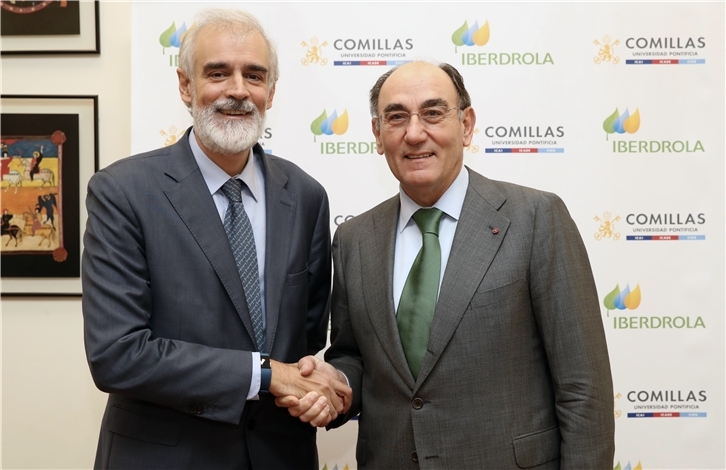
21/11/2018Presentation of the Iberdrola Financial and Business Ethics Chair of the Pontificia Comillas University Iberdrola and the Pontificia Comillas University have presented the Iberdrola Financial and Business Ethics Chair of to this academic institution, which has the main aim of encouraging education and fostering the concepts and principles of business and professional ethics in all of its spheres. The Vice-Chancellor of the Pontificia Comillas University, Julio L. Martínez, S.J., and the Chairman of Iberdrola, Ignacio Galán, met at the Comillas ICADE facilities to sign the agreement, which is initially set to last three academic years starting right away, and which intends to rise as a strong project with a powerful echo in the business and academic world. The Iberdrola Financial and Business Ethics Chair of the Pontificia Comillas University, which has now fostered 15 years of reflection and research into business ethics and CSR, is the outcome of the commitment towards best practice shown by both institutions. Its goal is to represent a meeting point between the academic and business worlds in this field. The Chair will continue to be directed by José Luis Fernández, a professor from the Business Management Department in the Faculty of Economic and Business Sciences (Comillas ICADE), along with two senior managers from Iberdrola: Dolores Herrera, Head of Compliance, and Agustín Delgado, Head of Innovation, Sustainability and Quality. Through this Chair,, Iberdrola and the Pontificia Comillas University will be working on various research lines in this specific field, including: * Analysing the human side of business activity and promoting more human-focussed business models, bearing in mind every aspect of a person. * Reflecting on decision-making and analysing the ethical repercussions of the digital era. * Promoting the Sustainable Development Goals (SDGs) on the UN 2030 Agenda. * The ethical side of corporate governance, responsible management and regulatory compliance. The agreement between these two institutions also includes activities to disseminate and raise awareness towards the research work and studies carried out, including seminars, meetings, papers and publications. Iberdrola’s University Programme The Iberdrola Financial and Business Ethics Chair of the Pontificia Comillas University arose from the Group's University Programme, which was put in place by the company to strengthen its ties with the academic world and attract talent, exchange knowledge and contribute to society. Within this context, Iberdrola has driven other initiatives with the Pontificia Comillas University, and the following are especially worthy of mention: * Establishing the Iberdrola Energy Chair in 2012 in order to create and exchange knowledge and to develop research, innovation and training activities. * The Comillas Emprende initiative (Enterprising Comillas), which gives students the opportunity to present projects related to future energy scenarios (Utility of the Future), such as clean energy innovation processes, initiatives to reduce consumption or other innovative ideas. * A collaboration with the electric motor racing team, which is a project that has seen 70 students work on designing, manufacturing and assembling an electric open-wheel car and an electric racing bike. About Iberdrola Iberdrola is a global energy leader, the biggest producer of wind power and one of the five top power companies in the world in terms of stock market capitalisation. The group is present in numerous countries and supplies energy to over 100 million people mainly in Spain, the United Kingdom (Scottish Power), the USA (AVANGRID), Brazil (Neoenergia) and Mexico. With a workforce of 34,000 and assets in excess of €110 billion, it posted revenues of over €31.26 billion and a net profit of just over €2.8 billion in 2017. Iberdrola is leading the transition towards a sustainable energy model through investments in renewable energy, smart grids, large-scale energy storage and digital transformation, offering the most advanced products and services to its customers. Thanks to its commitment to clean energy, Iberdrola is one of the companies with the lowest emissions and an international benchmark for its contribution to the fight against climate change and for the sustainability of the planet. Iberdrola forms part of numerous international sustainability indices, among them the Dow Jones Sustainability Index and FTSE 4Good, and is considered one of the most sustainable electricity companies in the world. For more information, contact: Pontificia Comillas University Communication Office Juan Manuel Daganzo jdaganzo@comillas.edu (+34) 91 542 28 00 ext. 2475 Iberdrola Corporate Communications Division comunicacioncorporativa@iberdrola.com (+34) 91 784 32 32. READ MORE
-
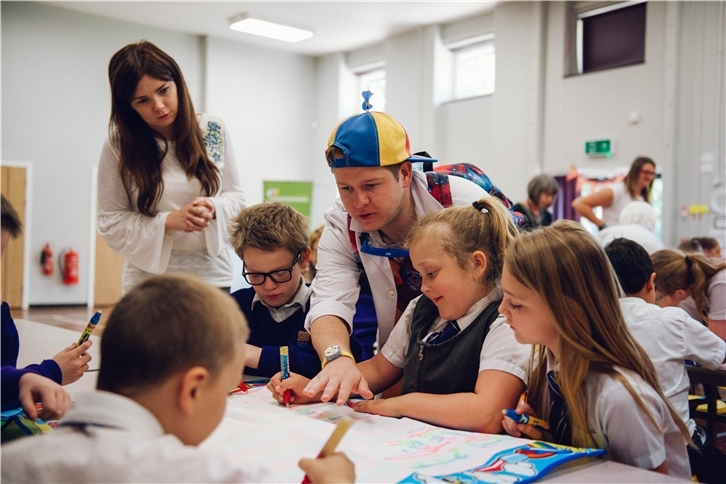
20/11/2018Iberdrola celebrates Universal Children’s Day: support for 88 social projects benefiting 360,000 people around the world in 2018 Iberdrola is celebrating Universal Children’s Day by supporting 88 social projects with NGOs in the area of childhood and adolescence, through its foundations in Spain, United Kingdom, United States, Mexico and Brazil. These initiatives, with an investment of over €3 million in 2018, reach a total of 360,000 beneficiaries among the children and young people who take part in the programmes and their families. The childhood-related programmes with which Iberdrola cooperates through its foundations address education, combating child poverty, training for the inclusion of young people with disabilities and improving the quality of life of children and young people suffering from serious illnesses. All these actions, which fall within the framework of Iberdrola’s commitment to the creation of value in the regions where it operates, have allowed the creation of 800 jobs and the participation of 2,000 volunteers. Iberdrola Social Programme in Spain In Spain, the company calls for applications to the Iberdrola Social Programme annually. With a total budget of €1.5 million a year, it allocates almost 80% (€1.17 million) to the winners, projects that are designed to preserve childhood, one of the essential pillars of the activities of its foundation. With this programme, Fundación Iberdrola España has allocated over €8 million to social initiatives in Spain since 2010. Since its launch, it has sponsored more than 300 projects that have benefited 270,000 people, contributing to the social insertion of vulnerable children, young people and women. The projects selected are implemented by local and national non-profit organisations with a proven track record, such as Save the Children, Menudos Corazones, Fundación Anar, Ayuda en Acción, Asociación Española Contra el Cáncer, Fundación Víctor Ullate, Fundación ASPANION and Fundación BALIA. Projects in the UK, USA, Mexico and Brazil In the other countries in which Iberdrola operates, social projects for children and young people are also being sponsored. In the United Kingdom, the Scottish Power Foundation social programme is involved in inclusive programmes to support education in the arts and develop schoolchildren’s skills in STEM activities. In the United States, the Avangrid Foundation has the project ‘Playwright Mentoring’ for adolescents at risk and initiatives to improve the infrastructure and facilities of schools, therapeutic games in local children’s hospitals and welcome centres for sick children and their families. Fundación Iberdrola México is a member of the Educational Excellence Civil Association and in Brazil the Neoenergia Institute’s Childhood Social Programme invests in the development of STEM skills and competencies and cooperates with UNICEF and the Fundación Aitor Sena on projects to help vulnerable groups. The Iberdrola Social Programme is aligned with the United Nations 2030 Sustainable Development Goals (SDG), which the company has made part of its corporate strategy. Specifically, the programme focuses its efforts on meeting goals 1 (no poverty), 3 (good health and well-being), 4 (quality education), 5 (gender equality), 10 (reduced inequalities) and 17 (partnerships for the goals). About Iberdrola Iberdrola is a global energy leader, the number one producer of wind power, and one of the world’s biggest electricity utilities by market capitalisation. The group is present in numerous countries and supplies energy to over 100 million people mainly in Spain, the United Kingdom (Scottish Power), the USA (AVANGRID), Brazil (Neoenergia) and Mexico. With a workforce of 34,000 and assets in excess of €110 billion, it posted revenues of over €31.263 billion and a net profit of €2.804 billion in 2017. Iberdrola is leading the transition towards a sustainable energy model through investments in renewable energy, smart grids, large-scale energy storage and digital transformation, offering the most advanced products and services to its customers. Thanks to its commitment to clean energy, Iberdrola is one of the companies with the lowest emissions and an international benchmark for its contribution to the fight against climate change and for the sustainability of the planet. Iberdrola forms part of numerous international sustainability indices, among them the Dow Jones Sustainability Index and FTSE 4Good, and is considered one of the most sustainable electricity companies in the world. READ MORE
-
19/11/2018“In our company we firmly believe that our differences enrich us” Ignacio Galán , Iberdrola chairman and member of theEuropean Round Table of Industrialists (ERT), is backing the ERT’s commitment to inclusive growth to confirm the enormous value that a diverse workforce can bring. This commitment is part of a larger campaign called #EmbraceDifference. “In our company we firmly believe that our differences enrich us. Our employees’ varied life experiences, personalities, training and skills contribute, on a day-to-day basis, to us achieving all of our objectives”, Galán said. Our employees’ varied life experiences, personalities, training and skills contribute, on a day-to-day basis, to us achieving all of our objectives The Iberdrola Group has several corporate polices to prevent discrimination and encourage respect for diversity and inclusive employment , promoting effective equality between men and women in their access to jobs, training, promotions and working conditions. They also support workers with functional diversity. READ MORE

-
15/11/2018Iberdrola and Uvesco sign the first PPA in Spain with a distribution group Iberdrola has signed a Power Purchase Agreement with Uvesco Group (BM Supermarcados) for the supply of electricity produced from renewable sources on a long-term basis. This makes it the first PPA signed between a power company and a distribution group in Spain. All of the energy supplied will come from a renewable source: the Nuñez de Balboa solar plant that Iberdrola will be building in Usagre (Badajoz-Extremadura). It is set to be Europe's biggest solar power plant, with a capacity of 391 MW. This contract will save Euskaltel from releasing over 26,700 tons of CO2 a year and will mean a step forward in the decarbonisation of the economy. “PPAs open up new opportunities for the development of energies that will set the standard for the world's energy future. Renewables have proven their competitive advantage and their ability to supply power at affordable and stable prices. In the long-term, PPAs will rise as an instrumental tool in managing the power supply for large consumers who are committed to achieving green and sustainable consumption” explains Ángeles Santamaria, CEO of Iberdrola España. For his part, José Ramón Fernández de Barrena, Managing Director of Uvesco Group, stressed that “this agreement makes us the leading power company with 100% green energy and will enable us to reduce our environmental footprint, as one of our main commitments to sustainability is precisely to seek alternatives to reduce energy consumption. We are a company that is permanently growing and we forecast that we will continue to enlarge our number of stores and so we have also got to grow towards a more sustainable management of our energy." Iberdrola's PPAs in Spain, USA and Mexico The term PPA stands for Power Purchase Agreement and designates long-term power supply agreements that provide stability for investments made by energy providers whilst guaranteeing a reliable supply for major energy consumers at competitive and predictable prices. These arrangements also help them to reach their sustainability and climate change goals thanks to the clean energy certificates associated with PPAs. Over the past few years, Iberdrola has struck up long-term power purchase agreements (PPAs) in Spain, with Kutxabank and Euskaltel, and in the USA and Mexico. So far, in America they have signed PPAs with U.S. multinationals for over 800 megawatts (MW), including Amazon with a wind farm in North Carolina; Apple with the newly‑built solar and wind power plants in Oregon; and Nike and Google with wind farms in Oregon, Texas and South Dakota. In Mexico, Iberdrola has built wind farms and solar power plants with an installed power of 600 MW that will be supplying energy to private industrial clients through long‑term PPAs, as well as the clean energy certificates associated with these facilities. Iberdrola is the world's prime renewable energy company, boasting an installed capacity of over 29,500 MW, more than 15,800 of which are produced in Spain. After investing more than € 95 billion in clean energy over the past 18 years, this will continue to be one of its key courses of action. In fact, the company expects to invest € 32 billion by 2022, dedicating 37% to renewable projects. About Iberdrola Iberdrola is a global energy leader, the number one producer of wind power, and one of the world’s biggest electricity utilities by market capitalisation. The group is present in numerous countries and supplies energy to over 100 million people mainly in Spain, the United Kingdom (Scottish Power), the USA (AVANGRID), Brazil (Neoenergia) and Mexico. With a workforce of 34,000 and assets in excess of €110 billion, it posted revenues of just over €31.26 billion and a net profit of €2.8 billion in 2017. Iberdrola is leading the transition towards a sustainable energy model through investments in renewable energy, smart grids, large-scale energy storage and digital transformation, offering the most advanced products and services to its customers. Thanks to its commitment to clean energy, Iberdrola is one of the companies with the lowest emissions and an international benchmark for its contribution to the fight against climate change and for the sustainability of the planet. Iberdrola forms part of numerous international sustainability indices, among them the Dow Jones Sustainability Index and FTSE 4Good, and is considered one of the most sustainable electricity companies in the world. About Uvesco Uvesco Group is one of the leading food distribution companies in the North of the Peninsula. It currently has a network of 220 supermarkets and four big logistics infrastructures that amount to 63,600 square metres, and is present in the Basque Country, Navarra, Cantabria, La Rioja, Madrid and Ávila. It operates under the trade name BM Supermercados in all the areas it serves and under the trade name SUPER AMARA in Gipuzkoa, and over the last few years has also set up a digital platform through its Online BM store and the BM Shop franchise. It's strategy is based on local supermarkets with an extensive range of quality products, with a strong commitment to local products, with staffed fresh produce sections and specialised training for its store professionals. This year it predicts it will reach a turnover of 740 million euros, which makes it an economic stakeholder and a job creator in its areas of establishment, where it already has a workforce of over 4,500 employees. In its commitment to sustainability and within the framework of its distribution business, over the last few years, Uvesco Group has brought in energy saving measures such as introducing 100% electric vans, replacing all its light fittings with led lights, replacing all the refrigeration systems in its supermarkets. On the social side it also has an agreement with the Food Banks, which meets a dual objective: reducing the environmental footprint by significantly reducing the management of food waste and facilitating access to food to those most in need. READ MORE