Overexploitation of natural resources
What are the consequences of the overexploitation of natural resources?
Natural resources are those that the planet offers without the need for human intervention. They are essential our survival, but if they are consumed at a faster rate than their natural regeneration, as is currently the case, they can be exhausted. Then, we review the consequences and possible solutions to this problem.
What are natural resources
There are two types of natural resources: renewable and non-renewable. The former are inexhaustible, like solar radiation, or their renewal is relatively rapid, as is the case with biomass. Non-renewable resources are those that exist in nature in a limited way because their regeneration involves the passage of many years, such as minerals and fossil fuels — oil, natural gas and coal —.
Human beings are depleting the planet's natural resources and standards of living will begin to decline by 2030 unless immediate action is taken. For example, in 2026 humanity is expected to have used up the total annual budget of nature's ecological resources and services by 30 July, according to the Global Footprint Network. That is five months before the end of the year and 73% faster than terrestrial ecosystems can regenerate.
If the world's population reaches 9.7 billion by 2050, as predicted by the United Nations (UN), we will need the natural resources of almost three planets to sustain ourselves and live as we have done until now. All of this serves as a wake-up call for all stakeholders in society to work towards curbing overconsumption and seeking sustainable alternatives that will not harm future generations.
Since global ecological overconsumption began in the early 1970s, annual deficits have accumulated to form a growing ecological deficit. This debt currently amounts to 20.6 years. In other words, if ecological overconsumption were fully reversible it would take 20.6 years of the planet's full regenerative capacity to restore the lost balance, according to the Global Footprint Network website.
Causes of the overexploitation of natural resources
The overexploitation of natural resources stems from several structural factors that pose a threat to the protection of our ecosystems:
-

Rising global demand for resources
Population growth consequently leads to an increase in demand for energy, food, water and materials. According to the UN, if the world's population reaches 9.7 billion by 2050, we will need the natural resources of almost three planets to live as we do today.
-

Linear production and consumption models
The "make, use and throw away" model contributes to pollution and the overexploitation of essential resources. In light of this, we must commit to the circular economy to reduce consumption and to reuse and recycle the products generated from these resources.
-

Dependence on fossil fuels
According to Simon Stiell, Executive Secretary of the United Nations Framework Convention on Climate Change (UN Climate Change), speaking at the Green Growth Summit held in Brussels in 2026, eliminating pollution caused by fossil fuels cleans the air, improving people's health and quality of life.
-

Deforestation and land-use change
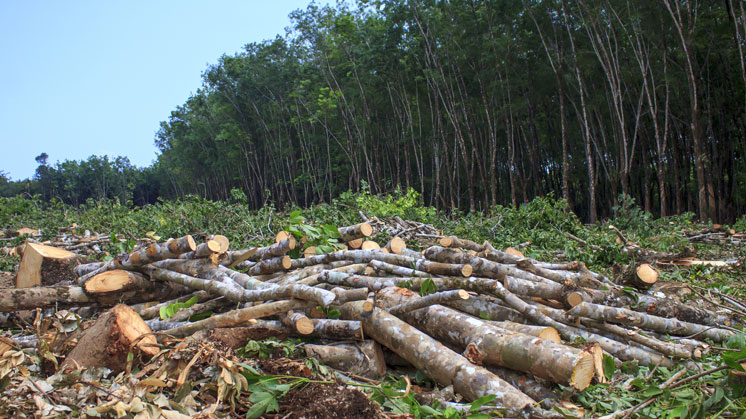
Deforestation involves the conversion of forests to other land uses, such as agriculture and infrastructure. Worldwide, more than half of forest loss is due to the conversion of forests into farmland, whilst almost 40% of such loss is attributable to grazing, according to a 2021 study by the Food and Agriculture Organisation of the United Nations (FAO).
-

Overfishing, intensive agriculture and mining
The exploitation of resources through fishing, farming and mining can not only damage the habitability of natural areas but also contribute to species extinction, posing serious threats to environmental balance and local economies.
-

Failure to value ecosystem services
When the benefits of nature are not accounted for it becomes easier for organisations to extract resources without taking into account the damage to biodiversity and without bearing the true cost.


Consequences of the overexploitation of natural resources
The uncontrolled consumption of natural resources has significant environmental consequences:
-

Environmental
The loss of habitats essential for flora and fauna and, consequently, the extinction of species. The International Union for Conservation of Nature (IUCN) reports that at present more than 42,100 species are at risk of extinction, meaning that 28% of the species assessed to date are threatened.
-

Economic
33% of the world's soil is moderately to highly degraded and more than 90% could be degraded by 2050, according to the Food and Agriculture Organisation of the United Nations (FAO). If the erosion of fertile soil continues at the same rate as it has done so far, the prices of agricultural products will inevitably soar.
-

Health
If we do not look after our forests, there will be fewer CO₂ sinks and, consequently, more air pollution. According to the World Health Organisation (WHO), almost the entire world's population (99%) breathes air that exceeds the quality limits recommended by the organisation itself, with low- and middle-income countries bearing the brunt of the consequences of air pollution.


Solutions to the overexploitation of natural resources
The future, as set out in the UN's 2030 Agenda for Sustainable Development, presents humanity with a dual challenge: to conserve the many forms and functions of nature and to create an equitable home for people on a finite planet. If we are to reverse this situation, we need, amongst other things:
-
Preserve natural capital
Restore degraded ecosystems and their services, halt the loss of priority habitats and significantly expand the global network of protected areas.
-

Improve production systems
Businesses must significantly reduce consumption and the volume of waste in production systems. Furthermore, these systems must be managed sustainably whilst promoting the use of renewable energy.
-

Consume more sustainably
Promote lifestyles, such as sustainable mobility, that leave a smaller environmental footprint. Another important habit is to avoid over-consumption of energy and prioritise sustainable and healthy consumption.
-

Redirecting financial flows
Governments must develop strategies that place a value on nature and natural resources, as well as taking responsibility for environmental and social costs. One exemplary measure is to support and reward companies that promote conservation, sustainable resource management and innovation in their operations.


What can each stakeholder do?
-

Governments
Governments must enact legislation to promote the protection of natural areas. Organisations such as the EU has set clear targets that will guide European environmental policy beyond 2050. They are channelling research programmes, legislation and funding towards this, with one of the main objectives being to transform the eurozone into a low-carbon economy.
-

Businesses
Businesses must apply the principles of circularity throughout their entire value chain, committing to the sustainable design of their products, innovating in production to optimise the use of resources and prioritising renewable energy over fossil fuels.
-

Citizens
People can help tackle this issue by changing their habits, such as practising responsible consumption, saving energy, travelling sustainably – whether by electric cars or bicycles – and reducing the waste they produce.



Measures to curb
the overexploitation of natural resources
LAWS AND POLICIES
to regulate the
exploitation of natural,
resources and establish
environmental impact
assessment as an
essential requirement
for entire projects

environmental protection initiatives

renewable
and non-polluting
energies
care to maintain
ecosystem health
AWARENESS-RAISING
of public transport
and bicycles

recycling: reduce,
reuse and recycle
education in schools

agriculture and
ecological tourism
RESPONSIBLE CONSUMPTION

How to reduce pressure on natural resources
Unlike phenomena such as global warming or rising sea levels, preventing the overexploitation of natural resources depends solely on proper management that encourages a change in habits among businesses and the general public.
-

Reducing demand for resources
To prevent waste, a direct solution to the overexploitation of natural resources is to focus on reducing fossil fuel consumption by opting for renewable solutions such as electrification. Furthermore, promoting the circular economy and a culture of recycling are key to mitigating pollution.
-

Protecting and restoring ecosystems
Restoring ecosystems reduces their vulnerability to climate change. This is achieved through improved sustainable water and soil management, promoting the conservation of natural habitats.
-

Measuring and managing impacts
Companies must identify risks through monitoring, studies and climate risk assessments of their activities. What’s more, they must implement monitoring systems that enable timely corrective action.
-

Driving regulatory and financial change
Governments must promote the creation of laws and incentives designed to encourage sustainable practices and prevent the overexploitation of resources by both companies and the general public. In Europe, the EU Taxonomy aims to support and drive the shift towards green investment by establishing a framework that determines which activities can be considered sustainable, thereby encouraging increased private-sector funding for the transition to climate neutrality.





Critical raw materials and the energy transition
The energy transition enables us to reduce our dependence on fossil fuels and move towards a world with lower emissions. However, this shift also increases demand for critical raw materials such as lithium, antimony, tungsten, copper and rare-earth elements, which are necessary for the production of batteries, electricity networks and other clean technologies.
This means promoting a more circular economy, where these materials are recycled and where traceability makes it possible to know where they come from and how they are extracted. This is a key issue, as according to the European Court of Auditors many strategic raw materials depend on just a few countries and recycling remains insufficient, which reinforces the need to invest in innovation, material substitution and monitoring tools to prevent these elements from becoming a source of pollution.
Overexploitation and climate change: a two-way relationship
The overexploitation of natural resources and climate change feed into one another. On the one hand the burning of fossil fuels exacerbates global warming; on the other, this phenomenon degrades essential resources such as water, soil and biodiversity, weakening the ability of ecosystems to absorb and store CO₂.
As a result, degraded ecosystems lose their ability to absorb CO₂, creating a negative feedback loop that exacerbates both the climate crisis and the pressure on natural resources.
In this context, the energy transition is one of the key drivers that can help mitigate these effects, provided it is carried out responsibly. Replacing fossil fuels with renewable energy helps to reduce pressure on the climate and ecosystems, but must be accompanied by sustainable land, water and raw materials management to prevent further environmental impacts.
Iberdrola's strategy to prevent the overexploitation of natural resources
Reducing emissions is a key lever for alleviating pressure on ecosystems, but it must be accompanied by a more efficient use of resources, circular models of production and consumption, the protection of biodiversity and the restoration of degraded areas. For this reason, at the Iberdrola Group, we have placed processes such as electrification and decarbonisation at the heart of our strategy, with the aim of reducing dependence on fossil fuels.
In line with this, we have established a business model in which renewable energy plays a fundamental role in ensuring the generation and supply of clean energy. Today we are global leaders in renewable energy sources, having reached 46,741 megawatts of operational renewable capacity by the end of the first quarter of 2026.
As well as reducing our carbon footprint we have drawn up our 2030 Biodiversity Plan, with the aim of integrating a conservation perspective into our projects (avoiding, reducing, restoring and offsetting impacts). This is to avoid developing facilities in areas of high ecological value, reduce pollution and restore affected habitats. What’s more, we are carrying out quantifiable monitoring of our impact using measurement systems that assess the effects on species and ecosystems where our infrastructure is located.
Projects such as East Anglia One, which involved the installation of two floating containers to collect plastic and some of the oils, detergents and fuels floating in the vicinity of Lowestoft harbour, aim to reduce pollution in our ecosystems.
Alongside these initiatives for the conservation and care of ecosystems, we are also prioritising the circular economy as one of our strategic areas of sustainability. At Iberdrola, we prioritise reducing the use of new raw materials through process efficiency, extending the lifespan of products and a firm commitment to the reuse and recycling of materials.
These strategies are complemented by the creation of Carbon2Nature, an initiative aimed at developing long-term conservation, restoration and sustainable management projects for nature that have a significant climate, environmental and social impact whilst helping to reforest ecosystems lost due to pollution and global warming.
Overexploitation: The end of natural resources
Would you like someone to tell you about it? Listen to this article. For those who want to change the world.