


A STEM future to transform energy and employment
The scientific and technological skills that are redefining the labour market
The rapid advancement of artificial intelligence, electrification, digitalisation and smart grids is changing the way we work across all sectors. In this context, STEM (science, technology, engineering and mathematics) professionals are essential for designing innovative solutions, operating critical infrastructure and moving towards a more sustainable energy model.
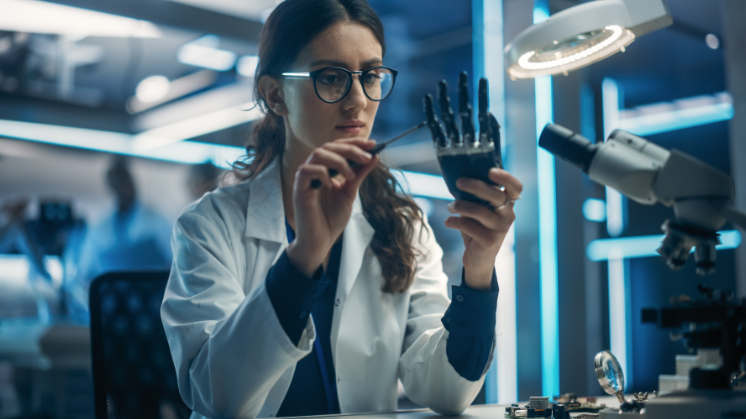
STEM talent is not just in demand in the technology sector: it is also a prerequisite for accelerating the consolidation of a sustainable energy model, strengthening security of supply and creating quality jobs.
Why are STEM profiles strategic?
The acronym STEM encompasses the disciplines of science, technology, engineering and mathematics. These fields account for a significant proportion of the skills required for automation, advanced data management, cybersecurity, artificial intelligence and the decarbonisation of the economy.
The World Economic Forum's Future of Jobs Report 2025 External link, opens in new window. identifies artificial intelligence and information processing technologies as among the trends with the greatest potential for organisational transformation. Alongside these, robotics and automation stand out, as do technologies linked to energy generation, storage and distribution
Where will employment grow the most? Emerging skills and occupations
Demand for technical roles will continue to grow rapidly, although not all opportunities will be concentrated in a single type of occupation. Digitalisation requires expertise in data, software and user experience; electrification requires engineering, storage, networks, electric mobility and advanced operations; and organisational resilience demands cybersecurity and risk management.
| Fast-growing jobs linked to technology and electrification | Main field |
|---|---|
| Big data specialists | Data and analytics |
| Financial technology engineers | Digital finance |
| Artificial intelligence and machine learning specialists | AI and automation |
| Software and application developers | Software |
| Specialists in electric and autonomous vehicles | Mobility and energy |
| Environmental engineers | Green transition |
| Renewable energy engineers | Sustainable energy |
Source: World Economic Forum, The Future of Jobs Report 2025.
The challenge: training and attracting talent for new STEM skills
The creation of STEM jobs goes hand in hand with a growing difficulty in filling certain roles. In the United States, projections from the Bureau of Labour StatisticsExternal link, opens in new window. for the decade 2024 to 2034 point to 8.1 % growth in STEM employment, well above the 2.7 % forecast for non-STEM occupations. In Europe, the mismatch between the demand for STEM profiles and the availability of qualified talent remains one of the challenges to competitiveness. To address this, the European Commission has launched the Skills Union and the Strategic Plan for STEM Education, with targets for 2030 aimed at strengthening basic skills, increasing the number of students on STEM pathways in vocational training and higher education and ensuring a greater presence of women in these fields.
| Training needs by 2030 | Estimated proportion |
|---|---|
| Will not require significant training until 2030 | 41 % |
| Will require training and will update their skills in their current role | 29 % |
| Will acquire new skills and the organisation will redeploy them | 19 % |
| They may not receive the necessary training | 11 % |
Source: World Economic Forum, The Future of Jobs Report 2025.
The gender gap in STEM: an opportunity for improvement
UNESCO points out that women remain under-represented in STEM careers, jobs and leadership roles. This gap limits the utilisation of all available talent and reduces the diversity of perspectives needed for innovation. Therefore, education policies, partnerships with businesses and early-stage guidance programmes are key to expanding opportunities.
Iberdrola: STEM skills for electrification
Iberdrola operates in a sector that is increasingly focused on innovation, smart grids, clean energy, storage, automation, data and cybersecurity. In 2025, the Iberdrola Group had a workforce of 45,400 professionals, recruited 4,500 new staff and dedicated 3.6 million hours to training, averaging 79 hours per professional. These figures reflect the Group's commitment to the continuous development of skills and underscore the importance of continuing to foster technical and STEM talent in an increasingly digitalised and innovative energy sector.
This growth is in line with the Policy on Sustainable Human Capital Management and the Prevention of Harassment, which promotes objective recruitment and development processes, equal opportunities, non-discrimination, accessibility, shared responsibility and continuous learning.


Programmes that bring together training, innovation and employment
-

Scholarships and advanced training
Master's scholarships and opportunities for university graduates in engineering, technology, energy and sustainability.
-

Neoenergia Electricians' Training School
Find out more about the Electricians’ SchoolTechnical training that encourages women to enter a traditionally male-dominated profession, recognised by the World Economic Forum as a global benchmark for diversity, equity and inclusion.
External link, opens in new window.
-

Women in STEM Chair
Find out more about the Women in STEM Chair Sustainability and MobilityA collaboration in Spain to promote STEM careers, particularly in vocational training linked to sustainable mobility.
External link, opens in new window.
-

Technology Outreach
Workshops, talks and activities on clean energy, digitalisation, AI, cybersecurity and new technologies.
-

Institutional partnerships
Participation in the STEAM Alliance for Female Talent, "Girls Standing up for Science", and recognition by AENOR as an organisation committed to STEM talent.


