


Interview with Manuel Cirauqui
“We are interested in documenting the transformation of the arts in light of a greater transformation: climate change”
Artistic practice has spent more than half a century responding to the environmental emergency. The exhibition 'Arts of the Earth' presented a vibrant map of historical and contemporary works that explored new materials, processes and ways of relating to ecosystems. Its curator, Manuel Cirauqui, shared with Iberdrola the key ideas behind the show and the impact he hopes it will have on visitors to the Guggenheim Museum Bilbao.
 Publication: December 2025
  Reading time: 10 minutes

Highlights of the interview:
- Soil as the cornerstone of survival.
- Art, the Anthropocene and cultural transformation.
- Living materials and non-extractive processes.
- Collaboration between artists, scientists and communities.
- The role of museums in the face of the climate emergency.
We spoke to Manuel Cirauqui, curator of the exhibition 'Arts of the Earth' Enlace externo, se abre en ventana nueva. , which opened on 5 December at the Guggenheim Museum Bilbao and could be visited until 5 May 2026. Sponsored by Iberdrola, the exhibition invited visitors to reflect on the relationship between art and the environment.
The exhibition examined more than five decades of artistic practices that highlight the importance of soil and natural resources as living elements, essential both for our survival and for redefining the very concept of an artwork from sustainable, non-extractive positions.
Through a careful selection of works, materials and projects, 'Arts of the Earth' connected different geographies and disciplines, from Land Art or conceptual art to performance. Cirauqui explained the key ideas.
"The works themselves are conceived to return to the soil; some of them are old enough to have done so on several occasions and are therefore regarded as historical references."
Manuel Cirauqui
Art, Earth and the survival of the planet
What does it mean for 'Art of the Earth' to be centred on “the survival of soil”?
Many of the works in the exhibition are created from materials that come from the uppermost, most accessible layers of the soil: leaves, branches, seeds, silt and so on. The works themselves are conceived to return to the soil; some of them are old enough to have done so on several occasions and are therefore regarded as historical references.
How do you expect visitors to react when seeing works that address care and repair of the planet through the language of art?
The language of art allows us to experiment, explore and make things visible. Each artist offers a perspective, with the common thread of care and attention towards materials, their future and their past. The only thing we can hope for – which is a great deal – is that the works and the project as a whole can transmit, or even infect, that empathy and that impulse to care and to observe.
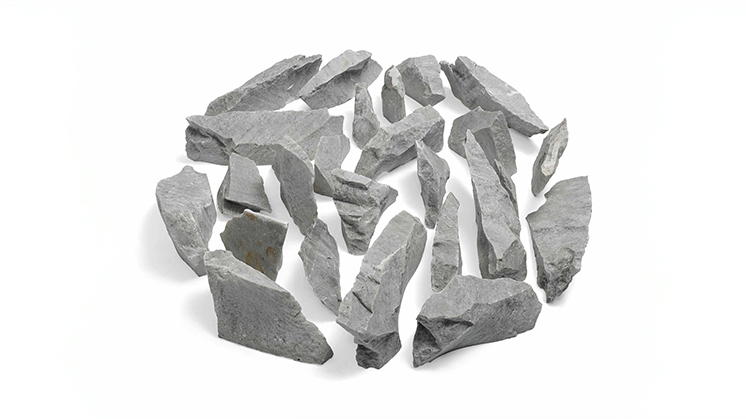
Splintered Marble Circle, 1987. Marble. By Richard Long. Courtesy of the Iberdrola Collection.
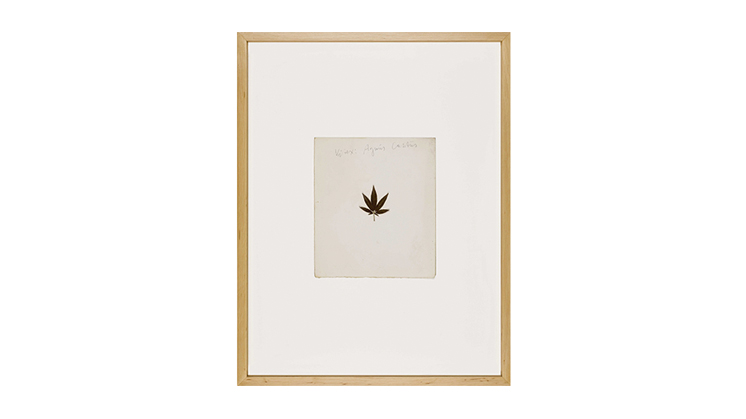
Vitex: Agnus Castus, 1972. Vitex Agnus Castus leaves on paper with pencil annotation. By Joseph Beuys. Courtesy of the Iberdrola Collection.
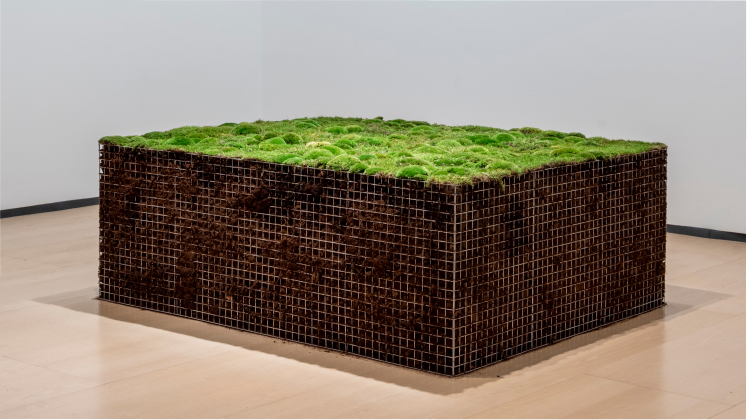
Volume for Lying Flat, 2016. Peat, green moss, soil and galvanized steel wire mesh. By Meg Webster. Courtesy of the artist and Paula Cooper Gallery, New York.
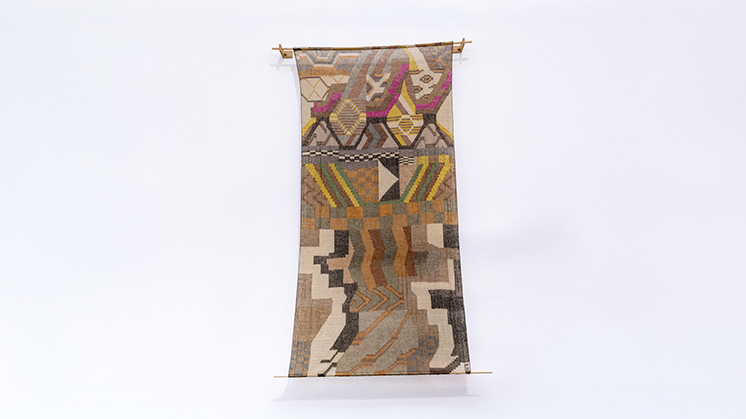
El poder de impregnar de nuestros colores al mundo [The Power to Imbue the World with Our Colours], 2025. Handwoven chaguar fibre (Bromelia hieronymi) dyed with leaves, roots and fruits from the Gran Chaco. By Claudia Alarcón. Courtesy of the artist and Cecilia Brunson Projects.
The evolution of environmental art and current challenges
The exhibition proposes a “reinterpretation of environmentally oriented art”. How has environmental art evolved from 1970 to today?
It is art in general that has evolved, in such a way that not only activist practices are sensitive to ecosystems, to the climate crisis or to the Indigenous communities that have survived and continue to survive globalised extractivism. These concerns are widespread; they affect us all and therefore resonate across every artistic language in ways that are increasingly expansive.
What challenges does art face when addressing urgent issues such as climate change and soil conservation?
The main challenge is continuity in the face of other urgencies, such as an economic crisis, and the constant pressure from interests that monetise climate denial.
Nature, the Anthropocene and Earth materials
How does the exhibition explore the connection between art and nature, especially through materials such as earth, wood, leaves and roots?
The notion of nature itself has been radically transformed by the advance of the climate crisis. The advent of the geological age known as the Anthropocene highlights two key ideas: that the “natural” world is irreversibly influenced by a process of human, or anthropic, construction on a planetary scale, and that the supposedly “human” or “artificial” world is deeply traversed by forces and affections that allow us to reconnect with Gaia – that is, with the very idea of the planet as a living and interconnected whole.
"The supposedly 'human' or 'artificial' world is deeply traversed by forces and affections that allow us to reconnect with Gaia – that is, with the very idea of the planet as a living and interconnected whole."
Manuel Cirauqui
Artistic legacies: from Land Art to the present day
Why do you think land-based interventions, exemplified by Land Art or Arte Povera, have become such an important reference for contemporary artists?
This exhibition seeks precisely to look at artistic practices linked to the reality of the Earth beyond the labels of movements and historical categories. Some of these practices were early enough, visionary enough, that we can now regard them as almost prophetic. And like many prophecies, they are not easy to understand immediately or literally. What interests us with this exhibition is documenting the visionary transformation of the arts in the face of an unavoidable, greater transformation that we may call climate change or the Anthropocene, which has been present in debates about the consequences of industrialisation for many decades.
Collaboration between art, science and the community
How important are collaborative processes that integrate disciplines such as agronomy, biology and chemistry within the artistic practices featured in the exhibition?
Artworks that integrate organic processes of formation or decomposition, that are conceived as part of a broader material cycle beyond our control, are collaborative in essence. It is true that 'Arts of the Earth' presents a significant number of works created collaboratively, such as those by Unión Textiles Semillas or the Campo Adentro collective, or the projects of Paulo Tavares (working closely with Amazonian communities) or Asunción Molinos Gordo (in collaboration with the Mutur Beltz cooperative), among many others. But many pieces with apparently individual authorship are also collaborative at a deep, more-than-human level.
"Having a major sponsor like Iberdrola is always a significant help for an ambitious exhibition project."
Manuel Cirauqui
Sponsorship, sustainability and institutional commitment
How significant is Iberdrola’s sponsorship for this exhibition, given the close relationship between sustainability and the artistic practices presented?
We have been fortunate to receive support from Iberdrola, but we have also been granted access to its Collection, which is a testament to its commitment and from which we have included three pieces in our exhibition. Having a major sponsor is always a significant help for an ambitious exhibition project; moreover, when that sponsor has the sensitivity to understand the essence and the driving desire behind the project, the project is strengthened and able to take on the challenge with much greater confidence thanks to the enthusiasm shared.
The role of museums
What role do you think the Guggenheim Museum Bilbao can play in the future in encouraging reflection on the environment through art?
Museums such as the Guggenheim Bilbao are key agents in helping millions of visitors become aware of the complexity and potential of the major issues that define our time. The future of ecosystems and planetary health is one of the main issues – if not the broadest and most unavoidable – that today’s younger generations and those who follow them will have to confront, but also those of us who thought we understood the world in the 20th century and must now entirely reconfigure our understanding of it.
That said, the Museum is not only a mechanism for learning, discovering or becoming aware. The Museum has the responsibility to redefine itself in light of new changes and challenges, and it also serves as a laboratory, a place where we can foster experimentation and change, creating prototypes collaboratively with artists, designers, architects, scientists, activists and technologists. 'Arts of the Earth' seeks to activate all these dimensions of museum work.
Iberdrola and the Guggenheim Museum Bilbao: promoting contemporary culture since the museum was born
The collaboration between Iberdrola and the Guggenheim Museum Bilbao is one of the strongest examples of support for contemporary culture in Spain. This partnership, which dates back to the museum’s opening in 1997, has helped promote art and contemporary creativity as tools for social transformation. Both institutions share a vision that sees culture as a driver of knowledge, creativity and social cohesion, encouraging access for increasingly diverse audiences. For Iberdrola, this commitment forms part of its dedication to social sustainability and to the cultural development of the communities in which it operates.