News
-
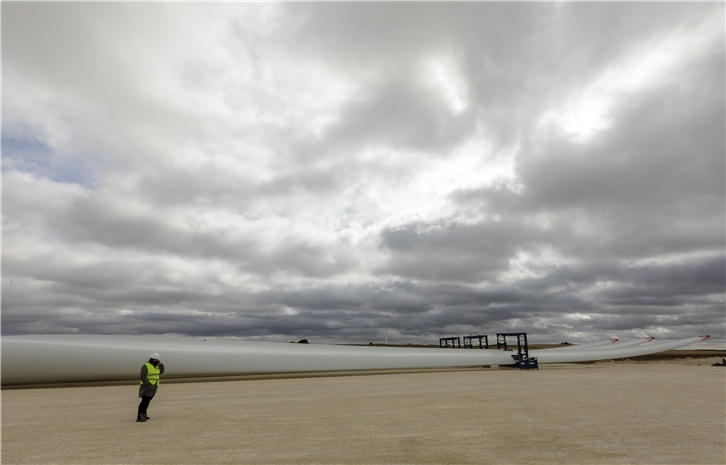
04/11/2020Iberdrola commences the installation of Spain’s most powerful wind farm Iberdrola has started installing Spain’s largest and most powerful wind turbines on the Herrera wind farm, with 63 MW capacity, in Castilla y León. The turbines have a unit power of 4.5 MW, which is seven times more than the first wind turbines installed in our country more than two decades ago. The Hererra complex, with 63 MW of installed capacity, is made up of three wind farms - La Huesa, Valdesantos and Orbaneja— and a total of fourteen SG 4.5-145 wind turbines with 70-metre blades offering a diameter of 145 metres. They are three times the size of the original wind turbines and are twice as tall as Burgos Cathedral. Iberdrola is investing €70 million in the development of this wind complex, which is helping to stimulate the region’s industrial sector. The development will create jobs for almost 800 people and the field work and civil engineering works have been entrusted to local companies, such as the Burgos-based Copsa building company. In addition, most of the components of these wind turbines are made in Spain, including the multipliers, in Burgos; the gondolas, in Soria and the generators, in Cantabria. The size of these components means that building them is a complex process, with up to 100 daily deliveries of up to 76 metres in length with different materials and 180-metre high cranes to lift components, some of which weigh more than 155 tonnes. The Orbaneja and La Huesa wind farms will be in the municipal areas of Isar, Las Quintanillas, Rabé de las Calzadas and Estepar. The former will consist of seven wind turbines, with a total of 31.5 MW of installed power, while the latter will have four turbines that will add a further 18 MW. Valdesantos will be built in Estepar and will have three wind turbines with a total installed capacity of 13.5 MW. The Herrera Complex will be operational by 2021 and will generate enough power to supply a population equivalent to 60,000 homes per year, while avoiding 50,000 tons of CO2 emissions per year. Committed to Castilla y León The company is advancing in its commitment to clean energy in Spain, incorporating cutting-edge technologies to provide more competitiveness and sustainability to its renewables projects. With this project, it is ratifying its commitment to Castilla y León and its leadership in renewable energies in the region, where it already operates 5,100 MW. Of this, 1,500 MW are from wind, making this the autonomous community where the most ‘green’ megawatts have been installed by the company. Along with the Herrera Complex, Iberdrola is building the Buniel wind farm complex in Burgos, in collaboration with Caja Rural de Soria, and the Valdemoro Park, with a total of 164 MW, which makes it one of the largest in Castilla y León. Last year, it commissioned the BaCa (Ballestas and Casetona) wind farm complex, with 69.3 MW and it is making strides with the first photovoltaic projects in the region, with a total of more than 400 MW. Iberdrola announced some months ago that it will develop more than 1,800 MW in the community over the coming years in renewable projects - wind and photovoltaic - for which it will allocate investments in excess of €1.3 billion. These resources will galvanise the industrial sector and create 18,000 jobs, according to estimates by the National Integrated Energy and Climate Plan (PNIEC)*. READ MORE
-
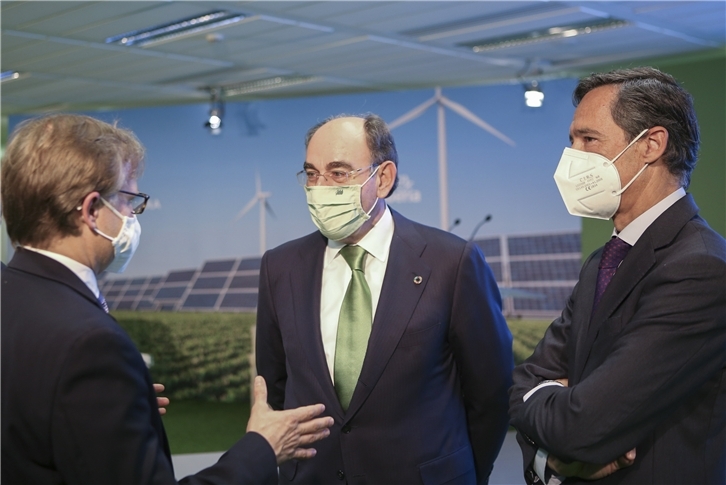
03/11/2020Iberdrola advances Europe’s largest green hydrogen project with electrolyser award Iberdrola is making progress on Europe's largest green hydrogen complex for industrial use, located in Puertollano (Spain) with the selection of European company Nel Hydrogen Electrolyser - a division of Nel ASA - as its preferred supplier for the construction of the project’s key component, a hydrogen production system using electrolysis. Nel's Proton PEM® solution, deployed all across the world for several decades, will now be used a as part of a commercial green hydrogen project, with 20 MW of installed capacity. The electricity utility is also working on leading the creation of a supply chain in Spain to develop electrolyser technology. The €150 million green hydrogen project in Puertollano (Ciudad Real), the result of an alliance between Iberdrola and Fertiberia, will be operational in 2021. The complex will comprise a 100-MW solar photovoltaic plant, a lithium-ion battery system with a storage capacity of 20 MWh and a system for producing hydrogen by electrolysis (20 MW). Its construction will create 700 jobs and, once operational, will prevent the emission of 48,000 tCO2/year[1]. The green hydrogen produced will be used in the Fertiberia ammonia factory in the same town. The plant is already one of the most efficient in the European Union, with a production capacity of over 200,000 t/year. Fertiberia will adapt its plant to the use of green hydrogen for manufacturing green fertilizers, reducing the needs of natural gas in the plant It will be the first European company in the sector to develop a large-scale experience in the generation of green ammonia. The plant is being built in a strategic location, an important industrial hub which includes the National Center of Hydrogen that advised both companies during the process. Iberdrola and Fertiberia have recently presented an innovative proposal which includes the development of 800 MW of green hydrogen at the Fertiberia plants in Puertollano (Ciudad Real) and Palos de la Frontera (Huelva) by 2027. The initiative represents an investment of €1.8 billion over the next seven years and could make Spain an industrial leader in green hydrogen and the first country with 100% production of ammonia for completely green fertilizers. The project is the result of a private-public partnership, created with the same ambition that the Spanish Government has shown in its Green Hydrogen Roadmap and would require European Recovery Fund support for the implementation of the last three phases. [1] Including the reduction of emissions in the processes at the Fertiberia industrial plant READ MORE
-
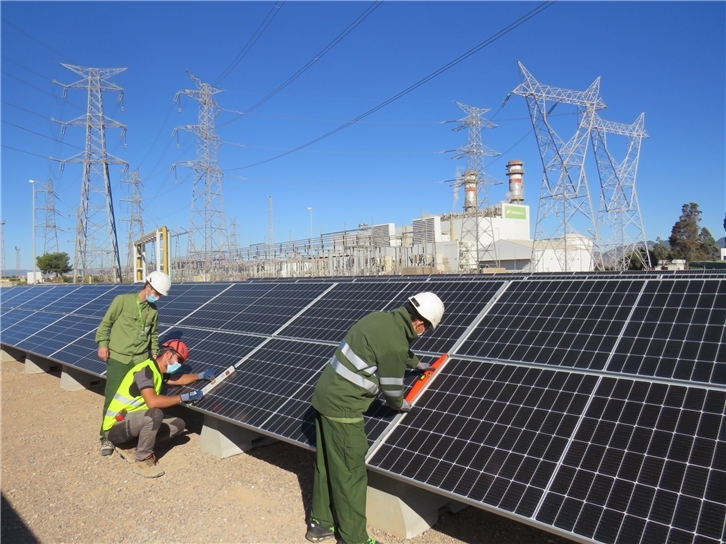
01/11/2020Iberdrola invests in renewables at the Castellon Combined Cycle Plant Iberdrola has finished installing 7,800 photovoltaic modules in the solar power facility it has under construction at the Castellon Combined Cycle Plant. This is an innovative project for Spain that will see €2.3 million invested in generating 3.5 megawatts (MW) of renewable power. Moving forward in its ambition to spearhead the energy transition in Spain and strengthen its engagement in the decarbonisation of the economy, the company will prevent 3,000 tonnes of CO2 from being released annually once the facility is up and running, which is expected to happen by the end of this year, generating 5,500 megawatt hours per year (MWh/year) of clean energy. The initiative is aligned with Iberdrola’s determination that electrification will leverage economic recovery and boost employment in the post-Covid scenario. So far, around fifty workers employed by different companies have played a part in the solar power plant’s construction, these include regional suppliers such as Ibérica de Aparellajes who are supplying the sectioning, delivery and measurement centres and the transformer station, and the local company Transportes y Excavaciones Vicente Prades who have been assigned to take care of the civil works to adapt the site. The administrative authorisation to undertake these works came through in late July, and in just three months Iberdrola has quickly prepared the ground on a site that covers approximately five hectares and installed 7,800 photovoltaic modules and the infrastructure they rely on. Over the coming weeks, work will focus on positioning the converters and the electric infrastructure to supply them. Once again, Iberdrola has chosen the Spanish region of Castellon to launch another pioneering project, as it did with the first smart grid to be set up in Spain. There are also plans to install solar power facilities at the company’s combined cycle plants in Arcos de la Frontera (Andalusia), Castejón (Navarre), Aceca (Castile-La Mancha), Castellón (Valencia region), Santurtzi (Basque Country) and Escombreras (Murcia region), which are expected to total 32.5 MW and involve an overall investment of €21 million. In its tireless efforts to help care for the environment, this initiative will make Iberdrola’s natural gas plants more sustainable, as implementing these solar facilities would prevent 25 thousand tonnes of CO2 from being released into the atmosphere, estimating a production of 50,000 MWh/year of clean energy from the sun. That production exceeds the energy consumed by all of the company’s combined cycle plants put together, including their equipment in terms of engines, pumps, ventilators and coolers, as well as lighting. As Iberdrola continues its efforts to combat climate change, it will be investing €10 billion worldwide this year in projects, industrial activity throughout the value chain and innovation in areas such as renewable energy, smart grids and large-scale storage systems. The company is Spain's leader in renewable energies, with an installed wind capacity of more than 6,000 MW and over 16,500 MW in renewables as a whole; totalling more than 32,700 MW worldwide and making its generation facilities among the cleanest in the energy sector. READ MORE
-
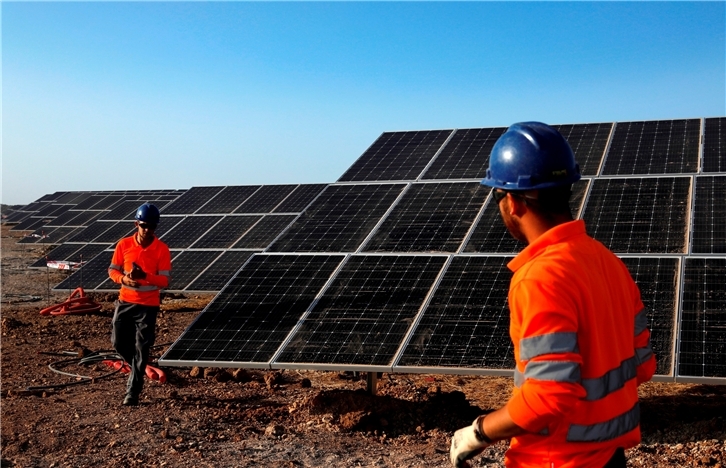
30/10/2020Iberdrola finalises arrangements to build its first major solar power project in the Valencia region Iberdrola is making progress towards building what will be its first major solar power project in Spain’s Valencia region: the Cofrentes Photovoltaic Farm, which entails an investment of over €100 million. This facility, located in the municipal areas of Ayora and Zarra, will have an installed capacity of 200 megawatts (MW) and will help to stimulate local industry by involving up to 600 professionals in its construction. The plant will be located in the Ayora-Cofrentes valley and feature 445,000 photovoltaic modules covering approximately 250 hectares across the municipal areas of Ayora and Zarra. The plan also includes building an electricity distribution substation, which would be located in Ayora municipality on the photovoltaic facility, as well as the electrical infrastructure needed to transport solar power and connect it to the national grid. Once up and running, it will generate enough clean energy to power 100,000 households per year and prevent emissions of 63,000 tonnes of CO2 every year. The project also includes building a collection substation in Jalance as part of the transmission infrastructure from the Cofrentes hub, which would comprise one transformer and potentially grow to include two more depending on how the renewable energy projects in the area progress. Iberdrola is helping to consolidate a model in which Valencian companies and new employment look towards key sectors for the future, including renewable energies. The company’s commitment was conveyed barely two months ago by its chairman, Ignacio Galán, when the president of the Valencia region, Ximo Puig, visited Iberdrola’s facilities in Valencia. Mr Galán took the opportunity to explain how the region has “everything it takes to continue spearheading the transformation of the energy system with more renewable energy” and shared his wish to “keep on growing, to further enhance the region’s industrial fabric, generate employment and bring added value to the people of Valencia”. Iberdrola already manages over 2,000 MW of renewable installed power in the Valencia region by producing hydroelectricity at the Cortes-La Muela complex, the largest pumping plant in Europe. Renewable energies to activate the recovery Iberdrola is convinced that the recovery of the economy and employment will have to be green. This commitment has led it to earmark record investments this year of €10 billion in renewable energy, smart grids and large-scale energy storage systems, after having allocated €25 billion since 2001 in Spain – rising to €120 billion worldwide. The company is Spain's leader in renewable energies, with an installed wind capacity of more than 6,000 MW and over 16,700 MW in renewables as a whole; totalling more than 33,800 MW worldwide and making its generation facilities among the cleanest in the energy sector. READ MORE
-
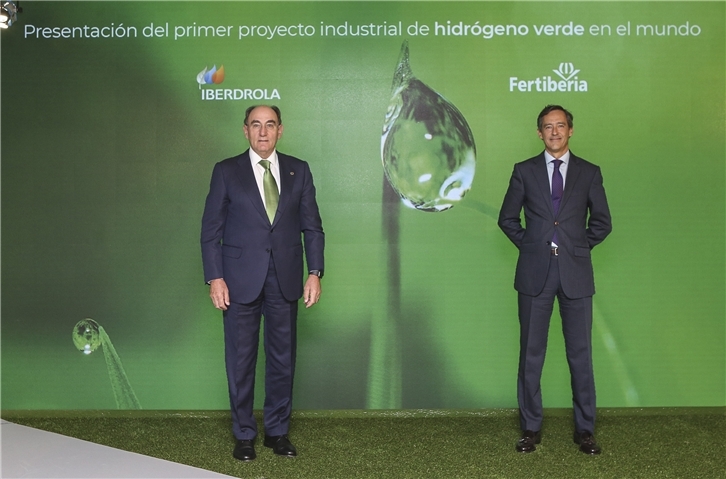
28/10/2020Iberdrola and Fertiberia place Spain at the forefront of green hydrogen in Europe, with 800 MW and €1.8 billion investment projected by 2027 The Green hydrogen industry has been boosted with a new alliance between Iberdrola and Fertiberia, which seeks to turn Spain into an industrial leader of a technology that will be fundamental to delivering climate neutrality. The partnership could see the installation of 800 MW of green hydrogen production capacity, with € 1.8 billion investment over seven years. In the next year the partners will commission their first plant in Puertollano , becoming Europe’s largest green hydrogen complex for industrial use. The innovative partnership includes plans to develop three additional projects between 2023 and 2027, in the Fertiberia plants of Puertollano (Ciudad Real) and Palos de la Frontera (Huelva) which could deliver 40 times the capacity of the first plant. This morning’s announcement was made by Ignacio Galán, Chairman of Iberdrola, and Javier Goñi, Chairman of Fertiberia. "This great project that could turn Spain into the first country to obtain 100% of its ammonia production from green energy sources.” The project is the result of an alliance "which puts both companies’ capabilities at the disposal of an unprecedented transformation process", said Galán. "An alliance that is not based on mere intentions, but on concrete actions. Once again, we are pioneering the implementation of a new clean technology, green hydrogen, and we are doing it together with the best partner, Fertiberia,” he added. Galán highlighted the European Union's green hydrogen strategy. "These are ambitious plans that aim to put Europe at the top of the world league of this technology," said the Chairman of Iberdrola, "and they require industrial companies willing to face up to the transformation of their production processes; a supply chain ready to fabricate the infrastructure for electrolysis on a large scale, with increasingly efficient and competitive equipment- The ambitions need companies with sufficient investment and execution capacity to generate and supply the required capacity of green energy; and support from the European Union to make these projects a reality". Javier Goñi explained that the alliance with Iberdrola makes Fertiberia "the first company in the industry that feeds its large plants with green hydrogen, thanks to local renewable sources that will also supply our electricity consumption needs". This project also allows Fertiberia to "show the way forward to the rest of the operators". With this "strategic and decisive" step, fertilizers will be manufactured with a high level of effectiveness and environmental efficiency, reducing greenhouse gas emissions, as required by the future Common Agricultural Policy. "More than 50% of our turnover already comes from high added value products, a percentage that will exceed 60% in 2023", highlighted Goñi, for whom the agreement with a European energy champion like Iberdrola "helps to promote the Spain brand as an international symbol of innovation and technological leadership". Creation of 4,000 jobs through 500 local suppliers Iberdrola's comprehensive project places the group at the forefront of the new technological challenge posed by the production and supply of hydrogen from 100% renewable sources. The plan would deliver 800 MW of electrolysis, equivalent to 20% of Spain´s national target - which envisages the installation of 4GW by 2030 - and would ensure that around 25% of the hydrogen currently consumed in Spain is emissions free. "Our green hydrogen plan is a project linked to green investment, which avoids the emission of more than 400,000 tons of CO2 into the atmosphere and helps to achieve climate neutrality", explained Galán. These projects would contribute to the development of the entire value chain, creating almost 4,000 qualified jobs - 2,000 of them by 2023 - through 500 local suppliers. The plan will invigorate an industrial hub with high growth potential, such as the manufacturing of electrolyzers in Spain. It reduces energy dependence and consumption of fossil fuels while promoting economic and social development, particularly in regions that face economic challenges such as Castile-La Mancha and Andalusia. As well as contributing to the reactivation of industry and the economy, the innovative proposal also includes positioning Spain as a technological benchmark in the production and use of green hydrogen in Europe, especially in the field of electrolysis. The investment would contribute to advancing the technological maturity of green hydrogen and turning it into a solution for efficient decarbonization in the medium term, both for industries that use it as a raw material and for processes that are difficult to electrify, such as heavy transport. The project is the result of private and public collaboration, born with the same ambition that the Spanish Government has shown in its Green Hydrogen Roadmap. For the implementation of the last three phases, support from the European Recovery Fund would be required. "To get out of this crisis we need concrete initiatives, which allow us to advance in the much-needed green recovery", explained Galán. In this sense, the Chairman of Iberdrola has expressed his wish that "this project receives the necessary state and European support to get it up and running and, thus, position Spain and Europe at the vanguard of a new technology that is essential for decarbonization, leading the way to its full commercial competitiveness". The largest green hydrogen complex for industrial use in Europe is underway In 2021, Europe’s largest green hydrogen complex for industrial use will be operational in Puertollano, following investment of €150 million. The complex will comprise a 100-MW solar photovoltaic plant, a lithium-ion battery system with a storage capacity of 20 MWh and one of the largest systems for producing hydrogen by electrolysis (20 MW). Its development and construction will generate 700 jobs. Once operational, it will prevent the emission of 39,000 tCO2/year. Iberdrola is accelerating the construction of this innovation project and, in addition, has already submitted an application to the Innovation Fund for European aid. The green hydrogen produced will be used in the Fertiberia ammonia plant in Puertollano. The plant is already one of the most efficient in the European Union, with a production capacity of over 200,000 t/year. Fertiberia will adapt its plant to the use of green hydrogen for manufacturing green fertilizers, reducing the needs of natural gas in the plant by more than 10%. It will be the first European company in the sector to develop a large-scale experience in the generation of green ammonia. The plant is being built in a privileged location, an important industrial hub which includes the National Center of Hydrogen that advised both companies during the process. Ambitious electrification plans are turning Europe into a global benchmark Spain and the European Union are making progress in the electrification of their economies to achieve full decarbonization. The contribution of electricity to energy consumption today barely exceeds 20% of the total and should grow three-fold in just 30 years if climate objectives are to be met. In parallel, there are some energy uses that, for technological reasons, are difficult to electrify. This is the case of high temperature industrial processes and heavy transport. For those, the production of green hydrogen from electrolysis - using renewable energy - is a key factor in the path towards climate neutrality in 2050. Aware of this challenge, but also of this great opportunity, the European Union and the Government of Spain have launched strategies to promote green hydrogen. The EU aims to have 40 GW of green hydrogen electrolyzers in just ten years, while in Spain the goal is 4 GW of installed capacity. READ MORE
-
26/10/2020“Our story should be a lesson to companies wanting to refocus their strategies in a way that benefits all stakeholders and encouraging a more sustainable way of life” In an article in the Harvard Business Review , Iberdrola group chairman Ignacio Galán remembers how he joined the company, when it was Spain's number two utility, to lead the transition to more sustainable energy sources. In those days, he explains, Iberdrola’s assets, “unlike those of many other energy companies at the time, were primarily sustainable: hydro and nuclear. But it also had some oil- and coal-fired power-generation plants, and its footprint was limited to Spain and a bit of Latin America”. Galán says that the last two decades have been “the most rewarding” of his career, because during this period the company has expanded into dozens of countries on four continents, supply more than 100 million people with power, create one of the world's largest wind energy companies and close all its oil and coal plants. This growth is based on clean energy and reducing operating emissions by 50 % by 2030, which has been no easy task. “But it was the right decision”, he insists. Galán is sure that “our story should be instructive for any company interested in remaking its strategy in a way that benefits all stakeholders and promotes more-sustainable living”. READ MORE

-
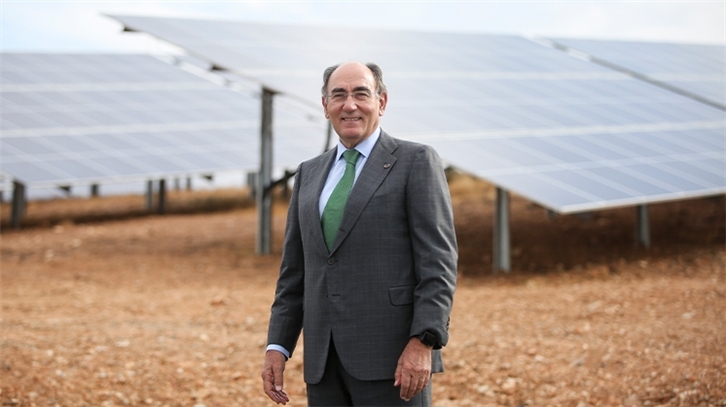
26/10/2020Ignacio Galán, the engineer who transformed Iberdrola into the ‘major new utility' To mark the presentation of Iberdrola’s results for the first three quarters of the year, the Financial Times has published a profile of the group chairman , Ignacio Galán, which analyses how he has succeeded in growing the company from a second-tier Spanish conglomerate into the world’s third largest utility. In the piece, Galán speaks with pride of having been “pioneers in the energy revolution for 2 years ”. “When nobody believed that electricity could be produced with clean sources, and the world thought that coal would be around for centuries... And that oil and gas were absolutely essential, we were the only ones to say that we could generate and produce energy from clean sources, he says. READ MORE
-
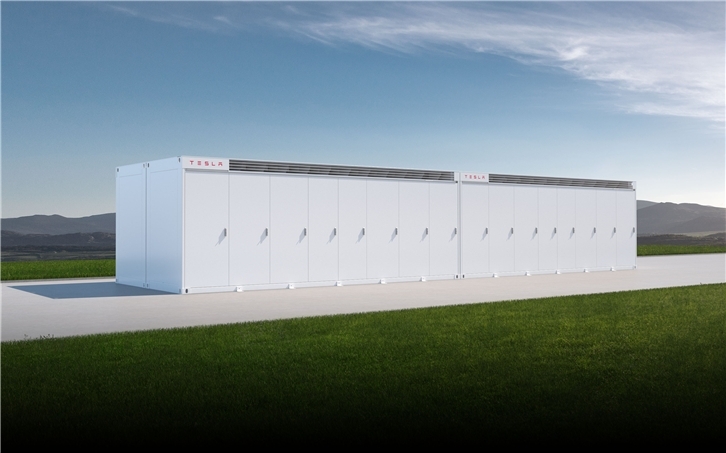
25/10/2020Iberdrola to operate a giant storage system with network batteries in Australia Infigen has reached an agreement with local distributor TransGrid to operate Wallgrove's battery powered energy storage system in New South Wales, called the “Wallgrove Network Battery”. The battery will have a power of 50 MW, capable of producing 75 MW, and Infigen will manage it for a period of 10 years, after its commissioning. Wallgrove will be owned, built and maintained by TransGrid and commercial operations are expected to commence in the second half of 2021. Infigen will have dispatch control of the Wallgrove Grid Battery and will receive all spot market revenues related to its operation, which will include revenues from energy auctions and from the eight Frequency Control Ancillary Services (FCAS) markets using Tesla's Autobidder platform. Infigen will pay TransGrid a fee for the use of the Wallgrove Grid Battery and will be responsible for the costs related to the distribution and energy purchased. TransGrid will manage and pay for the maintenance of the battery on the Wallgrove network. The initiative allows Infigen to increase its backup portfolio, as well as significantly increase its renewable energy capacity, by buying and selling clean energy to customers under supply contracts. The Wallgrove battery will bring strength to the network and stability in the energy supply system in this state. TransGrid's investment for Wallgrove Grid Battery is supported by funding from the Australian Renewable Energy Agency (ARENA), as part of ARENA's Advancing Renewables Program, and from the New South Wales Department of Planning, Industry, and Environment ('DPIE'), as part of DPIE's Emerging Energy Program. Infigen already has a 25 MW battery which is located at the Lake Bonney wind farm in the state of Virginia. Australia, a new growth platform Iberdrola has targeted Australia as a growth platform following the purchase of Infigen. The operation allows the company to enter an expanding market, through the acquisition of one of the country's leading renewable energy companies and is aligned with its strategy of consolidating its position as the world's largest renewable energy company by adding new projects to its portfolio. Following the operation, Iberdrola has become one of the leaders in the Australian market, with the operation of more than 800 MW of solar, wind and storage batteries in the country, including own and contracted capacity, and a significant project portfolio: 453 MW under construction (including Port Augusta) and more than 1,000 MW in various development phases. Last year, Infigen increased its production of renewable energy sold by 10% to 1,959 GWh. Its sales of renewable energy have increased by 40% in the last three years. In addition, its annual revenues grew by 3% to $235.6 million. Iberdrola has recently begun construction of the Port Augusta hybrid wind-solar project in South Australia, with a capacity of 317 MW (210 MW wind and 107 MW solar). With an investment of $500 million, it is expected to become operational in 2021. Approximately 200 jobs will be created during its construction and 20 will be for its operation and maintenance. The purchase of Infigen complements the project by permitting the sale of the energy produced in this complex to industrial clients in Australia. Renewable energy in Australia continues to increase its market share and is expected to accelerate its growth over the next ten years. According to the 2019 Australian Energy Report, 21% of electricity production will come from renewable sources, with solar production growing by 46% and wind production by 19%. By 2030, it is projected that emissions from the power sector will fall by 23% and the share of renewable energy in the generation mix are projected to reach 48%*. *Source: https://www.minister.industry.gov.au/ministers/taylor/media-releases/record-new-renewable-capacity-2019 READ MORE