


Jai Alai: the Basque legacy in the US
How the world's fastest sport conquered frontons across the United States
Jai Alai frontons in Miami or Rhode Island? Although this may sound surprising today, during the 1960s and 1970s this Basque sport enjoyed a genuine golden age in the United States, with packed stadiums and television broadcasts that turned it into a mass phenomenon. From its roots in the Basque Country to its journey across the Atlantic, Jai Alai forms part of Spain's legacy in US history. At Iberdrola, we are helping to recover and share this legacy through programmes such as ‘Desvelando memorias’.

Jai Alai in five key facts
- Basque origins. Jai Alai originated in the Basque Country in the 19th century as an evolution of other forms of Basque pelota.
- An international name. In the Basque Country, this sport is called zesta punta, but outside the region it is popularly known as Jai Alai, a Basque expression meaning ‘joyful festival’.
- A unique cesta. Its most distinctive feature is the xistera or cesta, traditionally woven from wicker and attached to the player's arm. The pelotari uses it to catch the ball, build up momentum and hurl it against the fronton wall.
- Extraordinary speed. The cesta allows players to propel the ball at tremendous speed. Throws exceeding 300km/h have been recorded, making this one of the fastest sports in the world.
- The golden age in the US. During the 1960s and 1970s, Jai Alai became hugely popular in the US, particularly in Florida. Frontons attracted thousands of spectators and Jai Alai became a sporting spectacle closely associated with betting.
Christmas 1975: the Miami Jai Alai fronton attracts 15,500 spectators. Everyone is dressed in their finest clothes because the venue is the place to be. With 16 frontons hosting matches every day, Basque pelota is enjoying its golden age in Florida and attending matches has also become a way of displaying social status.
Jai Alai became one of the most popular betting sports in the United States and generated more money than horse racing. It was promoted as the fastest and riskiest sport in the world, and with good reason: the ball travels at speeds well in excess of 300km/h.
This story, closely linked to the Basque presence in the US, was also one of those brought back to light by Iberdrola through ‘Memory Regained’, the exhibition we presented in 2017 in Bilbao. Today, it continues to form part of our work to recover our shared history through initiatives such as ‘Unveiling Memories’. But what exactly is Jai Alai and where did it originate? How did it reach the US? We take a look at some of the key facts about this sport.
What is Jai Alai?
Jai Alai is one of the most spectacular forms of Basque pelota. It is characterised by the use of an elongated, curved, concave wicker basket called a cesta, which is attached to the hand of the player (pelotari). Using this basket, players hurl the ball against a fronton wall at speeds that can exceed 300km/h, making it one of the fastest sports in the world. The aim is to catch and return the ball before it bounces twice on the ground, always seeking to make it difficult for the opponent to return.
The name Jai Alai is a Basque expression meaning “joyful festival”. It became the name by which the sport gained popularity in the US and in North American frontons.
The history of Jai Alai: from the Basque Country to the US
Jai Alai originated in the Basque Country as an evolution of traditional pelota, played by hand or with paddles. Towards the end of the 19th century, some craftspeople and pelotaris began experimenting with an elongated, curved wicker basket that fitted the hand and made it possible to throw the ball with much greater force and speed. This innovation transformed the game and gave rise to one of the most spectacular and fastest forms of the sport.
The arrival and rise of Jai Alai in the US
The arrival of Jai Alai in the US was closely linked to the Basque diaspora in the early 20th century and, above all, to the enormous popularity it had previously achieved in Cuba. From Havana, Basque entrepreneurs and players saw an opportunity to bring this spectacle to cities in the southern US, particularly Florida, where frontons began opening in the early 20th century. Over time, the sport also took hold in other states, such as Rhode Island, spreading along the East Coast.

This was where the golden age of Jai Alai began. Americans were drawn to frontons less by their interest in the sport itself than by the opportunity to bet, as gambling was still heavily restricted at the time. In fact, organised crime tried to take control of this lucrative business and there were even reports of match-fixing. Frontons became veritable temples of entertainment, with thousands of people following matches broadcast on television. The 1960s and 1970s became known as the ‘golden age’ of Jai Alai. For many Americans, the sport represented something exotic and appealing: a fast-paced and spectacular European sport, combining tradition with the ceremony of modern sporting entertainment.
From success to decline
The decline came following a players' strike (1988-1991) that lasted three long years. Several frontons closed and, by the time players returned to the courts, competition had increased as licences for casinos and other forms of gambling had been expanded.
Beyond its sporting dimension, Jai Alai left a significant cultural mark. In cities such as Miami, it was part of social life and community identity for decades and helped raise the international profile of a sport with Basque roots. Although it gradually lost some of its prominence to other mass-market sports, its legacy lives on as an example of how a local tradition can cross borders and become a global phenomenon.


The story of Jai Alai continues: the international revival of the Basque sport
The history of Jai Alai is a story of tradition and adaptation. Over the years, the sport has explored new ways of reaching audiences without losing its essence. In the United States, initiatives such as the World Jai-Alai League have championed revamped competition formats, more dynamic matches and streaming broadcasts to attract new audiences. These developments coexist with the long-standing history of Jai Alai in Florida, where frontons once occupied a prominent place in social and sporting life.
In the Basque Country, Jai Alai forms part of the region's sporting and cultural heritage. Frontons in towns such as Gernika and Markina-Xemein keep this tradition alive through competitions, schools and activities linked to clubs and federations.
The sport's renewal is also reflected in the growing presence of women in competitions, with a dedicated professional category and new generations of pelotaris broadening the range of role models. The passing on of knowledge between generations, the arrival of new male and female players and the promotion of training initiatives all help preserve the sport and secure its future.
Iberdrola's commitment to recovering our shared history
The history of Jai Alai forms part of the cultural ties connecting the Basque Country and the US. This connection is particularly significant for Iberdrola, whose roots lie in Bilbao and which, from this city, remains committed to recovering and sharing Spain's legacy in US history.
It is within this context that ‘Unveiling Memories’ was developed. This project aims to recover, research and share lesser-known episodes from the shared history of Spain and the US, bringing them closer to new generations. Its mission is built around four key areas:
-

Researching and recovering stories and key figures
Bringing to light stories and people who have not always featured prominently in historical accounts.
-

Sharing and highlighting this historical and cultural heritage
Through initiatives that make knowledge more accessible.
-

Building new connections between Spain and the US
By recognising our shared history.
-

Passing this history on to new generations
To keep the ties between the two countries alive.


Jai Alai, part of Iberdrola's ‘Memory Regained’ exhibition (2017)
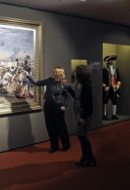
One of the main expressions of this commitment was ‘Memory Regained’, the exhibition that Iberdrola presented in 2017 at Torre Iberdrola in Bilbao. The exhibition explored Spain's presence in US history and dedicated one of its rooms to Basque sport as part of a broader account of Spain's contribution to the country.
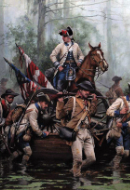
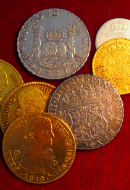
Featuring more than 200 works of art, documents and objects, ‘Memory Regained’ helped bring to light episodes and key figures from Spain's contribution to US history that have not always featured in the best-known historical accounts.
The project subsequently continued in New Orleans and Washington (US) with ‘Recovered Memories’ (2018) and, as part of this ongoing work to recover and share our shared history, through the ‘Desvelando memorias’ project, which has been expanding its reach to new audiences since 2017.