‘Memory Regained’: the exhibition that brought Spain's legacy in the US back into the spotlight
More than 200 exhibits to rediscover Spain's legacy in US history
The exhibition' Memory Regained' was one of the first major milestones in the initiatives developed by Iberdrola to highlight Spain's presence in the US. Held at the Torre Iberdrola in Bilbao in 2017, it brought together more than 200 works of art, documents and artefacts, with a particular focus on the contribution of Basque sailors and merchants. In 2018, this initiative continued with 'Recovered Memories', an exhibition presented in New Orleans and Washington, which subsequently gave way to the 'Unveiling Memories' project.
Exhibition dates: 10 April 2017 to 2 July 2017
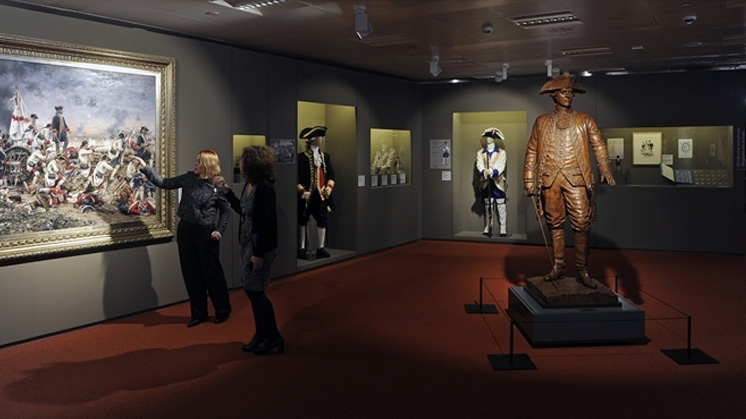
Key features of the exhibition:
- The Spanish presence in the US, which has been fundamental since the 18th century and is linked to key episodes in the history of the USA.
- The contribution of Basque sailors and merchants, who played a leading role in the exploration, trade and development of new territories.
- The role of women highlights their participation in society and in various aspects of 18th-century history.
- The rediscovery of a shared history, through more than 200 works of art, documents and historical artefacts.
Why this exhibition was significant:
- It brought to light a little-known part of the shared history of Spain and the US.
- It highlighted the role of Basque sailors, merchants and families.
- It brought together artistic, documentary and historical heritage in a single exhibition.
- It served as a precedent for subsequent cultural outreach initiatives.


The ‘Memory Regained’ exhibition: an initiative to rediscover Spain's legacy in the US
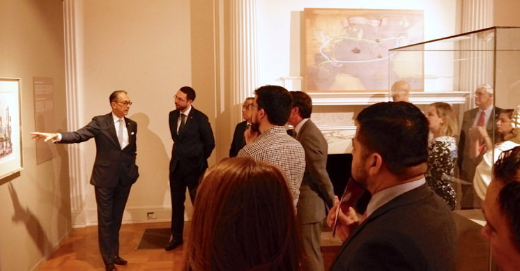
'Memory Regained' brought together more than 200 works of art, documents and artefacts to highlight Spain's presence in US history, with a particular focus on the contribution of Basque sailors and merchants. Held at the Torre Iberdrola in Bilbao, the exhibition occupied more than 1,000 square metres on the 25th floor of the company's headquarters. It was curated by José Manuel Guerrero Acosta.
The exhibition was based on a historical reality that remains little known: the involvement of the Spanish Crown in the birth of the United States. Visitors were welcomed by the words of Benjamin Franklin to the Bilbao-born military officer Diego de Gardoqui: “I have learned from many sources of your friendship towards America and of the kindness you have shown to many of my fellow countrymen. Please accept my grateful acknowledgement.” This introduction highlighted the relationship between Spain and the then-new American nation.


"With this exhibition, we wanted to help recover the profound legacy that Spaniards – and Basques in particular – have left in the US throughout its history, especially during its birth"
Ignacio S. Galán
Executive Chairman of Iberdrola. At the opening of the ‘Memory Regained’ exhibition
A journey through three centuries of history
Spanning five complementary sections the exhibition took visitors on a journey from the 18th century – the Age of Enlightenment – to the 20th century, marked by the arrival of electricity and the transformation of society.
The 18th century: Spain and the Americas during the Enlightenment
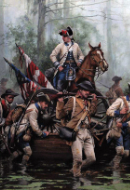
The exhibition began by recounting the heyday of Enlightenment ideas and the reforms undertaken during the reign of Charles III. Ships laden with money, weapons, cloth and medicines, as well as thousands of soldiers, set sail for the Americas from the ports of Bilbao and Cádiz. The sea was both a trade route and a theatre of conflict between the naval forces of England, France, Spain and the Netherlands.
The 19th century: emigration and the Spanish legacy
The exhibition then showed how the 19th century was marked by the emigration of men and women, many of them from the Basque Country, who left their mark in various places and spheres across the US. Among these, the exhibition highlighted examples as diverse as New York, the Spanish Aerocar at Niagara Falls, the sheep flocks of Idaho and the pelota courts of Miami.
The 20th century: electricity transforms society
The final section linked this history to the arrival of electricity, which went on to transform everyday life and society itself. Hidroeléctrica Ibérica and Saltos del Duero, the companies that form the origins of today's Iberdrola, were founded in Bilbao while the first electricity companies emerged on the East Coast of the US.
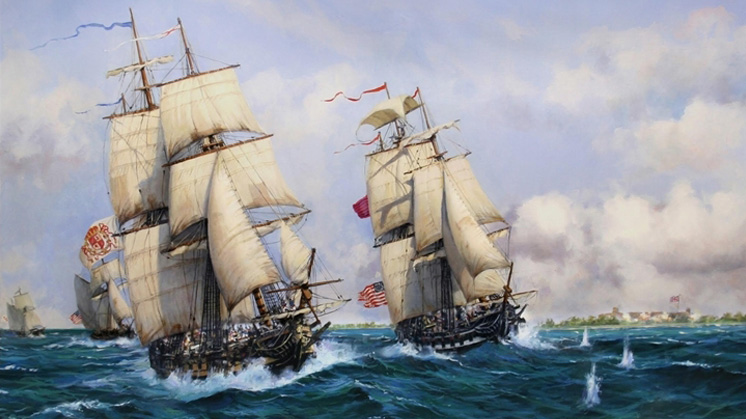
Comrades in arms. Augusto Ferrer-Dalmau, 2016. Oil on canvas. Private collection of Augusto Ferrer-Dalmau. Video voice transcription (Spanish version) [PDF] External link, opens in new window.
Bilbao, the Basque Country and America: a historic relationship
The choice of Bilbao as the venue for Memory Regained links the exhibition to a history in which the Basque Country plays one of the most significant roles. For centuries, sailors, merchants and expeditions set sail from Basque ports bound for the Americas, while trade relations forged lasting bridges between both sides of the Atlantic. In the 18th century the Gardoqui family, a prominent line of Bilbao merchants, maintained close ties with North America. Among its members, Diego de Gardoqui stood out as Spain's first ambassador to the US government and a key figure in relations between the two countries during the birth of the new nation.
The history of these ties continued in the centuries that followed through Basque emigration and the Basque presence in various spheres of American society. For this reason, the fact that the exhibition was held at the Torre Iberdrola – in the heart of Bilbao and the company's headquarters, which also has its origins in this city – added another dimension to this historical journey: from Bilbao, a place closely linked to the Basque commercial and industrial tradition, 'Memory Regained' invites us to rediscover the mark that the Basque Country and its people left on the other side of the Atlantic.
The prominent role of women in the 18th century
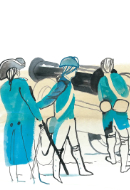
One of the exhibition's spaces, “Gatherings, dances and hearths”, was dedicated to highlighting the role of women in the 18th century, both among the upper classes and working-class women. The exhibition explored, among other aspects, their involvement in the fish trade and the responsibilities they assumed when they became responsible for running their households.
The exhibition also brought to light the stories of women who went so far as to enlist in the army, sometimes disguising themselves as men to gain access to armed forces that were otherwise off-limits to them. Among the middle and upper classes, the exhibition also highlighted the role of women in salons – social gathering places where people danced, recited poetry, performed plays and debated political issues.
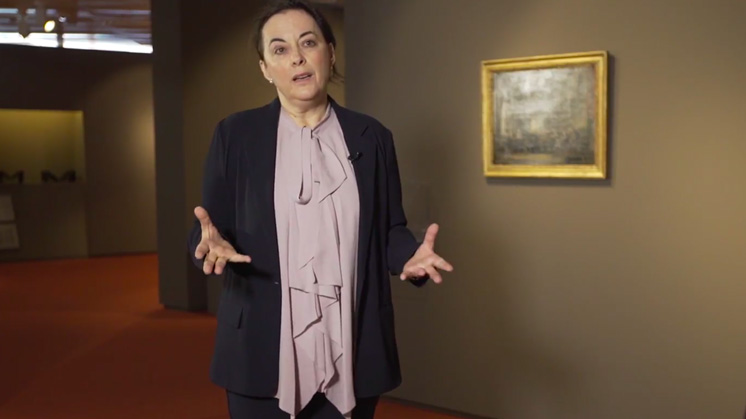
‘Memory Regained’: women in the 18th century.Video voice transcription (Spanish version) [PDF] External link, opens in new window.
El compromiso de Iberdrola con la recuperación de la historia y la cultura
‘La Memoria Recobrada’ es una muestra del compromiso de Iberdrola con la cultura y con la recuperación, conservación y divulgación del patrimonio y la memoria histórica. Una labor que desarrollamos a través del apoyo a la creación artística, la puesta en valor del patrimonio y la colaboración con instituciones y proyectos culturales que contribuyen a ampliar el conocimiento y acercar la cultura a la sociedad.
Dentro de esta trayectoria, desde Iberdrola impulsamos iniciativas que permiten recuperar y dar visibilidad a historias, obras y testimonios que forman parte de nuestro legado cultural. El objetivo es favorecer su conocimiento y conservación, generar nuevas oportunidades para su difusión y contribuir a que este patrimonio pueda ser disfrutado y comprendido también por las generaciones futuras.