


Personal development tips
Personal development: unleash your full potential and achieve your goals
Professional skills Leadership
Very often, limiting thought patterns take a hold of us and stop us from realising our full potential. Don't surrender to these negative psychological processes! You can change them, but you need to know how. Set yourself a clear goal, be tough, consistent, and have positive mindset. Here are some tips to help you achieve your goals.

Imagine that you're a soccer player and you miss an important penalty. That will leave a negative imprint in your brain. The next time you have to take a penalty, that imprint will trigger fear, meaning you won't want to take it...
Traumatic experiences and negative comments create limiting mental patterns that condition our behaviour far more than most people know. Our brains were 'wired' during more dangerous times and the fight or flight response is no longer adequate for coping with modern day threats. However, this response is still triggered when we are victims of circumstances, we miss that all-important penalty kick or even when we are plucking up the courage to take it.
The good news is that it is possible to break this vicious circle and to see things for what they really are to bring out all our potential. You only need two things to start out on this path to self-development:
- A real desire to get rid of the limiting thought patterns.
- A mastery of the right psychological tools.
Tips for personal development to achieve your goals
Henry Ford said that "Obstacles are those frightful things you see when you take your eyes off your goal." To achieve personal growth you need to look toward the goal, design the best strategy to reach it and focus on it. This is the first step in any action and you should spend as long on it as you need.
Once you have set your sights on your goal and worked out how to achieve it, it is time to take action and to get out of your comfort zone. These are the main psychological tools you must master to succeed:
-

Learn visualisation techniques
Visualise yourself taking the steps necessary to achieve your goal and achieving that success will help you to break limiting thought patterns, keep you motivated and to be more natural along the way.
-

Avoid negative thoughts
Maintaining a positive attitude is essential. You must monitor your thoughts and, when you begin projecting an old negative film, cut those negative thoughts off at the root.
-

Be resilient
In sectors undergoing constant change such as energy, this ability is particularly important in driving innovation and moving towards a more sustainable future.
-

Set small challenges
In the same way that missing a penalty leaves a negative imprint, overcoming small challenges leaves positive imprints that will reinforce your steps towards success. Learning new digital skills, taking part in collaborative projects or assuming new responsibilities are examples of small steps that contribute to professional development.
-

Establish realistic routines
Do not overload yourself with too many tasks. Establish routines that you can follow every day without feeling overwhelmed. Start gradually and adjust as you discover what works for you.
-

Set aside time to learn
Learning is essential for personal development. Set specific moments to train, whether through courses, reading or practising new skills.
-

Look after rest and mental wellbeing
Productivity is not measured only in hours worked, but also in the quality of that work. Resting and taking care of your mental health are essential elements for optimum performance.
-

Review progress regularly
Track your progress and reflect on what you have learned throughout the process. This will allow you to adjust your approach and continue evolving.
-

Accept mistakes as part of the process
Mistakes are not failures, but lessons. Learn to see them as an opportunity for growth and an essential part of the journey towards success.


How to start working on your personal development in five steps
Sometimes the path towards personal development may seem long, but it is simpler than it appears when approached with clarity and action. Here is a practical five-step approach to begin working on your personal growth:
- Identify a specific goal: Setting a clear objective is the first step towards progress. Think about something specific you want to achieve. It may be personal or professional, but the important thing is that it is measurable and achievable.
- Identify the habit or belief that is holding you back: Carry out an honest assessment of what is limiting your progress. Is it a negative belief? An unproductive habit? Identifying these barriers is crucial in order to work on them.
- Break your goal into smaller milestones: Breaking your goal into smaller steps will allow you to progress gradually and feel that you are genuinely achieving something. Each small achievement will be another step towards your final objective.
- Seek support or resources: You do not have to do everything alone. Whether through mentoring, books, training programmes or even a support partner, seek resources that help you achieve your goal more quickly.
- Measure progress and adjust: Review your progress regularly. Are you moving forward? What can be improved? Adjust your strategy if necessary, but never stop moving forward.
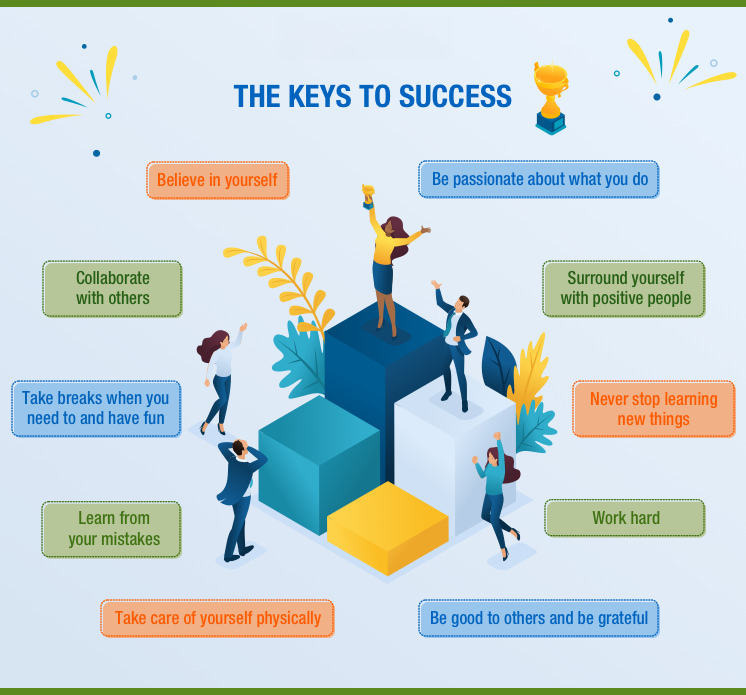

Limiting attitudes to avoid
Just as, in order to embark on the path of personal development, you need to know which psychological tools you must master, it is also essential to understand which attitudes perpetuate your limiting mental patterns and should therefore be avoided:
-

Being negative
If you are still mentally projecting films in which everything goes wrong, of course everything is going to go wrong.
-

Waiting idly by
Success is not going to come looking for you. If you do not move toward the goal, you will always be the same distance away.
-

Not asking for help
If someone can help you achieve your goal — friends, co-workers, professionals, etc. — and you don't ask that person for assistance, you are spoiling your chances of success. Moving towards personal growth does not mean not asking for help.
-

Wanting to change everything at once
Effective change is gradual. If you try to change all your habits at once, you are unlikely to achieve lasting results. Make small, sustainable changes.
-

Constantly comparing yourself
Comparing yourself with others only leads to frustration. Your only competitor is yourself. Focus on your own progress, not on what others are doing.
-

Not having measurable goals
If you cannot measure your progress, it is difficult to know whether you are moving forward. Make sure your goals are specific and measurable.





Continuous learning and professional development
In a professional environment, undergoing constant transformation is essential to adapt to new challenges and continue growing both personally and professionally.
Acquiring new skills, developing digital capabilities and being able to work in diverse teams allow people to face change with greater confidence and take advantage of new growth opportunities.
At Iberdrola, personal development is also linked to professional growth, innovation and commitment to sustainability. That is why having training programmes, wellbeing initiatives and learning opportunities helps people develop their full potential and prepare for the challenges of the future.
What’s more, generational and cultural diversity within teams enriches collective learning, drives new perspectives and fosters more inclusive, collaborative and innovative working environments.
Personal development in the workplace
The professional environment also requires a personal development mindset in order to adapt to change and continue growing. Here are some key points to consider:
- Adapting to change: In a working world undergoing constant change, the ability to adapt quickly is crucial. Maintain an open attitude towards new ways of working, technologies and challenges.
- Continuous learning and reskilling: Never stop learning. Constantly updating your skills, especially digital ones, is essential in order to remain competitive in the job market.
- Managing mistakes: Rather than fearing mistakes, learn to manage them effectively. Reflect on what you can learn from each mistake and how to improve next time.
- Collaboration and asking for feedback: Feedback is a powerful tool for growth. Do not hesitate to ask colleagues or managers for it. In addition, teamwork is essential in a dynamic professional environment.
- Stepping outside your comfort zone: Do not settle for what you already know. Seeking new learning opportunities and taking on challenges that push you outside your comfort zone will allow you to make meaningful progress.