


History of the electric car
The electric vehicle, a journey through more than 200 years of history
Sustainable mobility Electric mobility
Electrically powered cars have been on the road for almost two centuries, but petrol cars took the lead after World War I. After several changes and evolutions in technology, these vehicles are considered the next big step towards more sustainable and environmentally friendly urban mobility. After various changes and evolutions in technology, these vehicles are seen as the next big step towards more sustainable and environmentally friendly urban mobility. But why were they invented and how have they changed over time?

Electric cars came about as a result of a number of factors. One of the greatest advances following the invention of the steam engine in the late 18th century was the railway, which facilitated transport over long distances. However, individual transport of people was still relegated to the use of horse-drawn carriages, which prompted industrialists and engineers of the time to invest time and effort in finding a solution. In addition, the 19th century saw a great revolution with the advent of electricity, which completely transformed industry and later housing, transport and public space.
Timeline of the origins of the electric vehicle
The history of the electric vehicle is the result of various scientific and technological advances, which, during the 19th century, enabled the transition from the first experimental electric motors to the first motor cars capable of travelling under their own power.
1828 – Ányos Jedlik develops the first electric motor
Around 1828 the Hungarian inventor and engineer Ányos Jedlik created the first electric motor in history, considered the basis for subsequent electric machines. Years later, he applied this principle to the development of a small vehicle model.
1832 to 1839 – Robert Anderson presents one of the first electric prototypes
The Scottish entrepreneur and chemist Robert Anderson developed a prototype based on a traditional carriage powered by electric cells. Because of this work, many regard him as one of the fathers of the electric car.
1834 – Thomas Davenport builds an experimental electric vehicle
At the same time, the American blacksmith Thomas Davenport created a similar device that could travel along an electrified circular track, demonstrating the potential of the electric motor in transport.
1859 – Gaston Planté invents the rechargeable lead-acid battery
The French scientist Gaston Planté developed the first rechargeable lead-acid battery, a fundamental breakthrough for the electric vehicle, as it allowed energy to be stored and used without the need to remain connected to a power source.
1881 – Camille Faure improves batteries and Gustave Trouvé unveils an electric tricycle
The French inventor Camille Faure refined lead-acid batteries by increasing their charge capacity. That same year, Gustave Trouvé unveiled a tricycle fitted with an electric motor at the International Electricity Exhibition in Paris – one of the first functional electric vehicles.
1888 – Andreas Flocken develops the first electric car
The German inventor and entrepreneur Andreas Flocken created the Flocken Elektrowagen, considered to be the first electric car. This vehicle resembled a carriage, had four wheels, a 0.7-kilowatt motor, a battery weighing around 100 kilograms and reached a speed of approximately 15 kilometres per hour.
1899 – Camille Jenatzy exceeds 100 kilometres per hour in an electric vehicle
The Belgian driver and inventor Camille Jenatzy achieved a historic milestone by breaking the 100 kilometres per hour barrier for the first time. His electric vehicle, known as La Jamais Contente, reached 105.88 kilometres per hour and demonstrated the potential of this technology at the end of the 19th century.
When did electric cars come into use?
Following the advent of the rechargeable battery, the electric car became a hit in the early 20th century in cities. The first commercial users were New York taxi drivers. Some historians estimate that around one third of the cars on the streets of the United States were electric in 1900, while some sources claim that these vehicles outsold combustion engines in 1899 and 1900.
Taxi drivers in other cities such as London and Berlin followed suit, as did large hotels, which had fleets of electric vehicles to transport their guests. Among the vehicles sold were the Porsche Egger-Lohner P1 and the Baker Electric, and among the manufacturers, Ohio Baker Electric, which had batteries designed by Thomas Edison.



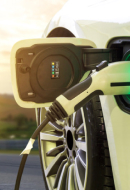
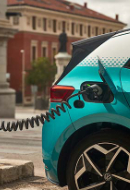
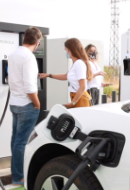
Electric cars became the vehicles of choice, especially for the upper classes because of their high price. They were noiseless, gave off no odour or fumes to make the occupants dirty, their range allowed them to cover everyday journeys, and electricity was beginning to reach most of the world, making them easy to recharge. A 1911 New York Times article described them as the cars of the future and stated that even petrol car manufacturers were using electric cars for their own personal use.
Why did combustion cars take over?
Production of electric vehicles peaked in 1912, but internal combustion cars began to gain ground for several reasons:
-

Automatic start
Their main problem – starting the engine – was solved. Previously it was necessary to turn a crank to start the combustion engine, a tedious process for drivers, but with the introduction of an automatic starter the driving experience improved significantly.
-

Assembly-line production
In 1908, Henry Ford revolutionised the automotive industry by introducing the Ford Model T, a petrol-powered car manufactured using an assembly line system that significantly reduced the final price. In 1912, an electric vehicle cost around $1,750 and a petrol-powered one $650.
-

Discovery of oil reserves
The discovery of significant oil reserves around the world made petrol an affordable commodity.
-

Poor technical conditions
Primitive electricity generation and distribution infrastructure, coupled with the perception that a car's range was a key factor when making a purchase, relegated the electric car to the sidelines.
At the end of the First World War, mobility needs increased and the focus shifted to combustion-engine cars.


The resurgence of the electric vehicle
Interest in this medium was revived after the Second World War, due to fuel shortages during and after the conflict. In France, the Peugeot VLV, the brand's first electric car, was introduced in 1941, and in 1947 Nissan exhibited the Tama, a small vehicle with removable batteries, in Japan.
However, it was not until the oil crises of the 1970s (in 1973 and 1979) that the electric car was considered again. This was prompted by an awareness of the sector's over-dependence on energy and rising oil prices. Some manufacturers began to revive models for urban commuting, such as the British Enfield 8000 and the well-known Citicar from the US brand Sebring-Vanguard, although with little production.
The modern electric car owes much to the EV-1 introduced by General Motors in 1996. With lead-acid batteries, this model offered a range of up to 160 kilometres and went up to 225 kilometres with nickel metal hydride batteries. But its run ended early, in 1999, when GM ceased production. The brand claimed that the model was too costly and unprofitable, and most of the 1,117 vehicles produced were destroyed.
Tesla picked up the EV-1 baton and in 2008 launched Roadster, a model that brought the electric vehicle into the 21st century. It included new lithium-ion batteries that improved the range to a previously unknown limit: more than 300 kilometres. All current electric cars use similar technology to Tesla's, and the improved performance of these lithium-ion batteries encouraged several brands to launch new environmentally sustainable models.
These electric vehicles now make it possible to cover daily distances in the city and make it necessary to "refuel" on the road during longer journeys: some models can reach 400 km without the need to recharge at an electric station. The installation of charging points has been boosted thanks to the commitment of companies such as Iberdrola, which has reinforced its strategy through its Sustainable Mobility Plan with specific policies and actions to "mobilise" all the actors involved: administration, companies, car manufacturers... The potential improvement in batteries, the reduction in the price of this means of transport and the regulations increasingly linked to the energy transition, augur a promising future for the electric car.
The current state of electric mobility
In recent years, the electric vehicle has gone from being a niche alternative to becoming one of the key drivers of the transport revolution. Improvements in battery technology and cost reductions, increased vehicle range and the expansion of charging networks have helped to overcome some of the main barriers holding back their adoption and have accelerated their presence in international markets.
Sales growth reflects this trend. In 2024, more than 17 million electric vehicles were sold worldwide, accounting for over 20% of global new registrations. Furthermore, the market continued to grow in 2025, exceeding 20 million units sold and accounting for approximately a quarter of global car sales.
However, the electrification of transport does not depend solely on the vehicle itself but also on an entire energy ecosystem capable of ensuring accessible, rapid charging linked to renewable energy sources. The availability of adequate infrastructure is crucial for the electric vehicle market to continue growing and become an integral part of everyday mobility.
Iberdrola: driving charging infrastructure and sustainable electrification
Precisely because the expansion of electric vehicles requires an extensive and efficient charging network underpinned by a sustainable energy model, energy companies such as Iberdrola are playing a vital role. We are developing solutions that facilitate the transition towards emission-free mobility linked to the use of renewable energy.
At Iberdrola, we launched the Sustainable Mobility Plan in 2016 with the aim of driving the decarbonisation of transport through the roll-out of public and private charging points. We have continued to expand this infrastructure and by 2026 we will have more than 11,000 operational public charging points in Spain, all powered by energy from renewable sources with a guarantee of origin.
The charging infrastructure is essential because it addresses one of users' main concerns: the availability of charging points whilst on the move. Solutions such as mobility apps allow users to locate chargers, check their availability in real time, book them and manage the charging process via their mobile phones, making it easier to integrate electric cars into everyday life.
Our approach thus combines electrification and renewable energy: it is not simply a matter of replacing combustion-engine vehicles with electric ones, but of ensuring that the energy used to power them comes increasingly from clean sources.