


Seed banks
Seed banks, what they are and their role in saving biodiversity and saving our food supply
Two out of five plants are threatened or endangered. Biodiversity is suffering and many foods may disappear from our menu in the future. One of the strategies that has become increasingly important in recent years is seed banks, which, in addition to storing seeds of different species in case worse comes to worst, are used to develop more resistant varieties. Researchers are looking for species that are better adapted to climate changes.

The Food and Agriculture Organisation of the United Nations (FAO) estimates that 75 per cent of crop diversity was lost between 1900 and 2000. In addition, according to studies carried out in 2024 by the UK’s Royal Botanic Gardens in Kew, up to 45% of flowering plants could be at risk of extinction, mainly due to climate change, habitat loss, overexploitation and human activity. Collecting, protecting and sharing a wide variety of seeds is essential to ensure our food security and that of future generations.
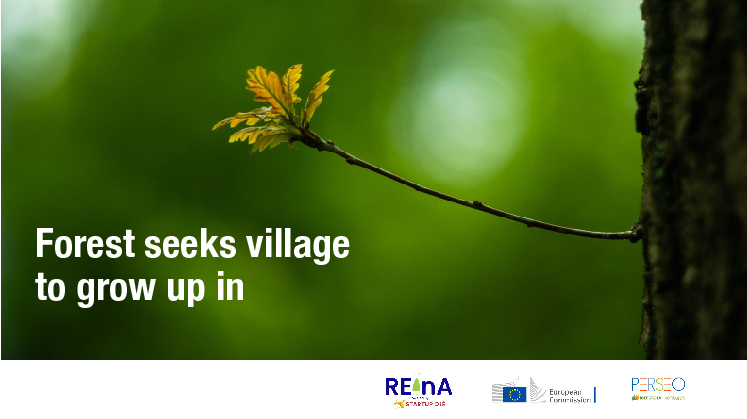
In response to this need, different proposals arise. One of them is reforestation with drones and intelligent seeds, as is the case of the 'Forest seeks village' proposal launched by Iberdrola through the 'Innovation and sustainability in rural areas’ challenge, in collaboration with Start-up Olé and with the support of the European Commission. Another of the big initiatives, which have gained special relevance in recent years, are the seed banks, specifically designed to preserve plant biodiversity.
What are seed banks and how do they work?
A seed bank or germplasm bank is a place where suitable conditions are maintained to conserve seed specimens of different plant species (wild or cultivated). The objective is clear: to ensure the preservation of as many plants as possible for posterity.
Seed specimens are preserved in conditions of stable humidity, constant low temperature and little or no light or darkness. "Most plants in the world produce seeds that can maintain their viability after drying and freezing," reads a document from the European Native Seed Conservation Network (ENSCONET). "After collection and proper sorting, seeds are cleaned and dehydrated to 5% moisture," the document states. They are usually stored and sealed in containers or in multi-layered foil packets, which in turn are stored in boxes and distributed on shelves within the bank. The containers are identified with labels detailing the variety, the place where the samples were collected and their characteristics. Low temperature and humidity levels ensure low metabolic activity, allowing the seeds to be kept for long periods of time.
Seed banks in the world
There are some 1,500 seed banks around the world, including the Svalbard Global Seed Vault, located on the remote Norwegian island of Spitsbergen in the Svalbard archipelago, some 1,300 kilometres north of the Arctic Circle. It is considered the world's largest germplasm centre. Also known as the 'vault at the end of the world', this dystopian-universe building was opened in 2008 in the middle of the ice and functions as a huge warehouse where more than one million seed samples from all over the world are stored.
Types of seed banks according to their purpose
-

Community seed banks
These aim to facilitate farmers’ access to seeds for the next planting season or to be used as an emergency supply when crops have been damaged or destroyed.
-

Production-oriented seed banks
Facilities designed to store and manage seeds with the primary aim of maximising agricultural yield, efficiency and crop standardisation.
-

Conservation seed banks
Facilities dedicated to protecting and preserving seeds in the event of a global emergency or the extinction of a species.


Svalbard is home to the world’s largest seed vault, an underground facility situated 130 metres below sea level and equipped with vaults, an access tunnel, refrigeration systems and security measures. There, seeds from over 6,000 species are stored in airtight containers, totalling more than 1.3 million samples, distributed across different regions of the world such as Europe (15% of the total), North America (5–7% of the total), Latin America and the Caribbean (15% of the total), Africa (20% of the total), Asia (40% of the total) and Oceania (between 2 and 3% of the total), with the aim of protecting global agricultural diversity.
 SEE INFOGRAPHIC: Svalbard: the world's largest seed bank [PDF]
Svalbard: the global seed vault in the face of Arctic ice melt
The outside view of the centre reveals only the entrance: a rectangular concrete block stuck in the snow that looks more like a portal to another world out of a science fiction movie. The building, dug into the mountain, is 130 metres underground and was built to withstand earthquakes, tsunamis and other natural disasters.
The main reason for locating this large seed bank here is that the mountain on which it is located contains a thick layer of permafrost, which guarantees a stable temperature of between -3 and -4 ºC. The seed storage area has an additional cooling system to keep the temperature at a constant -18°C. In the event of a power failure, the seed bank is kept at a constant temperature. In the event of a power failure, the permafrost will preserve the stored varieties. And in case of conflict, there is an international treaty that qualifies and maintains this territory as a demilitarised zone.
Safety and foresight are paramount. However, the climate change that is causing permafrost to disappear worldwide also threatens the function of the world's largest seed bank. According to the journal Nature in a 2022 article on Arctic warming, Svalbard is warming between six and seven times faster than the global average, especially during winter, which could pose a serious risk to the future of our ecosystems.
Other reference repositories in the world are the Millennium Seed Bank, south of London in the UK, or the Australian Botanic Garden's Australian Plant Bank.
Advantages and disadvantages of seed banks
Seed banks have one main drawback: they are not a viable option for all plant species. In fact, a study published in 2018 in the journal Nature Plants revealed that 36% of endangered plant species cannot be stored in seed banks. Some plants, known as recalcitrant species, cannot tolerate certain levels of desiccation and are difficult to preserve. Examples include chestnuts and acorns.
However, germplasm banks offer many advantages for the future:
-

Species conservation
They help preserve plant diversity, particularly species cultivated by humans.
-

Recovery in emergencies
They enable the replenishment of seeds lost due to natural or human-induced disasters, such as pollution.
-

Development of new varieties
They provide sufficient genetic diversity to develop new varieties, for example crops that are pest-resistant, drought-tolerant or capable of feeding a growing global population.
-
Protection of biodiversity
They safeguard rare and valuable species that are not commonly found in natural environments. Seed banks preserve genetic material and enable large-scale reintroduction into ecosystems.
-
Future security
They act as an insurance policy for the future of agriculture and food supply.


Actions for the preservation of seeds
What can we do to collaborate in the preservation of seeds? As citizens, we can actively contribute to food security through simple actions such as supporting conservation projects, like those promoted by organisations such as the Millennium Seed Bank, whether through raising awareness, making donations or volunteering. It is also crucial to consume local produce and traditional varieties, as this encourages their cultivation and prevents species from disappearing and local businesses from going under.
Furthermore, we must be conscious of the environmental impact by preventing the introduction or spread of invasive species that could displace native crops. Taking part in urban gardens, seed exchanges or community initiatives strengthens collective knowledge and provides support to those most in need.
Iberdrola in respect for and preservation of biodiversity
At Iberdrola, we work to promote protection and action for nature and the planet's life forms. We have set ourselves the ambitious goal of having a net positive impact on biodiversity by 2030. This commitment has been strengthened through our Biodiversity Plan 2030, which establishes the mechanisms to achieve this goal and drive the transformation towards an energy model in harmony with nature and human beings.
This roadmap addresses the impact on ecosystems and species of the Group's business throughout its life cycle, considering the supply chain and creating economic and social value through ecosystem services. The plan is based on applying the conservation hierarchy principle and implementing mechanisms to identify, quantify and monitor compliance.
The basis for this Plan was the approval in 2007 of our Biodiversity Policy, which is integrated into Iberdrola's Governance and Sustainability System. The Plan is based on years of work in integrating the consideration of biodiversity into strategic planning and corporate decision-making.
In addition, through a strong commitment to electrification based on clean energy, it is possible to meet growing energy demand while complying with greenhouse gas emissions reduction targets, improving air quality and strengthening the protection of ecosystems.