


Tips for exercising at home
Sport at home: how to keep fit without going to the gym
Maintaining a proper exercise routine is really important for our health. Although we normally associate it with going to the gym or other places to exercise, the reality is that it can be done from our living room. Nowadays, thanks to the multitude of apps and digital platforms dedicated to sport, it is easier than ever.
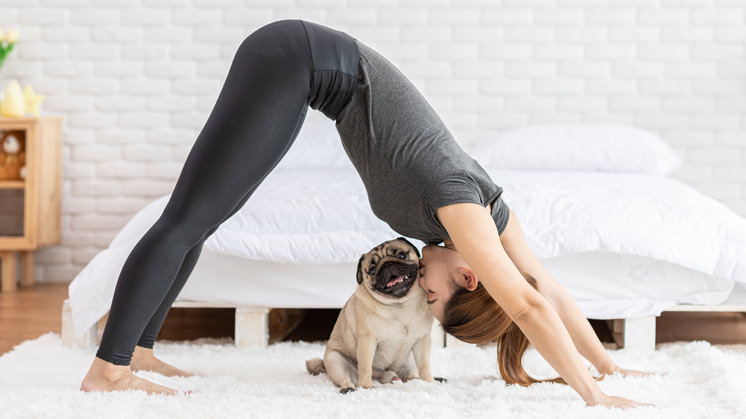
Teleworking has redefined how we spend our time and, above all, how we socialise. The change has also led to a different way of working out, where going to the gym is no longer something that everyone wants to do. Despite this, sport is very necessary, and for this reason other options have emerged, such as working out from home.
Sport has been essential for many people, not only to fill their free time or clear their minds, but also as a key tool for health. Various specialists, such as James F. Sallis and Michael Pratt from the University of California, have highlighted this and emphasised in various publications the importance of physical activity for maintaining a good quality of life and promoting general wellbeing.
In recent years, online sales of equipment such as treadmills and exercise bikes as well as products like resistance bands, exercise mats and foam rollers have grown significantly. The challenge now is to continue using them and learn how to use them efficiently and correctly so that they can be incorporated into your exercise routine.
Before you start: tips for training safely
Before starting any home exercise routine, it is important to bear in mind a few basic points to avoid injury and get the most out of your training. Although training at home offers many advantages, performing exercises incorrectly or at an inappropriate intensity can lead to discomfort or injury.
The first step is to do a proper warm-up to prepare your muscles and joints for the activity. It is also essential to adapt the intensity to your own fitness level and to progress gradually, without trying to achieve overly ambitious goals in a short space of time.
Technique should always take precedence over quantity: maintaining correct posture during exercises helps prevent injuries and maximises the benefits. Similarly, it is important to allow for rest periods between sessions and exercises as the body needs time to recover.
Having a suitable space, with enough room and free of obstacles, makes exercising easier. Furthermore, wearing appropriate footwear, staying hydrated and paying attention to your body's signals are essential. Pain should not be ignored: if you experience persistent discomfort or have a pre-existing condition, it is advisable to consult a professional before starting an exercise routine.




The benefits of exercising at home
Following advice on exercising at home is nothing new. A classic example is Jane Fonda's aerobics classes, which gained huge international popularity in the 1980s and helped to popularise home workouts worldwide.
Nowadays, the rise of social networks has established this type of content as one of the main sources for finding routines, advice and motivation when it comes to exercise, with a wide variety of trainers and content creators sharing programmes tailored to all levels.
Thousands of sports-lovers are showing off their routines on sites such as Instagram, but be careful, because there are amateurs out there as well as professionals, and we shouldn't forget that exercising can be dangerous to our health. On this subject, The World Health Organization (WHO) offers recommendations External link, opens in new window. for practising sport according to people's age range. For example, they recommend that adults between 18 and 64 years spend 150 minutes a week doing moderate aerobic activity, or 75 minutes of strenuous workout in order to improve cardio-respiratory and muscular functions and bone health, and to reduce the risk of depression.
Doing exercise, regardless of where, is good both for physical and mental health — it reduces anxiety levels, for instance — but we mustn't forget that sport at home has a number of advantages (as well as some downsides) over other options: not only do we save time by not having to travel, and have the freedom to exercise whenever we want - but also we can even take our sports equipment on holiday with us. It can be cheaper too, as we only have to shell out once to buy equipment.
How to stay motivated to exercise at home
-

Main challenge: consistency
The lack of a dedicated sports environment can make it easier to put off sessions, which is why establishing a routine and finding strategies to help maintain motivation is essential.
-

Setting realistic goals
It allows you to make steady progress and avoid frustration. To this end it can be helpful to create a weekly schedule with specific days and times for training, just as you would for any other important activity.
-

Motivational factors
Music, tracking your progress using apps or personal logs and varying your exercises can all help to keep you interested. Changing up your routines, trying new disciplines or training with others – even if only virtually – also helps to make exercise a more enjoyable and sustainable habit


How to exercise at home. Equipment and exercises
As regards the equipment needed to do sport at home simple and versatile gear is best that allows us to do different exercises. A dumbbells — the weight can vary depending on the use and the objectives — exercise wheels (myofascial and abdominal) — and a mat, are the starting point of any setup. Another basic and very useful item is resistance bands, which can be used for a lot of exercises:
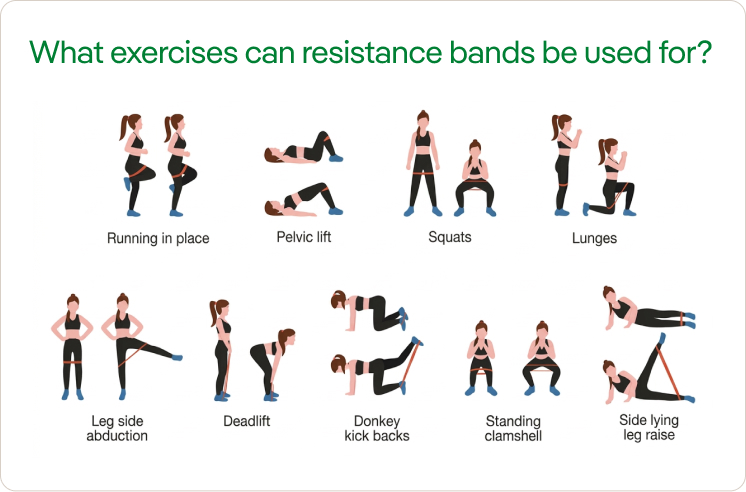
 SEE INFOGRAPHIC: What exercises can resistance bands be used for? [PDF]
But you can also do exercise without needing any equipment. Here's a few examples:
- Jump Squat
This involves bending the knees as though sitting in a chair and holding this position for a few seconds, then jumping up and stretching them. On landing, return to the original position and repeat a few times. This is a workout for muscles like calves, hamstrings and quadriceps.
- Diamond push-ups
This is a variation on the usual press-up, the difference being the position of the hands: they are placed in the centre, forming a diamond by joining the index fingers and thumbs. This keeps the whole body aligned and moving up and down uniformly. It is a very comprehensive exercise and exercises the arms, chest and abdominals, among others.
- Plank twist
A plank exercise where you rotate your abdominals as though, for example, you were wringing out a wet towel. With your elbows on the floor at a 90º angle, move your hips to the right and left without touching the floor. This exercise is great for your abdominals.
- Lateral lunge
To do this exercise you must stand, with legs and shoulders aligned. From there, take a big step to the side while bending the knee — leaving your hips behind — and then return to the original position. Then repeat for the other side. This exercise strengthens the buttock muscles.
Apps for exercising at home
Mobile devices have become a great ally when it comes to exercising at home, as there are numerous apps that help you keep fit in a simple, guided way. Among the most popular are several options offering different training approaches:
-
Seven. The exercises in this app are based on scientific research to offer the most benefit in the shortest time. They allow you to train at any time with no equipment, and compete with others to provide an extra dose of encouragement and support.
- Fifty: This app offers a variety of exercises, many without using any sports equipment. It has tailored routines and training programmes as well as pre-designed workouts by body part to keep you in shape, with a history to track your progress.
- Home Workouts: With million downloads, the aim of the website is to be able to perform all kinds of exercises at home, always adapted to the user’s level to achieve results easily.
- Nike Training Club: It offers guided workouts for different levels and goals (strength, mobility, endurance or yoga), with sessions of varying lengths. It includes routines requiring no equipment and more advanced ones using basic gear, as well as structured plans to support long-term progress.
Sport and sustainability: training can also help protect the planet
Exercising at home not only brings health benefits but can also help reduce the environmental impact associated with sporting activity. By avoiding journeys to gyms or other sports centres, travel distances are reduced and, with them, transport-related emissions.
Furthermore, many workouts can be done with minimal equipment or by using items such as exercise mats, resistance bands or dumbbells for years on end, encouraging more responsible consumption. Exercising at home can also be combined with low-impact outdoor activities, such as walking, running or cycling, creating a healthy routine that is kind to the environment.
How to move more during the day if you work from home
Working from home has changed the way many people organise their day and whilst it offers advantages such as avoiding commutes, it can also increase the amount of time we spend sitting down. Incorporating short bursts of activity throughout the day helps combat a sedentary lifestyle and promotes general wellbeing.
Some simple strategies include taking active breaks between tasks, getting up every so often to walk around or stretch, using phone calls as an opportunity to move about, doing mobility exercises between meetings or taking the stairs whenever possible.
It isn't always necessary to do a full workout to stay active: adding small movements throughout the day also helps to improve physical and mental health.
With these changes the article would be more comprehensive: it moves from focusing solely on "how to work out at home" to also addressing safety, consistency, sustainability and healthy habits, which are more up-to-date approaches for editorial content on wellbeing.