


Paris Agreement 2015 and COP21
Key points of the Paris Agreement
The Conference of the Parties to the United Nations Framework Convention on Climate Change (COP21), held in Paris in 2015, marked a historic milestone with the adoption of the Paris Agreement. For the first time, both developed and developing countries committed to reducing greenhouse gas emissions in order to curb global warming. Find out what this agreement entails, what its key points are, which countries are party to it and how it contributes to the establishment of a sustainable and clean model.

The response to climate change is one of the greatest challenges facing humanity due to its environmental impact and serious consequences for society and the global economy. This is why, over a decade ago, this fight managed to bring almost everyone together to come to an agreement on climate issues. Representatives of nearly 200 countries, meeting at COP21 in Paris in 2015, adopted the first global agreement to curb global warming caused by mankind's greenhouse gas (GHG) emissions: the Paris Agreement. France played a leading role in this meeting by bringing positions closer together and facilitating a consensus within the United Nations and the European Union, which plays a key role in the climate negotiations.
This agreement, which entered into force on 4 November 2016, represents a milestone for its universal nature and significant commitments and targets. Since the inception of the Conferences of the Parties and up to that point, no international agreement had succeeded in committing both developed and developing countries to reduce emissions.
In 2020, the Paris Agreement replaced the Kyoto Protocol, in force until then, as the main international agreement on climate change. The main difference in implementation is that under the Kyoto Protocol all countries had joint emission reduction targets, while the Paris Agreement allowed countries to set their own individual projects and targets. Another major difference is that the Paris Agreement is considered voluntary. However, the submission of pledges is binding, involves all Parties and, for the first time, non-state actors such as regional and local governments, businesses and civil society in general.
The eight key points of the Paris Agreement
The Paris Agreement, adopted by decision 1/CP.21 [PDF], covers crucial areas needed to combat climate change. Here are some of the key points of the Paris Agreement [PDF]:
-

Key point 1: the 2°C target
The Agreement sets out the ambitious objective of limiting global warming to well below 2°C compared with pre-industrial levels, while striving to keep the temperature rise to 1.5°C.
-

Key point 2: peak and climate neutrality
To achieve this temperature target, the Parties undertook to ensure that global GHG emissions peak as soon as possible whilst recognising that developing countries would take longer to reach this point. Countries must achieve net-zero emissions as soon as possible during the second half of the century.
-

Key point 3: mitigation
Developed countries must continue to take the lead by setting economy-wide absolute reduction targets whilst developing countries must continue to promote mitigation. Furthermore the agreement allows for the use of markets to enable countries to collaborate with one another through "Internationally Transferable Mitigation Outcomes" (ITMOs). An example of this would be a collaborative agreement between two countries for the buying and selling of mitigation units.
-

Key point 4: sinks and reservoirs
The Paris Agreement also encourages Parties to conserve and enhance carbon sinks and GHG reservoirs, such as forests, to offset any emissions they may produce.
-

Key point 5: the need for adaptation and the reduction of loss and damage
The agreement recognises that adaptation is a global challenge and stipulates that countries must implement national planning processes and adaptation pathways to strengthen climate resilience and minimise vulnerability to climate change. Furthermore it highlights the need to avoid, minimise and address loss and damage related to the adverse effects of climate change — for example, those resulting from extreme weather events.
-

Key point 6: climate finance and technology transfer
Under the agreement, developed countries are obliged to provide financial support for developing countries' efforts to build a clean and climate-resilient future. For the first time other Parties are also encouraged to provide or continue to provide such support on a voluntary basis. Furthermore the need for international cooperation on the development and transfer of climate technology is reaffirmed.
-

Key point 7: promoting education
The agreement emphasises the importance of strengthening education, training and awareness-raising on environmental sustainability, as well as public participation and access to information on climate change.
-

Key point 8: promoting transparency
The Paris Agreement is underpinned by a robust system of transparency and accountability to provide clarity on the measures and support provided by the Parties. In addition to submitting information on mitigation, adaptation and support, the Agreement requires that technical experts subject the information submitted by each Party to international review.


Paris Agreement
Key dates
- 2015 Adoption of the Paris Agreement on 12 December.
- 2016 Signature of the Paris Agreement in New York. The European Union deposited the instruments of ratification for the Agreement. The Paris Agreement entered into force on 4 November.
- 2018 Start of negotiations to agree on the operational details for the implementation of the Paris Agreement.
- 2020 New presentation of National Contributions.
- 2021 End of negotiations on the implementation of the Paris Agreement.
- 2023 First full global stocktake.
- 2025 New presentation of National Contributions.
- 2028 Second global stocktake.

 SEE INFOGRAPHIC: Paris Agreement [PDF]
Countries party to the agreement
When the Paris Agreement came into force in 2016, 55 countries representing at least 55% of global emissions had ratified it. Since then, more countries have continued to ratify it. By 2024, the Paris Agreement was supported by 193 countries plus the European Union.
The Paris Agreement requires all Parties to undertake all possible measures through nationally determined contributions (NDCs) and to progressively step up their efforts to curb climate change. This means that all Parties that have ratified the agreement must report regularly on their emissions and their environmental contributions. Furthermore, the agreement provides for a global stocktake every five years to assess collective progress towards the established targets and to report on new measures adopted by the Parties.
The Paris Agreement and its contribution to decarbonising the economy
Since the signing of the Paris Agreement, there has been significant progress in implementing its provisions. Countries have submitted their NDCs, i.e. their detailed plans on how each country will reduce their emissions and adapt to the impacts of climate change. In addition, funds to support developing countries in implementing climate action have been mobilised, such as the Green Climate Fund, established under the Paris Agreement.
However, the progress of this agreement is insufficient in terms of deadlines and objectives set, as the United Nations Secretary General António Guterres recalled on several occasions – insisting on the need to reinforce ambition, determination and speed in taking action.
One of the main challenges is precisely the lack of ambition in the NDCs submitted by countries. According to the IPCC's analysis [PDF], current contributions are insufficient to limit global warming to the proposed target of 2°C; indeed, global warming is actually increasing. Unless carbon dioxide emissions are reduced rapidly, the world is likely to reach 1.5°C of warming by the end of the century. The IPCC stresses that countries which do not submit ambitious plans for the period after 2030 are likely to see temperatures rise by up to 2.8°C by 2100.
Another major challenge is the wide gap between the financial resources needed to implement climate action in developing countries and those actually available. Investment patterns vary widely and depend above all on the sector and region. But there is still a greater focus on fossil fuels than on clean technologies. Furthermore, the international political context has imposed significant constraints. One example was the United States' withdrawal from the Paris Agreement in 2025 under Donald Trump's presidency. Trump had already withdrawn the country in 2020; it rejoined under the Biden administration, though not for long. This is a cause for concern as the US is one of the world's largest emitters of greenhouse gases, and it encourages other major emitting countries to follow suit.
Shaping the NDCs of tomorrow
By 2026, more than 140 countries had submitted their new NDCs. This represents a commitment from countries responsible for 75% of greenhouse gas emissions. The contributions also set out proposals for 2035. The World Resources Institute shared a five-point plan for the next NDCs:
- Strengthening emissions reductions. To meet the Paris Agreement targets, global GHG emissions must fall 43% by 2030 and 60% by 2035 compared with 2019 levels. Furthermore, developed countries have a responsibility to achieve the deepest reductions.
- Set ambitious sectoral targets. Countries must set specific sectoral targets that underpin their overall emissions reduction goals. This provides guidance for public and private sector investors and supports more effective implementation of such legislation.
- Resilience to environmental impacts. It is also essential to adapt with resilience and empathy to immediate climate impacts, such as heatwaves, severe storms and wildfires, and to long-term impacts, such as desertification and rising sea levels.
- Boosting investment. It is essential not only to set out commitments but also to propose concrete actions to fulfil them. This includes a clear outline of the roles to be played by the various stakeholders as well as specific and realistic timelines and investment targets. The strategies proposed must be underpinned by clear and transparent accounting.
- Putting people at the centre. Climate change has repercussions for work, health and the economy – issues that are fundamental to human life – so climate policies must not lose sight of people when being proposed.


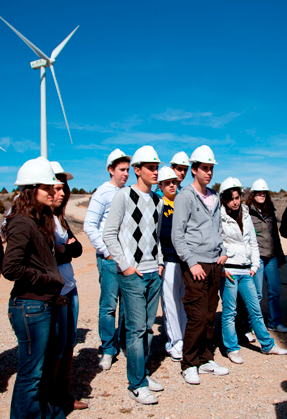

Iberdrola and its commitment to the environment
In the current climate crisis, the drive towards electrification has become the necessary solution for achieving the climate and energy security targets set out in various international climate agreements, policies and partnerships. The aim of this process is to transform the current energy system into an electrified model based on renewable energy and other means of reducing emissions.
To move in this direction, our Climate Action Plan sets out a roadmap aimed at achieving carbon neutrality for Scope 1 emissions by 2030 and net-zero CO₂ equivalent emissions across all scopes by 2040.
In this way, we are consolidating a sustainable and clean energy model through electrification, driven by the roll-out of renewable energy and the modernisation of electricity networks, reaffirming that the transition towards an electrified society requires everyone's involvement.