


Electricity distribution
Distribution System Operator (DSO) strategy: digitalisation and efficiency
Electricity distribution is the final stage in the journey of electricity: the stage that delivers it from the transmission network to where we use it every day, including homes, businesses, services and industries. Thanks to this network, energy reaches users safely, continuously and with high quality. At Iberdrola, we are driving the modernisation of distribution through more digital and intelligent networks, capable of responding more effectively to today’s needs: greater electrification, more renewable energy and a system that is more resilient to incidents.

Electricity distribution is the part of the power system that delivers energy at high, medium and low voltage from substations to final consumption points –homes, businesses, services and industries.
Distribution companies are responsible for managing and maintaining the distribution network as well as operating the distribution system, which is why they are known as DSOs (Distribution System Operators). DSOs must ensure that electricity is delivered safely, continuously and with the required quality of supply. Efficient distribution is essential to:
-
Integrate more renewable energy sources, such as solar and wind power.
-
Manage demand more effectively, adapting to peaks in consumption.
-
Support new uses of electricity, such as electric mobility and self-consumption.
Aware of this strategic role, Iberdrola has launched a Strategic Plan under which we intend to invest €37 billion in networks, mainly in the United Kingdom and the United States. Of this total, €25 billion will be allocated to strengthening and digitalising distribution networks and a further €12 billion to developing transmission infrastructure. This investment will enable greater integration of renewable capacity and accelerate the deployment of increasingly decentralised energy solutions and services.
Integration of renewables and distributed energy resources (DERs)
Electricity distribution networks have evolved from systems designed for one-way energy flows to platforms capable of managing bidirectional flows and thousands of decentralised connection points.
In this new context, Distributed Energy Resources (DERs) play a key role. These are small-scale installations connected to medium and low voltage networks that can generate, store or manage electricity locally, such as solar self-consumption, batteries, energy communities or electric vehicle charging points.
Their integration introduces variable generation and consumption patterns throughout the day, transforming the traditional network model and requiring greater flexibility and coordination to maintain system stability. Distribution networks are therefore essential for integrating renewables and supporting the electrification of the economy.
Operational excellence and critical network infrastructure
Distribution networks are essential infrastructures for everyday life. They are designed to operate continuously, in diverse environments, with operational and response plans to act quickly in the event of incidents. As well as having robust equipment, their operational management must be constantly improving.
Organisations such as the International Energy Agency (IEA) and the International Renewable Energy Agency (IRENA) highlight the following key capabilities of modern distribution networks:
-

Resilient infrastructure
Lines, transformers and equipment designed to withstand extreme conditions and enable rapid service restoration.
-

Predictive maintenance
Preventive and predictive practices that identify risks before they affect customers, reducing outages and extending asset life.
-

Rapid response to incidents
Operational centres, tools and protocols to quickly locate faults and minimise restoration times.
-

Standardised processes
Consistent technical and safety criteria for design, operation and maintenance, and which help to guarantee a comparable level of service across the network.


Smart management of medium and low voltage assets
Medium and low voltage networks, which are closest to the user, incorporate sensors and digital equipment that provide real-time visibility of network conditions. This information is integrated into advanced data analytics systems to identify patterns, anticipate failures and plan maintenance proactively.
IRENA highlights digitalisation as a key driver in transforming the power system, enabling more monitored, automated networks ready to integrate new services such as smart charging, storage and demand aggregation.
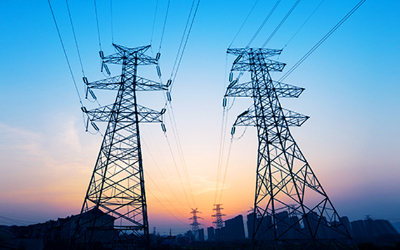
Smart grids
This digitalised model is characteristic of smart grids, which are electricity networks that enable the bidirectional exchange of energy and information through the integration of digital technologies based on the internet, information and communication technologies, control systems and software and home automation applications.
Learn more about smart grids
Smart grids
This digitalised model is characteristic of smart grids, which are electricity networks that enable the bidirectional exchange of energy and information through the integration of digital technologies based on the internet, information and communication technologies, control systems and software and home automation applications.
Learn more about smart gridsAt Iberdrola, we are driving the deployment of smart grids to support electrification and improve supply efficiency and quality. By having more data and visibility over the state of the network, smart grids also allow us to make more efficient decisions and even prioritise investment where the network truly needs reinforcement or renewal, while reducing operating and maintenance costs. The result is a more sustainable management model, with fewer outages and better service for customers.
Modernisation and automation of substations and transformer stations
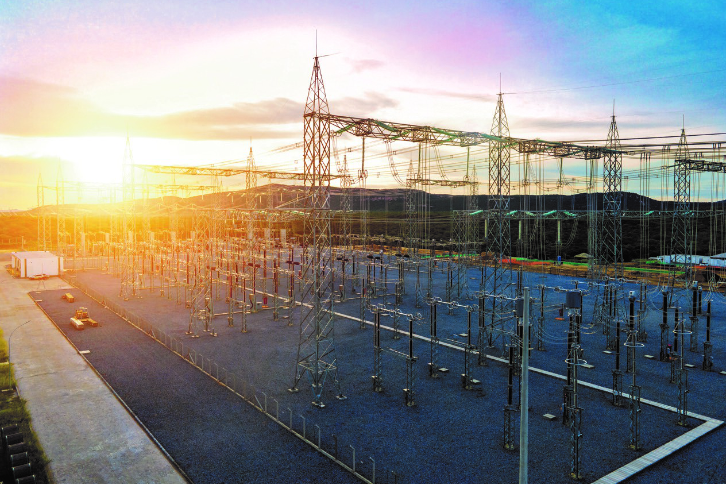
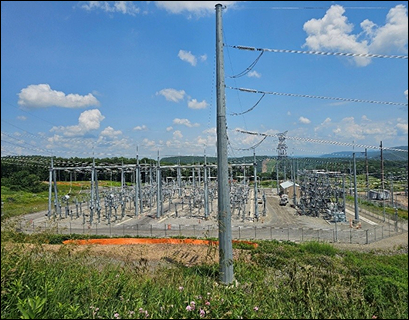
Substations and transformer stations are key nodes in distribution networks, where energy is transformed and routed to urban areas, homes and industries. Their increasing digitalisation enables remote monitoring and operation, improving efficiency and reducing the need for on-site intervention.
At Iberdrola, we are driving the progressive modernisation of these facilities by incorporating increasingly advanced capabilities in remote control, sensing and automated operation. A clear example of this approach is the development of a transformer station platform (SSP), which will enable the deployment of technologies such as edge computing and virtualisation in transformer stations. In addition, through our international open innovation programme with start-ups, PERSEO, we are promoting new technological solutions aimed at modernising the network and improving infrastructure integration.
These advances allow remote reconfiguration and fault isolation, minimising impact on customers and significantly reducing restoration times.
We are driving a reliable and innovative electrical network system
Supply quality: technical indicators (SAIDI/SAIFI) and continuity
Supply quality is measured in terms of service continuity and power quality. Continuity reflects the time customers receive electricity without interruption, while power quality refers to voltage stability and waveform consistency, avoiding variations that can damage equipment or affect industrial processes.
The methodology used to quantify continuity depends on the regulation in each country. At international level, the following indicators are commonly used:

SAIDI
System Average Interruption Duration Index, measuring total outage duration per customer per year

SAIFI
System Average Interruption Frequency Index, measuring outage frequency per customer per year.
SAIDI
System Average Interruption Duration Index, measuring total outage duration per customer per year
SAIFI
System Average Interruption Frequency Index, measuring outage frequency per customer per year.
Power quality is monitored through technical parameters such as voltage stability, harmonic distortion, frequency and the absence of sags or overvoltages.
Regulatory compliance and international design standards (IEC/IEEE)
The design, construction and operation of the distribution network are based on regulatory frameworks and technical standards that help ensure safe, reliable installations capable of operating in increasingly complex environments. In this context, global references developed by organisations such as the International Electrotechnical Commission (IEC) and the Institute of Electrical and Electronics Engineers (IEEE) are used, whose standards are widely recognised by regulators and the industry internationally.
Although both organisations share similar objectives –improving safety, performance and interoperability– their approaches and ways of working differ:

IEC
- The International Electrotechnical Commission is an international organisation dedicated to preparing and publishing standards for electrical, electronic and related technologies. In addition to standards, it manages global conformity assessment systems for testing and certifying equipment, systems and components against its standards. Its standards are intended for international application and cover a wide range of technologies and assets within the electrical system.

IEEE
- An international organisation dedicated to promoting standards and developing technology across various disciplines. IEEE standards are frequently used in regions such as the United States, where the organisation is based, but they are also incorporated into other national frameworks due to the global adoption of US technologies. Its approach is more technical, addressing specific areas of optimal performance and reliable integration into systems. These criteria are developed from research, studies or experience within the scientific, academic or professional community.
Industrial safety and grid sustainability
The operation of the electricity distribution network requires safety to be integrated as a universal principle across all stages of asset life –design, construction, operation and maintenance– to protect workers and the public. This relies on defined processes and procedures, coordination of on-site activities and training associated with work in hazardous environments, reinforcing a preventive culture and continuous improvement.
At the same time, sustainability guides the development and modernisation of infrastructure, incorporating criteria and solutions aimed at reducing impacts, improving efficiency and promoting more harmonious integration with the territory.
Infrastructure protection and operational cybersecurity
As critical infrastructure, electricity distribution networks must be comprehensively protected against all types of physical and digital risks. In addition to adopting traditional security measures –such as access control, CCTV or perimeter reinforcement at substations or transformer centres– operations incorporate advanced cybersecurity protocols to safeguard telecontrol, automation and communication systems. Common practices include network segmentation and data encryption.
At Iberdrola, we maintain a strong commitment to cybersecurity, embedding protection into daily management through operation and security centres that monitor the network in real time, regular audits and testing, and continuous updates of standards and technologies.

Grids: “The backbone of the present and future of electric mobility”
Environmental integration of lines and biodiversity protection
Electricity distribution networks coexist with natural and scenic environments, so their design, operation and maintenance must incorporate environmental criteria that minimise ecosystem impact. At Iberdrola, we maintain a 2030 Biodiversity Plan through which we commit to applying the principle of net positive impact on nature, with key measures spanning from planning to network operation.
Key actions for distribution highlighted in our Biodiversity Report include:

Undergrounding in sensitive sections
We carry out targeted interventions, often in coordination with local authorities, to bury lines where the aim is to restore spaces or minimise impact, contributing to better territorial and landscape integration.

Protection of birds
Projects such as ALETEO (by i-DE in Spain) adapt infrastructure to reduce bird collisions and electrocutions.

Responsible vegetation management
We promote maintenance plans to preserve vegetation around network infrastructure, conserve native species and prevent habitat damage.
Undergrounding in sensitive sections
We carry out targeted interventions, often in coordination with local authorities, to bury lines where the aim is to restore spaces or minimise impact, contributing to better territorial and landscape integration.
Protection of birds
Projects such as ALETEO (by i-DE in Spain) adapt infrastructure to reduce bird collisions and electrocutions.
Responsible vegetation management
We promote maintenance plans to preserve vegetation around network infrastructure, conserve native species and prevent habitat damage.
Global presence: our network operators
Distribution network management is a strategic pillar of Iberdrola’s business model. We successfully deploy and operate infrastructure in multiple countries through local operators with strong territorial presence. This approach combines a global perspective with close-to-customer execution, adapted to each regulatory framework and the specific needs of each market. Our network operators worldwide are:
-

i-DE Redes Eléctricas Inteligentes
Learn more about i-DE Redes Eléctricas InteligentesParent company of Iberdrola España and an electricity distribution company.
 External link, opens in new window.
-

SP Energy Networks
Learn more about SP Energy NetworksParent company of ScottishPower, our UK subsidiary, operating electricity distribution and transmission in Scotland, northern Wales and northwest England.
External link, opens in new window.
-
SP Electricity North West
Learn more about SP Electricity North WestParent company of ScottishPower operating the electricity network in northwest England.
External link, opens in new window.
-

Avangrid Networks
Learn more about Avangrid NetworksParent company of Avangrid, our US subsidiary, operating electricity and gas transmission and distribution infrastructure across several states.
External link, opens in new window.
-

Neoenergia
Learn more about NeoenergiaSubsidiary subholding of Iberdrola operating in distribution, generation, transmission and retail in Brazil.
External link, opens in new window.


More on electricity distribution
-
- Residential electrification
- Difference between high, medium and low voltage
- Telecommunications for the smart grid
- Digitalisation of electrical structures using BIM technology
- The benefits of the green grid
- Transformer substations: what they are, how they work and their different types
- "It’s no longer about laying more cables but making the network smarter"