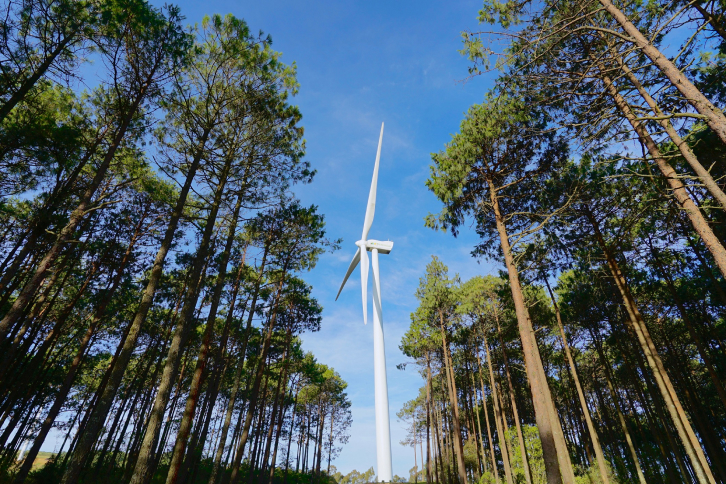
Tâmega wind farms
Tâmega: Portugal’s largest wind farm is set to generate enough energy to power 400,000 homes
Onshore wind Portugal Iberdrola projects
The Tâmega wind farms, located in northern Portugal, will be the largest in the country, with a capacity of 274 MW, enough to supply clean energy to 400,000 people. They will feature 38 wind turbines rated at 7.2 MW each, the largest and most powerful onshore wind turbines on the global market. With an investment of approximately €350 million, the wind farms will generate 601 GWh of electricity annually.
 Update: October 2026
 Reading time: 7 minutes
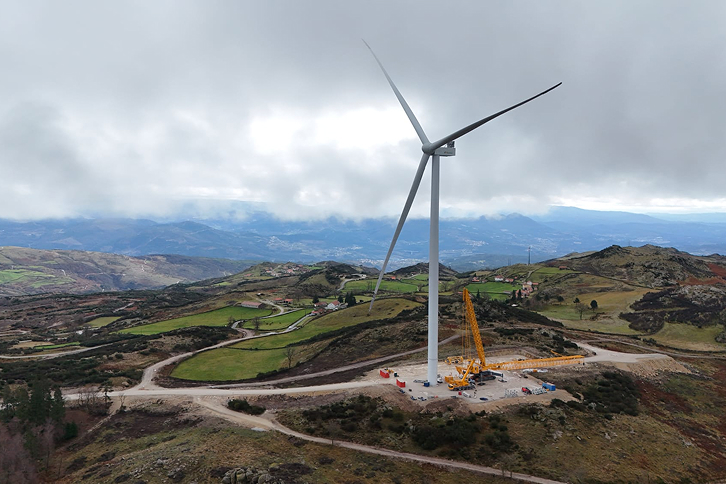
Tâmega wind farms


This ambitious project is located along the River Tâmega, a tributary of the Douro between Braga and Vila Real. It will be the first to feature a hybrid connection between hydropower and wind power, sharing the same grid connection infrastructure at the Tâmega Hydroelectric Power Complex substation.
Comprising the Tâmega Norte and Tâmega Sur wind farms, the project is part of the agreement signed with Norway’s sovereign wealth fund, managed by Norges Bank Investment Management. It will also have a long-term power purchase agreement (PPA).
The project further reinforces the role of the Tâmega Complex as a cornerstone of Portugal’s electrification, promoting energy independence and contributing significantly to the country’s National Energy and Climate Plan objectives. The wind farms will feature 38 Vestas EnVentus V172 wind turbines, developed by Vestas and among the largest and most powerful onshore wind turbines on the market. Each turbine has a capacity of 7.2 MW, 85-metre blades and a tower height of 114 metres. Together, the wind farms will generate 601 GWh of electricity annually.
In May 2026, Tâmega Norte, equipped with 27 wind turbines and an installed capacity of 195 MW, began operating. Meanwhile, construction work continues at Tâmega Sur, which is expected to come into operation by the end of 2026.
In addition to avoiding 230,000 tonnes of CO₂ emissions annually, the project will have a significant economic impact, creating 700 direct jobs at the peak of construction and involving Portuguese companies such as CJR, Conduril, Socorpena, Painhas and Proef. Components are manufactured in various European countries, reinforcing the commitment to European industry and collaborative innovation.

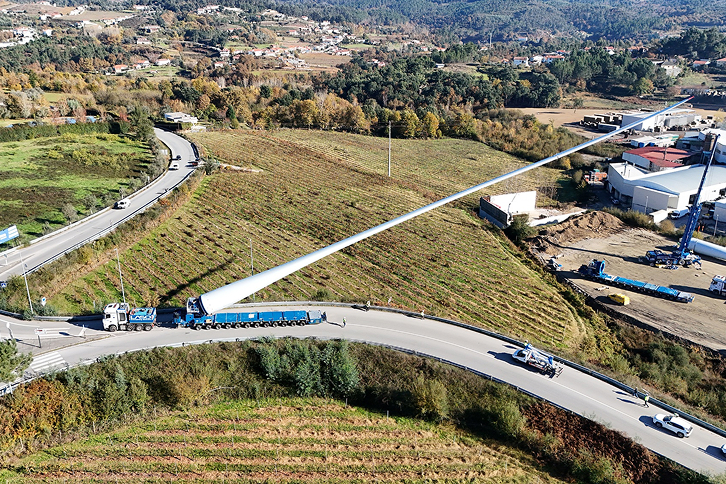
Iberdrola at the forefront of wind turbine installation: the logistical challenge of transporting 85-metre blades
Construction will continue until the third quarter of 2026, with all wind turbine components due to be transported to the site before the end of the first half of the year.
More than 110 blades will depart from the port of Aveiro. For the final stage of transport to the construction and assembly site, an innovative system will be used: a blade lifter, a pioneering technology in Europe that enables the operation to be carried out safely.
This equipment uses a hydraulic mechanism to rotate the blades vertically or horizontally. The blade is secured to the mechanism during transport, which can achieve inclinations of up to 60°. This enables it to negotiate sharp bends, steep gradients and other obstacles while adapting to existing roads.
This solution reduces the environmental impact by avoiding changes to road layouts and ensuring safety throughout the transport process.
This project reinforces Iberdrola’s leadership as Portugal’s largest investor in renewable energy over the past 10 years, with more than €2.2 billion invested and over 1,400 MW of installed capacity.
The EIB supports Iberdrola in the construction of wind farms
Iberdrola and the EIB (European Investment Bank) have signed a €175 million green loan to support the construction of the Tâmega wind farms. The new EIB loan is backed by a guarantee from the Spanish export credit agency, Cesce.
This is the second Iberdrola operation financed by the EIB with a guarantee from Cesce to support green projects led by Spanish companies outside Spain, contributing to the European Union's climate action and environmental sustainability objectives. The first operation was the Windanker offshore wind farm, currently under construction in German waters in the Baltic Sea.
The Tâmega project also contributes significantly to the EIB Group's climate action objectives set out in its Strategic Roadmap for the period 2024 to 2027 and the second phase of the Climate Bank Roadmap for the period 2026 to 2030, as well as the EIB's action plan to support the REPowerEU programme, which aims to increase energy security and accelerate the energy transition by reducing the European Union's dependence on fossil fuel imports.

The Tâmega Complex
The Tâmega wind farms form part of the Tâmega Complex, which also includes the Tâmega gigabattery. This hybrid energy project also comprises three hydropower plants: Gouvães, Daivões and Alto Tâmega. Together, the complex will have an installed capacity of 1,432 MW, making it the first energy infrastructure of its kind in the Iberian Peninsula and helping diversify the country’s energy generation sources.