


Tâmega pumped-storage gigabattery
Tâmega: one of the largest hydroelectric projects built in Europe in the last 25 years
Hydroelectric power Energy storage Portugal Operating plants
The Tâmega pumped-storage gigabattery, located in northern Portugal, is one of Europe's largest energy storage facilities and one of the biggest energy projects in the country's history. This pumped-storage hydropower plant comprises three dams with a combined installed capacity of 1,158 MW. Together with two wind farms that will reach 274 MW, it forms part of the Tâmega Complex, one of the largest energy projects in the country's history and a milestone in the transition towards a cleaner, more efficient energy model.
 Update: January 2026
 Reading time: 17 minutes

Tâmega river gigabattery


The Tâmega hydroelectric project comprises three power stations: Gouvães, Daivões and Alto Tâmega. They are located along the River Tâmega, a tributary of the Douro in northern Portugal, near Porto. Together, the three power stations have an installed capacity of 1,158 MW, equivalent to a 6% increase in the country's total installed electricity capacity in 2024.
The hydropower complex can generate 1,766 GWh of electricity a year, enough to meet the energy needs of the surrounding municipalities and the cities of Braga and Guimarães, supplying 440,000 households. In addition, this major renewable energy infrastructure has a storage capacity of 40 million kWh, equivalent to the energy consumed by 11 million people in their homes over 24 hours.
Tâmega helps diversify energy sources, avoiding the import of more than 160,000 tonnes of oil a year and preventing the emission of 1.2 million tonnes of CO₂ annually. It also boosts economic activity and employment in the region. During construction, the project generated up to 3,500 direct jobs and 10,000 indirect jobs, 20% of which went to people from neighbouring municipalities. More than 100 suppliers were involved, 75 of them Portuguese.
The project, which required an investment of more than €1.5 billion, is financed by the European Investment Bank (EIB). In July 2018, the bank provided Iberdrola with €500m, the first instalment of the €650m approved in total to finance the development.
The Tâmega project also makes a significant contribution to the EIB Group's climate action objectives, as set out in its Strategic Roadmap for 2024-2027 and the second phase of the Climate Bank Roadmap for 2026-2030, as well as the EIB's action plan to support the REPowerEU programme. The latter aims to strengthen energy security and accelerate the transition to a cleaner energy system by reducing the European Union's dependence on imported fossil fuels.

The project's Environmental Impact Statement (EIS) also includes various ecological compensation measures, such as reforesting more than 1,000 hectares, planting 17,000 cork oaks and taking action to improve populations of protected wildlife in the surrounding area.
Gouvães and Daivões began entering service in early 2022, while Alto Tâmega has been operational since late 2024.
The three hydropower stations will be joined by two new wind farms, Tâmega Norte and Tâmega Sul, by the end of 2026. This will make the complex the first hybrid wind and hydropower facility connected to the grid in the Iberian Peninsula. The project's technical advantages include the shared use of grid connection infrastructure, reinforcement of the country's electricity network and a reduced environmental impact by avoiding the need for additional infrastructure development in the region.

Construction of the Tâmega Hydroelectric Complex

Tâmega: the most innovative hydroelectric complex in Europe.

The Gouvães pumping hydroelectric plant will store enough energy to supply two million Portuguese for 24 hours.

The Tâmega project reaches its final phase with the filling of the reservoirs, which will facilitate the start of the turbination and pumping tests.

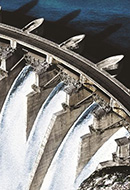

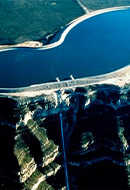
Tâmega gigabattery


- Hydroelectric development at Upper Tâmega
- Dam height: 104.5 m
- Hydraulic circuit length: 50 m
- Gross fall: 87 m
- Installed capacity: 160 MW
- Reservoir area: 468 ha
- Reservoir volume: 132 hm³
- Hydroelectric development at Daivões
- Dam height: 77.5 m
- Hydraulic circuit length: 250 m
- Gross fall: 64.5 m
- Installed capacity: 118 MW
- Reservoir area: 340 ha
- Reservoir volume: 56.2 hm³
- Hydroelectric development at Gouvães
- Dam height: 34 m
- Hydraulic circuit length: 7.640 m
- Gross fall: 657 m
- Installed capacity: 880 MW
- Reservoir area: 176 ha
- Reservoir volume: 13.7 hm³

Pumping system
- The only technology that stores large amounts of energy efficiently.
- Essential as a back-up and support for other renewable energies, especially wind and photovoltaic.
- It contributes to the stability of the electricity system thanks to its enormous flexibility to respond to demand changes.
- It moderates electricity prices by producing stored energy at times when the system needs it most.
- Independent operation of the hydraulics.
 SEE INFOGRAPHIC: Tâmega gigabattery [PDF]
Construction work on the Tâmega project
The creation of the Daivões reservoir required the replacement of existing infrastructure, including a bridge approximately 200 metres long and 35 metres high, more than five km of power lines, over seven km of roads and two wastewater treatment plants.
This reservoir serves as the lower reservoir for the 880 MW Gouvães pumped-storage hydropower plant. In January 2022, Iberdrola commissioned its first generating unit, a 220 MW turbine, and began supplying clean electricity to the grid from the Tâmega pumped-storage gigabattery.
The plant operates in both directions, allowing water from Daivões to be pumped up to the Gouvães reservoir, taking advantage of the difference in elevation of more than 650 metres between the two. Water is pumped uphill when there is excess electricity generation and released to recover energy when it is needed. Its storage capacity can guarantee a continuous electricity supply to the Porto metropolitan area for 24 hours.
The first filling of the Daivões reservoir was completed in March 2021. Its associated power station generates 118 MW through three generating units. The concrete arch-gravity dam is 77.5 metres high and has a crest length of 265 metres. Its construction required 240,000 m³ of concrete. The reservoir covers 340 hectares and has a volume of 56.2 hm³.
The Gouvães quarry has produced aggregates exclusively for the concrete used throughout the complex, including the final dam at Alto Tâmega. Production has exceeded two million tonnes, equivalent to the weight of 5,000 fully equipped Boeing 747 aircraft carrying passengers.

Learn more about the Tâmega hydroelectric complex.

Progress of the works of Tâmega project.

"We will continue to drive the energy transition in this country and, with it, the creation of wealth and well-being for all Portuguese people"
Ignacio Galán, executive chairman of Iberdrola Group


Pumped-storage technology: the most efficient energy storage method
The Tâmega pumped-storage gigabattery adds almost 900 MW of pumping capacity to Portugal's electricity system, representing an increase of more than 30% compared with the country's previous pumped-storage capacity.
Efficient energy storage is a fundamental pillar of the strategic effort to stabilise market prices and avoid price volatility. At Iberdrola, we are leaders in pumped-storage technology, currently the most efficient method of energy storage. It generates no polluting atmospheric emissions and offers significantly higher efficiency than the best batteries on the market.
Hydropower plants such as Tâmega provide a safeguard for the electricity system. Europe's largest facility of this kind is the Cortes-La Muela complex, located in the Valencia region.
Sociocultural and environmental action plan
-
Tâmega Project
Developed as part of the Tâmega project and agreed with the municipal councils involved, this plan includes a record investment of more than €50m to support economic, social and cultural development in Alto Tâmega.
Its aim is to boost the region and improve living conditions for local residents, with 3,500 direct jobs and 10,000 indirect jobs generated, while also protecting the project's surrounding environment. Initiatives are being implemented in Ribeira de Pena, Vila Pouca de Aguiar, Cabeceiras de Basto, Boticas, Chaves, Valpaços and Montalegre.
One example is Boticas, where Iberdrola has contributed to the Boticas Nature and Biodiversity Park by building visitor accommodation and implementing compensation measures to protect local flora and fauna.
 Boticas, Nature and Biodiversity park.
The company will also carry out similar compensation initiatives in Cabeceiras de Basto, Ribeira de Pena, Vila Pouca de Aguiar and Chaves through collaboration agreements. These include conserving native forest populations, restoring riparian woodlands and river connectivity, planting cork oaks and improving aquatic ecosystems.
Iberdrola also funds other initiatives, including improvements to public sanitation and water supply, sports facilities, fire service equipment and new recreational areas. It has also co-financed landmark facilities such as Alvão Village Campsite, the Pedras Salgadas Equestrian Centre and the Vidago Educational Spa.
Through this support, the company is reinforcing its commitment to sustainability and social responsibility.
-
Tresminas Roman gold Mining Site

Tresminas Mine Complex, Portugal. Video voice transcription (Spanish version) [PDF] External link, opens in new window.
As part of the construction of the Tâmega Hydropower Complex, Iberdrola has promoted visits to the Roman gold-mining site of Tresminas, one of the compensation measures established in the Environmental Impact Statement.
The company has invested €1.84 million in the Tresminas Mining Complex, working with Vila Pouca de Aguiar Municipal Council and the Regional Directorate for Culture of Northern Portugal to showcase its history, heritage and archaeology. The investment began in 2016 and was scheduled to continue until 2023. Through this initiative, Iberdrola is demonstrating its commitment to the economic, social, cultural and environmental development of the communities where it operates.
Between 2016 and the end of 2018, approximately €850,000 was allocated to:
- Funding the technical team.
- Continuing historical and geological studies, as well as research into local flora and fauna.
- Providing equipment for visits to the open-cast workings and mine galleries, together with cleaning and clearing work.
- Constructing a support building and installing the structures and equipment required to access the open-cast workings and mine galleries.
Tresminas, one of the largest gold-mining operations
During the Roman period, the Tresminas Mining Complex was one of the largest primary gold deposits exploited in the conventus bracaraugustanus and one of the most significant mining sites in the north-west of the Iberian Peninsula. It is estimated that around 25 tonnes of pure gold were extracted between the 1st and 3rd centuries AD, involving the removal of millions of tonnes of rock through open-cast mining.
Iberdrola is committed to preserving the local and national heritage of Tresminas, promoting awareness of its archaeological and historical significance and encouraging tourism in the area. The funded initiatives are helping the complex progress towards designation as an Archaeological Park, a status that would protect the remains of Roman mining activity and the surrounding landscape.
Tresminas is one of the strategic pillars of cultural tourism in Vila Pouca de Aguiar. Recent efforts are already producing results: following improvements to its heritage and tourism facilities, visitor numbers to the region have increased.
Tresminas, a candidate for World Heritage status
This initiative to showcase the archaeological site and its surroundings has a cross-border partner: Las Médulas, a UNESCO World Heritage Site since 1997 and one of the most important and best-known Roman mining complexes, located in the El Bierzo region of Spain. The Archaeological Park candidacy is being pursued jointly as part of a shared cultural project aimed at showcasing the legacy of Roman mining on the Iberian Peninsula. This partnership seeks to strengthen the Portuguese site's bid for UNESCO World Heritage status.

Tâmega: ongoing monitoring of the fauna and flora

The scale of the Tâmega development and construction project has required detailed studies of wildlife, flora, habitats and water resources, among other areas. To uphold its environmental commitment, Iberdrola has introduced various measures to protect the area's natural wealth. The Group continuously monitors local flora and fauna, with several specialised technical professionals involved throughout the construction period, and has specific programmes for each species. This work has involved relocating thousands of animals from different species, including mammals, Iberian wolves, birds, bats, fish, freshwater mussels, invertebrates, otters and Pyrenean desmans.
Iberdrola, world leader in renewable energies
At Iberdrola, we have been committed to renewable energy for more than two decades, making it a fundamental pillar of our safe, clean and competitive business model. Thanks to this vision, we are now a global leader in renewables, reaching 46,437 MW of clean energy in operation as of the end of the first nine months of 2026.
This commitment is reflected in the €21 billion that our Strategic Plan 2025-2028 allocates to Renewables and Customers, with 38% dedicated to offshore wind, 24% to onshore wind, 10% to solar photovoltaic and another 10% to energy storage.