










Spain
i-DEElectricity networks: operation of the power system
Global leadership in distribution and digitalisation of networks
Electricity networks have become the main driver of investment and growth for the Iberdrola Group, so much so that we are allocating €37 billion to them –more than 70 % in the United Kingdom and the United States – to increase our regulated asset base by 40 % by 2028.

At the Iberdrola Group, we consider networks to be a key factor both for the electrification of the economy and for boosting the regions in which we operate. For this reason, we consider regulated assets –together with renewable energy– have become key pillars of our strategy.
Our Strategic Plan 2025-2028 sets out how we are concentrating a large part of our investment on modernising, digitalising and expanding traditional electricity networks to achieve an increasingly smart and robust system capable of delivering this energy to as many people as possible.
We have been pioneers in the deployment and management of smart grids and, thanks to our innovative approach, also focused on service, we have become one of the leading operators in this transition towards the electrification of the economy. Today, our efforts focus on the construction, operation and maintenance of lines (high, medium and low voltage), substations, transformer centres and other infrastructure, with the aim of delivering electricity from generation points to the end user.
We already operate one of the largest distribution systems in the world, with more than 1.3 million kilometres of transmission and distribution lines, more than 4,500 substations and more than 1.6 million transformers, built and operated to supply a high-quality and reliable service to more than 38.2 million electricity supply points. Our figures speak for themselves.
Our financial figures
Discover the key figures from our Strategic Plan 2025-2028 and our financial results for the first half of 2026.

investment in Networks to 2028

invested in 1H 2026

gross margin

adjusted EBITDA
Key figures for the Networks business in the first half of 2026
With a long-term vision, at Iberdrola we drive the development and modernisation of our networks in the countries where we operate, strengthening our role as an international benchmark in a field that is crucial to building a more sustainable, efficient and future-ready energy system.
1,294,765
km of electricity lines (2)
20,262
km of overhead transmission lines (2)
1,213
km of underground transmission lines (2)
1,071,034
km of overhead distribution lines (2)
202,060
km of underground distribution lines (2)
196
km of submarine transmission lines (1)
38.2
M supply points managed
136,648
GWh of electricity distributed
€54bn
regulated asset base
(1) 2024 data.
(2) 2025 data.
Electricity distributed in the first nine months of 2026
The electricity distributed by Iberdrola worldwide rose by 5.8 per cent in the first nine months of 2026, reaching 206,947 gigawatt hours (GWh). By geographical area, growth in the United Kingdom was particularly notable, with a 22.8 per cent increase driven by higher demand and the integration of the Manchester-based distributor, Electricity North West. Furthermore, electricity demand continued to accelerate in the third quarter of the year thanks to electrification, with increases in electricity distributed of 4.8 per cent in Spain and 6.9 per cent in Brazil between July and September.

Grids: “The backbone of the present and future of electric mobility”
We are developing an electricity grid system to lead the way in electrification
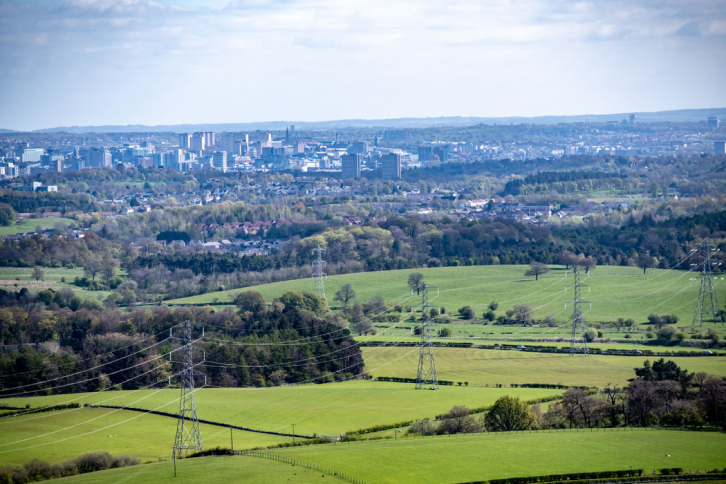
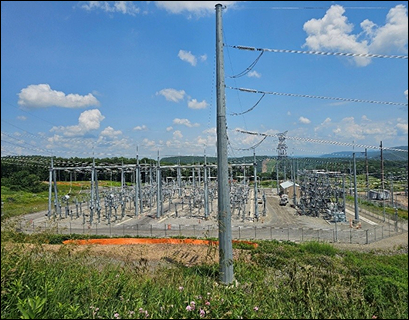
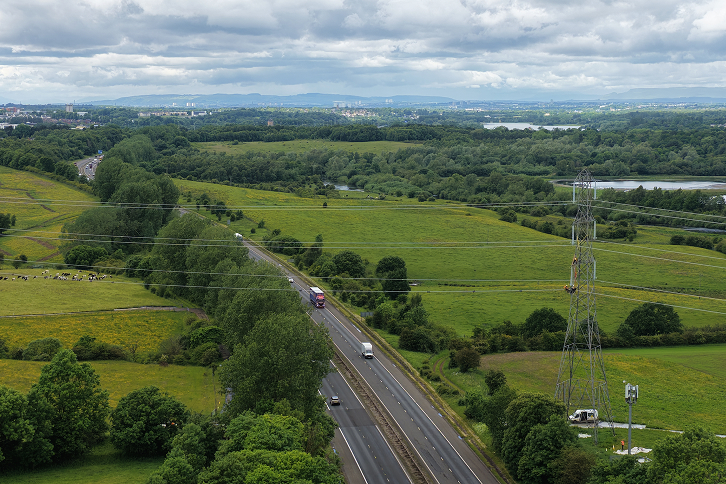
Transmission and distribution asset management
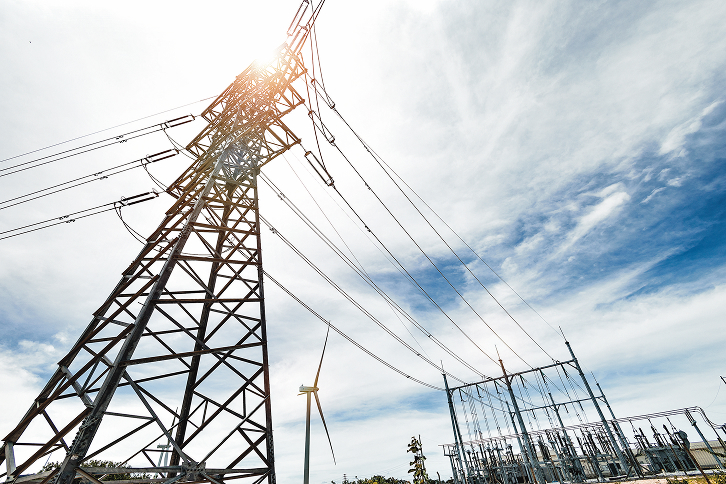
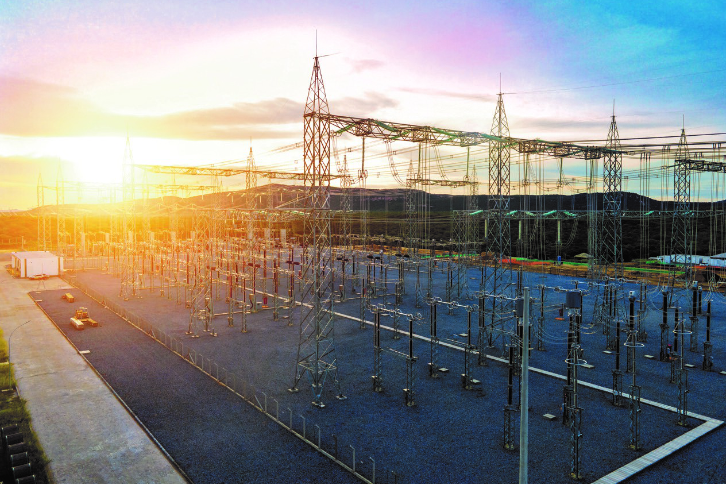
To make use of the electricity we produce, it is essential to have a strong network infrastructure capable of transporting energy from its origin to the point of consumption, adjusting voltage along the way between high, medium and low voltage.
From high-voltage and transmission networks to distribution and last-mile management
-

High voltage
High-voltage networks are used to carry large amounts of electricity over long distances efficiently and safely, minimising energy losses along the way. To achieve this, it is essential to have well-maintained facilities that undergo constant inspections, supported by advanced monitoring systems.
Furthermore, these networks are managed intelligently and in real time to ensure that the energy produced and consumed are always balanced. This guarantees a stable, secure and continuous supply for homes, businesses and industries.
Depending on the voltage level, high-voltage networks may form part of the transmission network or the distribution network.
-

Medium voltage
Medium-voltage networks act as a key link between high-voltage networks and end users. They supply power to large-scale industry and urban substations, from where it is subsequently distributed to homes, businesses and services.
Furthermore, these networks play an increasingly important role in the integration of distributed energy resources, such as local renewable generation, self-consumption and storage. As a result, they enable a more flexible, efficient and locally-focused network, ready for new energy consumption models.
-

Low voltage
Low-voltage networks are those that deliver electricity directly to users, enabling its everyday use in homes, businesses and services. To achieve this, transformer stations step down the voltage – to approximately 230 V in Europe, and between 100 and 127 V in the Americas, depending on the needs of each region – so that it can be used by electrical appliances. All of this is supported by smart meters that help manage demand and ensure the resilience and security of the supply.
Smart substations and transformer stations
Technology and data analysis play a key role in substations and transformer centres. Thanks to the digitalisation of these facilities and their remote control, we can identify, isolate and resolve incidents remotely, significantly reducing response times and, in many cases, avoiding unnecessary travel.
This more intelligent operating model allows us to offer a higher-quality electricity service, one that is more resilient to incidents and more consistent, strengthening security of supply for our customers.

Smart meters and remote management (AMI)
A smart meter is much more than a device connected to the internet; it is a key element of the digital electricity network, capable of continuously collecting and sending information.
These meters form part of an advanced metering infrastructure, which makes it possible to understand consumption almost in real time. As a result, the network can operate more efficiently, anticipate incidents and adapt better to changing needs. At the same time, users have more information to understand their consumption and make more informed decisions.
For this reason, in recent years the Iberdrola Group has installed close to 15 million smart meters worldwide, incorporating remote management, monitoring and automation capabilities into the network, strengthening the quality and reliability of electricity supply.

Smart grids: the network as a technological platform
Innovation in electricity networks, together with technological advances, has enabled the network to evolve from a passive system into a dynamic and flexible one.
In this context, smart grids emerge as a bidirectional platform, capable of managing not only the energy that is consumed, but also the energy that is generated and fed back into the network. New participants are involved, such as renewable self-consumption, electric vehicles or distributed storage systems, which can supply energy when it is needed.
To ensure this new reality operates seamlessly for users, the network relies on advanced management and data analysis systems. These make it possible to balance demand, coordinate different resources and distribute energy efficiently, ensuring a safe, stable supply adapted to new electricity uses.

Microgrids: the solution for small communities
Microgrids are local, self-sufficient electricity systems designed to provide a constant, high-quality energy supply to specific communities, especially in rural or remote areas where the conventional network is difficult to deploy.
These infrastructures can operate in isolation or connected to the main network to provide stability, using the intelligent integration of renewable sources and battery storage systems that ensure continuity of service even in the event of external disruptions.
At Iberdrola, we promote microgrids as an essential tool for the energy transition and decarbonisation, fostering social and economic development through pioneering projects in regions such as Brazil and Spain.

Our flagship electricity networkds projects
-
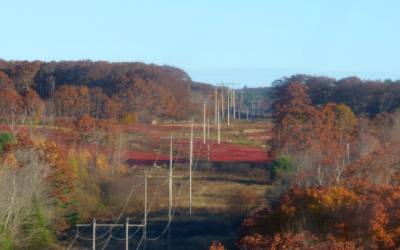
NECEC: connecting Canada and the United States to supply renewable energy to New England
-
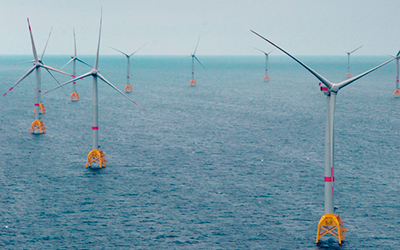
Eastern Green Link 1: an undersea electric conduction superhighway linking the North Sea to England
-
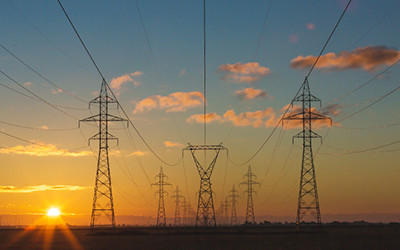
BeFlexible implements pilots in various countries to validate its flexibility strategy in Europe
-
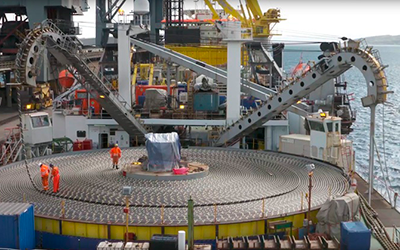
Western Link: the project laying the world's longest underwater power line
-
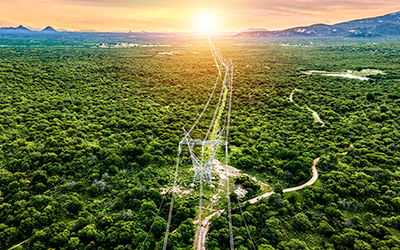
1,600 kilometres of power line in Brazil: Our largest grid project in the world
Operational excellence, resilience and quality of supply
At Iberdrola, we are pioneers in developing innovative projects to improve the reliability, security, resilience and digitalisation of our networks, providing our customers with excellent service quality. To achieve this, we work to maximise system efficiency through operational excellence and the digitalisation of our assets.
We also work to improve customer service levels by combining innovative technology with expert teams operating locally. This allows us to respond quickly to extreme weather events thanks to our field teams and control centres in the countries where we operate, helping to guarantee continuity of supply (TIEPI), while strengthening safety and energy resilience.
As leading players in electrification, we are moving towards a more electrified model through the large-scale deployment of smart grids which, thanks to the information they provide, enable better management –more anticipatory, remote and secure– facilitating the more efficient integration of electricity generation (centralised and distributed) and the rollout of technologies highly dependent on electricity, such as electric vehicles and heat pumps, among others.
Our global network operators
Electricity networks will play a leading role in the company’s expansion and growth in the coming years. Our Strategic Plan therefore includes strong investment in networks, particularly focused on the United Kingdom and the United States, where around €37 billion will be allocated, with one-third dedicated to transmission and two-thirds to strengthening distribution activities.
All these efforts have made our Group a global leader in the development and deployment of smart grids. If you would like to learn more about our distribution companies by country, you can find them at the following links:
-

i-DE Redes Eléctricas Inteligentes
Learn more about i-DE Redes Eléctricas InteligentesParent company of Iberdrola España and an electricity distribution company.
 External link, opens in new window.
Iberdrola electricity distribution companies
Spain
United Kingdom
United States
Brazil
Australia
United Kingdom
SP Electricity North West SPENUnited States
Avangrid NetworksBrazil
NeoenergiaAustralia
Iberdrola Australia NetworksMore on networks
-
- Distributed generation: what it is, types and its benefits
- The benefits of the green grid
- Difference between alternating and direct current
- How an electrical substation works
- Difference between high, medium and low voltage
- What are submarine cables?
- Smart meters
- Earthing system: types, importance and installation
- Artificial intelligence in electricity networks
- "It’s no longer about laying more cables but making the network smarter"
-
- Transformer substations: what they are, how they work and their different types
- Internet of energy
- Telecommunications for the smart grid
- DSO (Distribution System Operator)
- Digitalisation of electrical structures using BIM technology
- How an electrical substation works
- Digitalisation of electrical structures using BIM technology
- Regulated Asset Base
- “A SCADA system is our ‘eyes and ears’ across our network”