Environment conservation principle
Biodiversity, a key pillar of our environmental action
The Iberdrola Group maintains a firm commitment to the protection and restoration of biodiversity in the ecosystems and landscapes where it operates. It also promotes public awareness of the scale of this challenge and the need to move towards a nature-positive development model.

The planet’s ecosystems have been profoundly transformed by human activity and, over the last century, this transformation has accelerated at an unprecedented pace in human history. According to the Intergovernmental Science-Policy Platform on Biodiversity and Ecosystem Services (IPBES), around one million species are at risk of extinction – many of them within the coming decades if no action is taken – as a result of human pressure on the environment. This loss not only threatens the balance of ecosystems, but also the well-being and prosperity of societies.
Aware of this context, Iberdrola has placed biodiversity as a strategic pillar within its environmental and sustainability policy. Its Biodiversity Policy establishes a framework for action aligned with the Kunming-Montreal Global Biodiversity Framework, the international agreement adopted in 2022 that sets global targets for 2030 aimed at halting and reversing biodiversity loss and restoring ecosystems, on the path towards a balanced relationship with nature by 2050. In this regard, the Group aims to contribute to a nature-positive economy and society.
The Group also promotes initiatives at its facilities – such as wind farms – to protect birdlife and improve the integration of its infrastructure into the natural environment.
Principles of action on biodiversity
The Group’s Biodiversity Policy is structured around the following key principles:
-

Integration into strategy and decision-making
Incorporating biodiversity into strategic planning and operational decision-making throughout the entire lifecycle of facilities.
-

Impact and risk assessment
Identifying, quantifying and managing impacts, dependencies, risks and opportunities related to biodiversity, both in operations and across the value chain.
-

Application of the mitigation hierarchy
Prioritising impact avoidance, followed by minimisation, restoration and, as a last resort, offsetting, with a nature-positive approach.
-

Protection of sensitive areas
Avoiding, wherever possible, the development of new infrastructure in protected areas or areas of high ecological value, unless no viable alternatives exist.
-

No deforestation and natural capital management
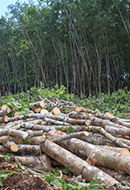
Preventing deforestation linked to activities and promoting deforestation-free supply chains.
-

Species monitoring and conservation
Developing monitoring programmes for flora and fauna, particularly vulnerable or protected species, and implementing conservation and restoration measures using native species.
-

Integration into environmental management
Incorporating biodiversity into the Group’s environmental management systems, with objectives, indicators and monitoring and auditing mechanisms.
-

Management of invasive species
Identifying risks and implementing specific plans to control invasive species in operational environments.
-

Collaboration and innovation
Participating in research, conservation and awareness projects in collaboration with public authorities, social organisations, local communities and other stakeholders.
-

Training and corporate culture
Promoting knowledge and training in biodiversity among employees, suppliers and partners.
-

Transparency and reporting
Regularly and transparently reporting on the Group’s biodiversity performance and actions.