


Installation of wind turbines
How to choose the best location for installing wind turbines?
The uncertainty surrounding how wind behaves is the main handicap when building a wind farm, especially in places with a complex orography. Where and how can wind turbines be installed to maximise the production of wind power? Supercomputing has the answer.
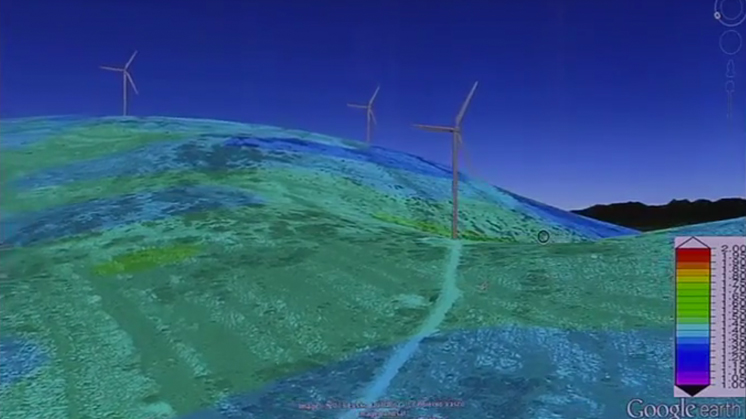
Iberdrola is working with the Barcelona Supercomputing Centre (BSC) in the Sedar project (High-Resolution Wind Power Simulation) to reduce these levels of uncertainty, using this simulation software to estimate the production capacity of an offshore or onshore wind farm throughout its useful life before it is built.
Thanks to the computing power of these systems, it is possible to identify the most suitable locations for installing wind turbines, optimising the design of the wind farm to maximise the production of energy. This improves the efficiency of the wind farm, reduces construction costs and minimises investment risk.
Since then, these technologies have evolved through the incorporation of artificial intelligence, new atmospheric models, satellite data and information collected by field sensors. The combination of high-resolution atmospheric models, satellite data and field sensors makes it possible to predict wind behaviour more accurately and optimise both the location of wind turbines and their operation throughout the wind farm's lifetime. These technologies help increase renewable energy generation, reduce operation and maintenance costs and minimise the environmental impact of wind farms.
A computer model of this complexity requires advanced computing infrastructure. It was developed using the supercomputing capabilities of the Barcelona Supercomputing Center (BSC), home to the MareNostrum supercomputer, one of Europe's most advanced scientific computing platforms. These facilities make it possible to process vast amounts of meteorological data and run complex simulations to optimise wind farm design.

What factors are considered when choosing the location of a wind farm?
Although the availability of the wind resource is the determining factor when selecting the location of a wind farm, it is not the only one. Before a project begins, multiple technical, environmental and logistical variables are analysed to ensure that the installation is efficient, safe and viable throughout its operational lifetime. Thanks to high-resolution simulation tools and advanced data analysis, all these factors can be assessed together to optimise the wind farm's design.
The main factors include:
-

Wind resource quality
Wind speed, direction and consistency throughout the year are analysed to estimate the site's energy generation potential and reduce uncertainty over future electricity production.
-

Topography and terrain characteristics
The shape of the landscape influences wind behaviour. Mountains, valleys and slopes can generate turbulence or alter air flows, so specific simulations are carried out to identify the most favourable locations.
-

Connection to the electricity network
Proximity to electricity transmission and distribution infrastructure makes it easier to connect the energy generated to the network and can reduce project development costs.
-

Accessibility and logistics
The availability of suitable roads and access routes is assessed to ensure the transport and installation of large components such as blades, towers and nacelles.
-

Ground conditions
The characteristics of the ground are essential when designing foundations capable of supporting the weight and structural loads that wind turbines must withstand over several decades.
-

Environmental and biodiversity factors
Environmental studies assess the presence of protected species, bird and bat migration routes, natural habitats and other factors that may influence the project's development, with the aim of minimising its environmental impact.
-

Simulation technology and data analysis
Supercomputing, high-resolution atmospheric models and advanced analytics make it possible to integrate all these variables, optimise wind turbine locations, improve energy production and reduce the project's technical and financial risks.


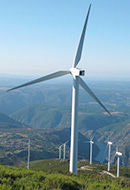
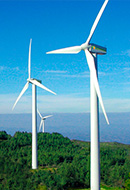
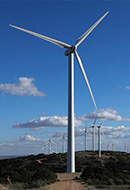
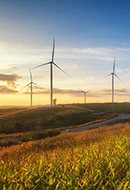
The Sedar project, launched in 2013 in collaboration with the Barcelona Supercomputing Center (BSC), marked an important milestone in the application of supercomputing to wind farm design. Its objective was to reduce uncertainty associated with wind behaviour and improve the planning of new projects through models capable of analysing site conditions with greater accuracy.
The project demonstrated how supercomputing could be applied to wind farm design to identify the most suitable locations for wind turbines, optimise their layout across the wind farm and improve estimates of energy production before construction began. One of its earliest applications was the Pier II wind farm in Mexico, whose planning was supported by this technology.
Since then, these capabilities have evolved into more advanced systems that combine artificial intelligence, field sensors, meteorological data, satellite information and digital models of the wind farm. These tools make it possible not only to design better installations before construction, but also to optimise their operation throughout their lifetime by anticipating potential deviations in energy production, improving maintenance strategies and adapting operation to changing wind conditions.
The ultimate goal is to increase renewable energy generation, reduce operation and maintenance costs and minimise environmental impact by enabling better decisions at every stage of a project, from site selection and wind farm design through to day-to-day operation.
