


Soil polution
Soil pollution, its effects on our future and what we can do to reduce it
When we talk about pollution, we tend to look up at the sky. However, this environmental challenge goes far beyond the atmosphere. Soils, which are essential for food production, are also seriously affected, compromising ecosystems as well as the quality and safety of our food.
The Earth's surface is like the skin of the planet: a mantle with scars, ancient wrinkles and recent wounds caused by humans and nature. Some of these wounds, such as the extinction of species, are incurable; others compromise health and food security. Together they threaten the wellbeing of half the world's population, according to Global Land Outlook (GLO2), Land Restoration for Recovery and Resilience. This report, published in 2022 by the United Nations Convention to Combat Desertification, highlights that pollution is the leading environmental cause of disease and death worldwide, particularly through soil contamination, exposure to chemicals and poor waste management.
What is soil pollution
This invisible affliction appears when the concentration of pollutants on the surface becomes so high that it harms land biodiversity and endangers health, particularly through food. Activities such as stock breeding and intensive farming use chemicals, pesticides and fertilisers that pollute the land, just as happens with heavy metals and other natural and man-made chemical substances.
Soil pollution is a global threat that is particularly serious in regions like Europe, Eurasia, Asia and North Africa, as indicated by the Food and Agricultural Organization of the United Nations (FAO). The FAO also affirms that both intense and even moderate degradation is already affecting one third of the world's soil. Moreover, recovery is so slow that it would take 1,000 years to create a few centimetres layer of arable soil.
Causes and types of soil pollution
Phenomena such as erosion, loss of organic carbon, increased salt content, compacting, acidification and chemical pollution are the major causes of current soil degradation. Moreover, the FAO distinguishes between two types of soil pollution:
- Point source pollution: this is due to specific reasons, occurs in small areas and its causes are easy to identify. This type of land pollution is common in cities, former factory sites, areas surrounding roads, illegal dumps and sewage treatment plants.
- Diffuse pollution: this covers very large areas and its causes are diverse or difficult to identify. This phenomenon involves the dispersion of pollutants through air-soil-water systems and has a significant impact on human health and the environment.
Among the main human causes of soil pollution, the Food and Agriculture Organisation of the United Nations (FAO) highlights:
- Industrial and mining activity, due to the release of heavy metals and hazardous chemicals.
- Military activities, due to the use and storage of polluting materials.
- Inadequate waste management, including both urban waste and technological waste or electronic waste, whose components can leach toxic substances into the soil.
- The discharge of untreated wastewater introduces pollutants into the soil.
- Intensive agriculture and livestock farming, especially due to the excessive use of fertilisers, pesticides and slurry.
- The construction of urban and transport infrastructure, which can cause soil sealing, compaction and contamination.
Together these activities exert increasing pressure on soils and compromise their ability to maintain productivity, biodiversity and essential ecosystem services.

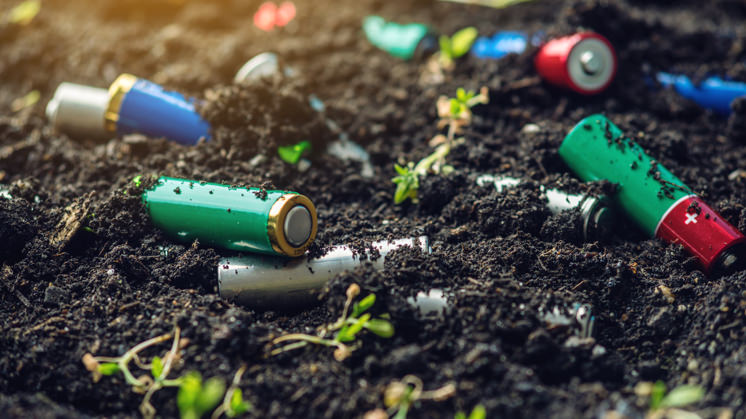
At home, we use various products which, if disposed of incorrectly, can contaminate the soil and disrupt its natural balance. Among the most problematic are batteries, used cooking oil, detergents and cleaning products, expired medicines, and garden pesticides or herbicides, as they contain chemicals that seep into the ground and affect microorganisms, microfauna and plant growth. Furthermore, some of this waste can seep into the groundwater and cause wider damage to the environment. Therefore, properly sorting and managing these products is essential for protecting soil fertility and caring for the environment.
 SEE INFOGRAPHIC: Which household products pollute the soil? [PDF]




Consequences of soil contamination
Toxic substances deposited on the Earth's surface harm our health and wellbeing, as well as the quality of our food, water and air. Below are the most significant effects according to the Intergovernmental Science-Policy Platform on Biodiversity and Ecosystem Services (IPBES) and the FAO:
-

Damage to health
Contaminants in the soil enter our bodies through the food chain, leading to the onset of disease. What’s more, the spread of antibiotics in the environment promotes the resistance of pathogens to these drugs.
-

Poorer crops
Soil pollution compromises the food security of the world's population by reducing the quantity and quality of crops.
-

Climate change
From 2015 to 2050, 69 gigatonnes of CO2 will be emitted as a result of land use change and soil degradation, a figure that represents 17% of current greenhouse gas emissions each year.
-

Water and air pollution
The deterioration of the Earth's surface has an impact on water and air quality, especially in developing countries.
-

Population displacement
Soil degradation and climate change will force between 50 and 700 million people to migrate by 2050.
-

Species extinction
Soil pollution is one of the main causes that could trigger the sixth mass extinction in history: wildlife populations fell by 73% between 1970 and 1 December 2024, according to the WWF's Living Planet Report.
-

Desertification
The number of inhabitants in the most arid areas of the planet could account for 45% of the world's population by 2050, while the world's wetlands have lost 87% of their area in the last three centuries.
-

Impact on the economy
Global economic losses caused by soil degradation are estimated to reach half of the world's annual Gross Domestic Product (GDP).


Solutions to reduce soil pollution
Soil degradation is a complex problem that requires governments, institutions, communities and individuals to take joint measures. The following are just some of the things we can do to improve its health:
- Eat sustainable foodstuffs, properly recycle batteries, produce homemade compost and dispose of drugs in the places authorised for this purpose.
- Encourage a more eco-friendly model for industry, farming and stock breeding, among other economic activities.
- Improve urban planning and transport planning and waste water treatment.
- Improve the management of mining waste, restore the landscape and conserve topsoil.
- Involve local communities and indigenous peoples in the design, implementation and assessment of sustainable land and soil management.