


World Water Day - 22 March
World Water Day 2026: Importance, history and Interesting facts about water
World Water Day, celebrated every 22 March since 1993, is a global initiative backed by the United Nations to highlight the importance of fresh water for our planet and the need to combat its scarcity around the world – as nearly 2.2 billion people still lack access to safe drinking water. From the Iberdrola Group, we join in the celebration of this date to raise awareness of the rational and sustainable use of this unique resource.
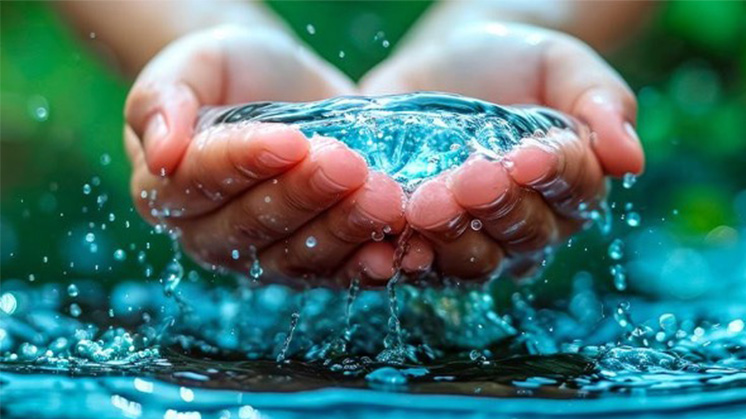
Water is a fundamental resource that sustains life on our planet. From oceans to rivers and lakes, water is indispensable for human well-being, agriculture, industry and ecosystems. However, despite its vital importance, sustainable water management faces numerous challenges, including scarcity, pollution and overexploitation of water resources.
World Water Day, celebrated on 22 March each year, highlights the importance of conserving and protecting this vital resource for the health of people and the environment. It is an opportunity to reflect on the need to adopt responsible water management practices and to raise awareness of the problems related to its access and equitable use around the world. At Iberdrola, this day is closely linked to collaboration between different sectors in the face of the water crisis.
Water – a vital resource
Water is one of the most common compounds in our universe. It is essential for life at all levels, from individual cells to entire ecosystems. At the microscopic level, living things depend on water to regulate their body temperature, maintain hydration and carry out physiological processes vital to their survival.
For humans in particular, water has always played a fundamental role in their development and evolution. Early civilisations, for example, sought to settle near freshwater sources in order to take advantage of their properties for agriculture, hygiene, transport and food production. Since then, people's daily lives have always revolved around access to water, making it a vital resource for human progress.
Water stands out, among other things, for being the most abundant resource on our planet. This chemical substance – whose molecule is made up of two hydrogen atoms and one oxygen atom – covers three quarters of the earth's surface through the oceans. However, despite its abundance, it remains a scarce commodity. According to the United Nations (UN), approximately 2.2 billion people still lack access to safely managed drinking water – which means that 115 million people are still forced to drink contaminated water.
The growing impacts of climate change and global population growth are associated with greater demand and limited water availability. Public health, prosperity, food and energy systems, economic activity and environmental balance all depend on the proper functioning and adequate management of the water cycle.
Origin of World Water Day
The proposal to create an annual celebration focusing on the importance of water emerged during the 1992 United Nations Conference on Environment and Development (UNCED) in Rio de Janeiro. At this meeting, the need to highlight the importance of this valuable natural resource was recognised, and in the same year, 22 March of each year was declared World Day for Water by the United Nations General Assembly.
The United Nations and its Member States dedicate this day to implementing UN recommendations and promoting specific initiatives within their countries aiming to raise awareness of the importance of responsible and efficient use of water resources. Every year, the different UN agencies involved in water-related issues seek to coordinate international activities during the day, while the organisation itself and the countries commit to implementing measures to save water and improve access to drinking water – recognised as a fundamental right since July 2010.
Celebrate World Water Day with Iberdrola.
What is the aim of celebrating World Water Day?
Before celebrating World Water Day, it is important to reflect on the objectives of dedicating an exclusive date to this basic and irreplaceable resource. UN-Water, the United Nations inter-agency coordination mechanism on water and sanitation, defines this day as an opportunity to "celebrate water and raise awareness about people living without access to safe drinking water". It is also about taking specific action to address the global water crisis and support the achievement of Sustainable Development Goal 6 by 2030.
The initiative involves mobilising organisations to participate in a global public day in the run-up to 22 March, spreading the word about the cause through strategic communications and activities. Billions of people join the campaign with conversations and debates, with the aim of raising awareness around the world. In addition, on the day itself, the UN World Water Development Report, which provides tools for water policy implementation, is released.
In a global action, the General Assembly also set a series of targets for 2028. In the context of the current International Decade for Action "Water for Sustainable Development" (2018-2028), signed in 2016, the aim is to strengthen international cooperation to advance water-related goals and targets. One of these efforts resulted in the United Nations Water Conference, held from 22-24 March 2023 in New York – which marked the first international gathering dedicated exclusively to the water issue in almost 50 years.
World Water Day 2026 theme
The theme for this year is “water and gender equality”. The campaign highlights that women and girls are disproportionately affected by problems of access to water and sanitation, due to traditional gender roles, inadequate infrastructure and systemic inequalities.
The United Nations initiative underlines that addressing the water crisis requires a transformative, human rights-based approach. This approach must fully recognise the voices, leadership and agency of women. Ignoring this right could exacerbate public health problems, conflicts, displacement and human rights violations, especially in contexts of poverty or humanitarian crises. It is therefore crucial to dedicate this World Water Day to reflecting on solutions to this growing challenge.
Learn more about the key messages of World Water Day 2026
 “The global water crisis does not affect everyone equally.” The global water crisis affects us all, but not in the same way. Where human rights to safe drinking water and sanitation are not guaranteed, inequalities deepen and women and girls suffer the consequences most severely.
 “Women must shape the future of water.” Water systems must be fair and able to adapt to climate change, addressing the needs of the entire population. This is only possible through a human rights-based approach that effectively integrates women’s participation and leadership in water planning, management and decision-making.
 “Where water flows, equality grows.” When women and girls actively participate and make decisions in water management, services are more equitable, sustainable and efficient. Strengthening female leadership enables water to drive health, wellbeing and development, becoming a foundation for a fairer and more inclusive future for society as a whole.
Interesting facts about water
Water – a vital resource that is part of our daily lives – hides a series of interesting facts that often go unnoticed. Below, we review some of its most outstanding interesting facts that reveal the importance of this element for the functioning of the planet and its inhabitants:
-

Properties
Water is the only element in nature that can be found in three different physical states: solid, liquid and gas.
-

Freshwater withdrawals
70% of all freshwater withdrawals are used in agriculture – 20% in industries and 10% in municipalities. (UN, 2024).
-

Wastewater
42% of domestic wastewater is not properly treated (UN, 2023).
-

So much life in one drop
Up to 10 M microscopic bacteria and viruses can live in a single drop of seawater, as well as fish eggs, crab hatchlings and plankton (Smithsonian Tropical Research Institute).
-

Daily consumption
50 litres of water per person per day is necessary to cover basic hygiene needs and basic food hygiene (WHO).
-

Body water
Water is the main constituent of the human body and accounts for approximately 50-70% of body weight.


