Lighting projects in Mexico
The lighting of Oaxaca Cathedral and the National Museum of Art, part of our legacy in Mexico
During the years in which the Iberdrola Group operated in Mexico, until 2026, it also carried out important work to protect and promote works of art and historic buildings through its Foundation in the country.
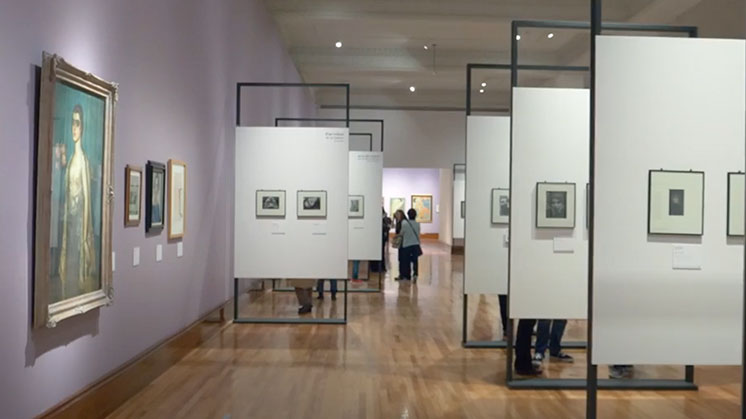
Illumination of the interior of Mexico's National Museum of Art (MUNAL) in Mexico City (video in Spanish)
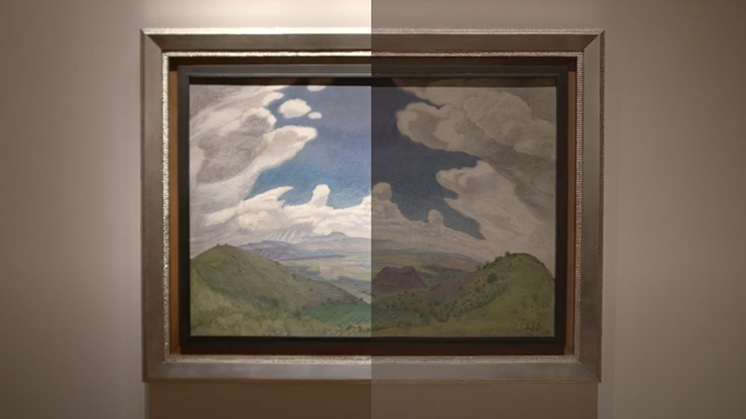
How the pictures look with the new lighting compared with the previous lighting.
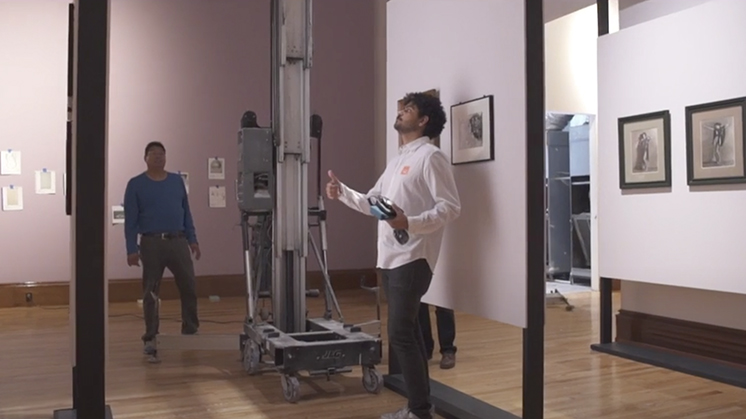
Installing the interior lighting in Mexico's National Museum of Art (MUNAL).
As a demonstration of Iberdrola's commitment to preserving the artistic and cultural heritage of the countries where it operates, during our period of activity in Mexico we developed major energy-efficient lighting initiatives to showcase works of art and historic buildings of immense value to their full potential and splendour. These included a donation of resources to the National Museum of Art (MUNAL), as well as the 'Oaxaca Brilla' and 'Saltillo Brilla' projects.
How Iberdrola promoted culture through lighting in Mexico
While we were present in Mexico, Iberdrola supported cultural and heritage initiatives through lighting projects that helped enhance iconic spaces and bring them closer to the public, with several objectives:
-

Enhancing heritage
The lighting helped highlight the architecture and distinctive features of different cultural and heritage sites.
-

Bringing culture closer to the public
These projects helped make places of cultural interest more visible and attractive, encouraging people to enjoy them.
-

Strengthening local identity
Highlighting iconic buildings and spaces helped preserve and showcase elements that represent the communities where Iberdrola operated.
-

Bringing culture and innovation together
The lighting projects demonstrated how new technological solutions can help transform the way people experience and enjoy heritage.
-

Contributing to community development
Supporting cultural initiatives was part of Iberdrola's commitment to the communities in which it operated in Mexico.


Celebrating 125 years of history with lighting projects
At the Iberdrola Group, we celebrated 125 light-years, a milestone in the long journey that has made us the largest electricity company in Europe and one of the two largest in the world by market capitalisation. To mark the occasion, we launched an extensive programme of activities that included various lighting initiatives for historic and iconic buildings and sites.
Iberdrola lighting projects while we were present in Mexico
Here are some of the lighting projects promoted by Iberdrola through the Iberdrola Mexico Foundation.
'Saltillo Brilla'
Project date: 2025
The iconic Santiago Cathedral, an architectural and spiritual gem in Saltillo, entered a new era with the installation of an artistic and sustainable lighting system. This initiative, part of the México Brilla programme, was developed in collaboration with the State Government, the Municipality of Saltillo, the Diocese of Saltillo and the National Institute of Anthropology and History (INAH).
Thanks to the latest-generation LED technology, the new lighting makes it possible to appreciate the architectural details of its Baroque and Neoclassical styles more clearly, while significantly reducing energy consumption and its carbon footprint.
Built between 1745 and 1897, Santiago Cathedral stands out for its imposing quarry-stone façade with Solomonic columns, richly decorated interior altarpieces, a pulpit featuring botanical motifs and a roof that preserves centuries of history. Its 81-metre-high Neoclassical tower is topped by an iron cross which, according to legend, was placed there by a single man in exchange for his freedom.
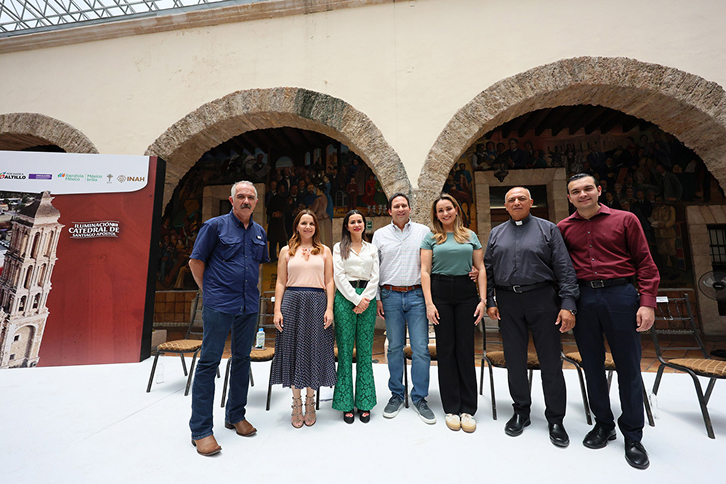
Santiago Apóstol Cathedral (Saltillo), one of Mexico's national architectural gems.
'Oaxaca Brilla'
Project date: 2024
During this period, we partnered with local authorities to provide 10 historic buildings in the state of Oaxaca with new, cutting-edge and sustainable artistic lighting. Through the 'Oaxaca Brilla' initiative, we promoted tourism by highlighting the appeal and beauty of iconic buildings, including Oaxaca Metropolitan Cathedral, the Temple of Santo Domingo de Guzmán and the Government Palace.
The aim of the programme was to support cultural outreach through the efficient use of energy. The lighting systems use technology that improves energy efficiency by reducing the building's current electricity consumption by 50 %, lowering the carbon footprint of the Oaxacan capital and contributing to its sustainability.
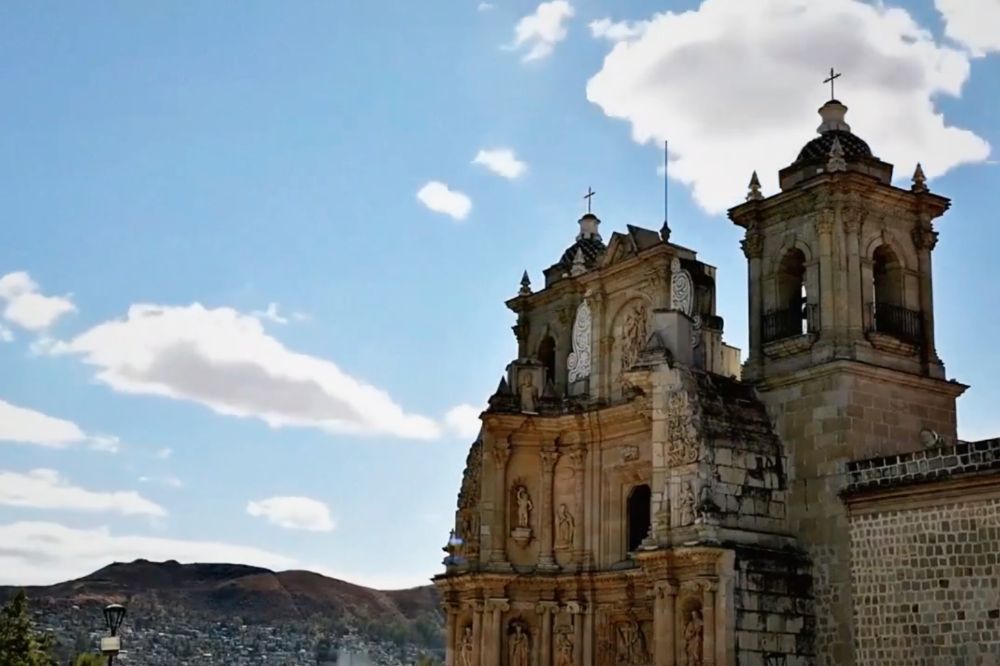
The Metropolitan Cathedral of Oaxaca, beneficiary of the Oaxaca Brilla project (video in Spanish).
National Museum of Art (MUNAL) (Mexico City)
Thanks to our work in Mexico, the National Museum of Art (MUNAL) now has an energy-efficient lighting system that makes it easier to appreciate the colour, detail and texture of the works on display, while also helping preserve them by controlling illuminance levels.
This innovative system, which represented an investment of more than one million pesos by the company and was implemented in July 2018, consists of LED tracks and lamps installed across almost 1,000 m² of exhibition space used for temporary exhibitions. The change resulted in an 85 % reduction in annual energy consumption, with a corresponding reduction in CO₂ emissions.
With more than 15 optical options available, the new system enables 95 % of the colours in a work of art to be accurately appreciated. This is very close to the 100% achieved when a piece is exposed to natural light, and significantly higher than the 80% available with the previous system.