


Initiatives for women's development in STEM areas
Promoting scientific vocations among girls and young women
Iberdrola is driving initiatives to support the professional development of women in STEM fields –science, technology, engineering and mathematics– and to move towards genuine equality of opportunity. These programmes aim to spark an interest in these fields from an early age, create local role models and help more girls and young women envisage their future in sectors that are key to the energy transition and digital transformation. Equal opportunities must be built on the foundations of education, unbiased recruitment and access to positions of responsibility.

Women and STEM education
Social norms, prejudices and expectations limit interest in STEM subjects and shape women's life paths from a very early age. Is there a solution? For many experts the answer lies in promoting STEM education.
Social norms, stereotypes and expectations still shape girls' and young women's interest in STEM subjects. It is therefore essential to take action from an early age, showcase diverse role models and make science and technology accessible in a practical, useful way that is connected to social and environmental challenges.
Recent reports show that the challenge lies not only in sparking girls' and young women's interest in STEM subjects but also in sustaining their confidence, their sense of belonging and their access to real opportunities throughout their entire educational journey. According to the report State of Girls and Women in STEM 2026 by the National Girls Collaborative Project, girls and young women perform well in maths and science, but stereotypes, a lack of relatable role models and learning experiences that are disconnected from their reality can undermine their confidence and their continued engagement in these fields. The same report highlights that 86% of girls and young women want to pursue careers that help others – an aspiration that can be directly linked to the opportunities offered by science, technology, engineering and mathematics.
Global data confirms that the gap persists. According to UNESCO, women account for just 35 % of graduates in STEM disciplines, a proportion that has remained unchanged over the last decade, despite the fact that these fields are key to the jobs of the future, innovation, social wellbeing, inclusive growth and sustainable development. This under-representation in education is subsequently reflected in the labour market: the report State of Girls and Women in STEM 2026, by the National Girls Collaborative Project, notes that women account for 35 % of the STEM workforce in the data analysed, even though they make up 48 % of the total workforce, and that globally they hold only 22 % of roles related to artificial intelligence. In the same vein the UNESCO report Changing the Equation: Securing STEM Futures for Women emphasises that the gap is not limited to access to education, but extends to research, employment and leadership in science and technology; it is therefore essential to take action through education, career guidance, role models and development opportunities.
Promoting the integration of women into STEM fields
Education is one of the most effective levers for reducing this gap. To make progress it is necessary to strengthen academic and career guidance, support teaching staff, highlight female role models, promote practical experiences and eliminate bias in recruitment, promotion and professional development.
The European Union has reinforced this approach through the Capacities Union and the Strategic Plan for STEM Education, which sets out specific targets to increase the number of women in vocational training and higher education in science, technology, engineering and mathematics.
Women and STEM studies
Influencing factors
Society
- Gender equality
- Equal pay
- Social norms
- Reformulation of policies
- Legislation and policies
- Peers and social media
School
- Teaching strategies
- Evaluation tools
- Perception of teachers
- STEM equipment, materials and resources
- Interactions among students
- Quality of teaching
Family
- Family relations
- Beliefs and expectations
- Family characteristics
- Resources and support at home
Student
- STEM stereotypes and identities
- Special abilities
- Interest and dedication

Women scientists: an inspiring example
Up to 2025, the Nobel Prizes in scientific disciplines (Physics, Chemistry and Physiology or Medicine) were awarded to women on 27 occasions, representing around 4% of the total in these categories. Despite this lack of representation and recognition, throughout history there have been women scientists who have made a decisive contribution to the advancement of knowledge. Here are some of the most inspiring examples:

Hipatia de Alejandría
- La primera mujer astrónoma conocida. Mejoró el diseño de los primitivos astrolabios —instrumentos para determinar las posiciones de las estrellas— e hizo innumerables aportaciones a la astronomía.

Marie Curie
- Licenciada en física y matemáticas, fue pionera en el campo del estudio de la radiación. Descubrió el radio y el polonio y se convirtió en la primera mujer en recibir el Nobel —además, por partida doble, primero en Física y después en Química—.

Valentina Tereshkova
- A bordo de la Vostok 6 y con tan solo 26 años, La Gaviota hizo historia convirtiéndose en la primera mujer astronauta. Corría el año 1963 y durante las 70 horas y 50 minutos que estuvo lejos de La Tierra dio 48 vueltas al planeta azul.

Katherine Johnson, Dorothy Vaughan y Mary Jackson
- Con los cálculos de estas tres afroamericanas que trabajaban en la NASA, Neil Armstrong llegó a la luna. Su hazaña se hizo popular con la película Figuras ocultas.

Lise Meitner
- Física sueca de origen austriaco que fue la descubridora de la fisión nuclear. Fue su compañero de investigación, Otto Hahn, quien recibió el Nobel en 1944 al verse obligada a huir de Alemania por ser judía.

Elizabeth Blackburn
- Bioquímica australiana que recibió el premio Nobel de Medicina en 2009 por descubrir la telomerasa, una enzima capaz de alargar los telómeros —los extremos de los cromosomas— y conferir vida adicional a las células.
And like them there are many other female inventors who have forever changed the course of humanity: the first computer language, the syringe, desalination units, Wi-Fi, Kevlar, anti-reflective glass, the fire escape and even the lifeboat.
Promoting women in STEM careers through the Iberdrola Group
Promoting the presence of women in science, technology, engineering and mathematics requires action at various stages: inspiring vocations, supporting educational choices, creating support networks, opening up career opportunities and ensuring development processes based on merit and ability.
At the Iberdrola Group, promoting female talent in STEM fields forms part of a broader commitment to equal opportunities, inclusion and non-discrimination. The Policy on Sustainable Human Capital Management and the Prevention of Harassment promotes recruitment and development processes based on merit and ability as well as measures to reduce bias and encourage participation in consultation and decision-making forums.
In 2025, Iberdrola had a workforce of 45,400 professionals, 25.4 % of whom were women. The representation of women also increased in positions of responsibility: women accounted for 31.1 % of leadership roles, 43 % of the Board of Directors and 50 % of senior management.
To continue attracting female talent, the electricity company runs various programmes to promote STEM careers in the different countries where it operates. By doing so, we inspire other companies and our value chain to recognise the challenges faced by women in the fields of science and technology and to undertake similar initiatives.
The company dedicated 3.6 million hours to training in 2025, averaging 79 hours per employee, and maintains programmes for professional development, mobility, continuous learning and inclusive leadership to strengthen the skills required in an increasingly technology-driven sector.
Initiatives for women's development in STEMareas
United States
- Programa de Tecnología CMP Lineworker, Eureka!
- WomENergy
Brazil
- Escuela de Electricistas para mujeres
- Impactô Mujeres y Premio Inspirar, Selección brasileña de fútbol femenino
Spain
- Cátedra Mujer STEM
- Alianza STEAM, Niñas en pie de ciencia
United Kingdom
- POWERful Women, Returner Programme
- SP Connected Women
- Training
- Programmes
- Network
 Brazil: more women in the electricity sector
In Brazil Neoenergia External link, opens in new window. , a subsidiary of the Iberdrola Group, runs the School of ElectriciansExternal link, opens in new window. , a free technical vocational training initiative set up in 2013 with the support of SENAI and FAT/ETEC, which combines theoretical and practical classes to train participants as electricians. Since its launch, the programme has generated more than 5,500 jobs, helping to meet the demand for skilled workers in the Brazilian energy sector.
The initiative also promotes employability and equal opportunities in a traditionally male-dominated profession. Some 91.7 % of those who complete the training go on to find employment in the energy sector, and 82.3 % apply what they have learnt directly in their roles at Neoenergia. The company has set itself the target of achieving a 35 % proportion of women in electrician roles by 2030, and prioritises ensuring that at least 40 % of each intake is made up of women, thereby strengthening the attraction of female talent from the very start of the training programme. Access the Socioeconomic Impact Assessment Report for the Electricians’ School [PDF]
This commitment has received international recognition. In 2025 the World Economic Forum selected the initiative as one of the eight Diversity, Equity and Inclusion Lighthouses, recognising it as an international success story in diversity, equity and inclusion. Notable achievements include an increase in female representation in the annual recruitment of electricians, from 1.7 % in 2019 to 36.4 % in 2024, and the fact that 76 % of the programme's graduates have secured stable employment with a full benefits package.
The initiative has also been recognised as a best practice in line with UN Women's Empowerment Principles. Since 2013, the School of Electricians has trained more than a thousand women, and around 75 % of them have been hired, reinforcing the role of technical training as a pathway to economic independence and professional development for women in the electricity sector.
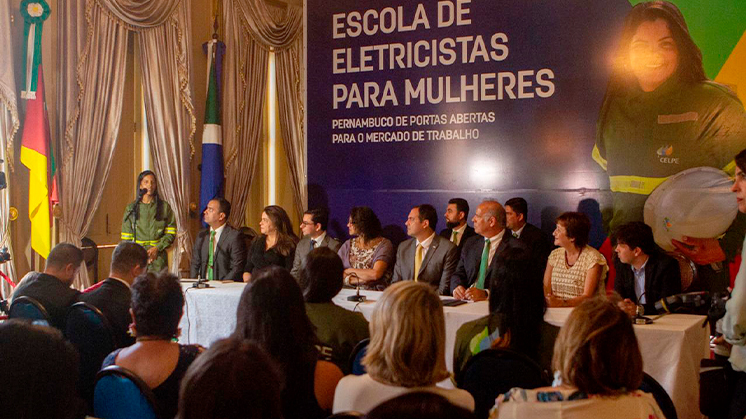
Learn about the Women's School of Electricians project.


 United Kingdom: career re-entry and STEM talent development
ScottishPower  External link, opens in new window. promotes talent development in STEM fields through programmes that facilitate entry into the energy sector and support a return to work following career breaks. A key example is the Returner ProgrammeExternal link, opens in new window. , aimed at experienced professionals wishing to re-enter the STEM industry after a period away from the labour market. The programme offers a paid placement, mentoring, workshops and support to update skills and rebuild professional confidence.
In addition, ScottishPower promotes access to the energy sector through pre-employment programmes, apprenticeships, scholarships and work experience opportunities aimed at various STEM profiles, such as pre-apprenticeships for 16 to 19-year-olds, summer work placements, the Year in IndustryExternal link, opens in new window. programme in partnership with the Engineering Development Trust (EDT), Power AcademyExternal link, opens in new window. scholarships (a STEM scholarship programme for undergraduate students) and master's scholarships in fields such as clean energy, data, IT and engineering, which help to expand the pool of technical talent needed for the energy transition.
 USA: STEM ecosystem
In the United States, AvangridEnlace externo, se abre en ventana nueva. is driving the recruitment and development of technical talent in fields linked to engineering, networks and digitalisation among other key capabilities required to move towards a more innovative, resilient and sustainable energy system.
The company promotes recruitment practices based on equal opportunity, merit and access to professional development, with the aim of bringing in the skills needed to advance in an energy sector increasingly reliant on technology, digitalisation and innovation.
This approach is underpinned by a culture of learning and open innovation. On 1 January 2025 Avangrid held its eighth Innovation Forum at The Engine, an incubator founded by MIT, bringing together experts, start-ups, universities and students to tackle challenges facing the energy sector such as network modernisation, energy storage, artificial intelligence and robotics. The company also promotes learning, mentoring and talent development programmes, including masterclasses at the MIT Museum in Boston, programmes for those at the early stages of their careers and mentoring opportunities aimed at strengthening technical and leadership skills. Such initiatives help to expand the pool of technical talent and strengthen career paths in STEM areas that are key to the energy transition.
 Spain: STEM careers, partnerships and AENOR certification
In Spain, Iberdrola EspañaExternal link, opens in new window. promotes STEM careers among girls and young women through a combination of educational partnerships, awareness-raising programmes, training initiatives and collaboration with specialist organisations. This commitment is reflected among other milestones in the fact that the company is the first to obtain AENOR's Certificate of Organisation Committed to STEM Talent, a recognition that reinforces its role in promoting science, technology, engineering and mathematics from an inclusive perspective.
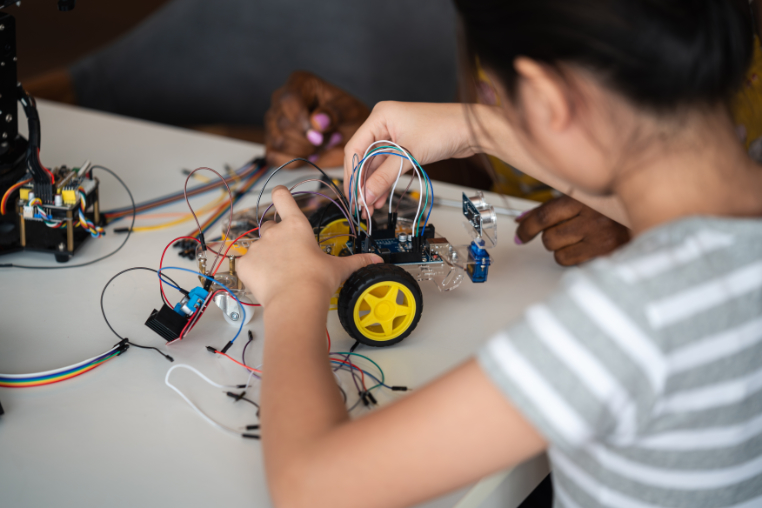
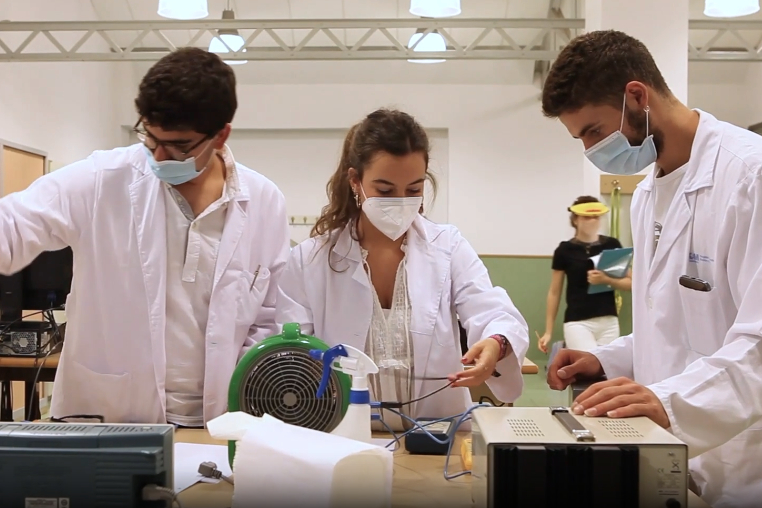
What’s more, Iberdrola España and the Iberdrola España Foundation are part of the STEAM Alliance for Female Talent, "Niñas en Pie de Ciencia"External link, opens in new window. (Girls for Science), promoted by the Ministry of Education, with the aim of contributing to an education and training system free from stereotypes. In the same vein, the Foundation together with the Madrid Municipal Transport Company and Comillas Pontifical University also supports the Women in STEM ChairExternal link, opens in new window. , which aims to promote STEM careers and vocational training linked to sustainable mobility.
This approach is complemented by initiatives such as TaleMto (with an 'M' for 'woman') and Technovation GirlsExternal link, opens in new window. , which aim to bring science, technology and engineering to girls and young women in a practical, inspiring way that is linked to the challenges of the future. Iberdrola España also organises conferences, workshops and STEM outreach activities, as well as technical talent development programmes such as the Cybersecurity Bootcamp, designed to strengthen skills in key areas for digitalisation and the energy transition. The company also takes part in initiatives such as #STEMConecta, organised by Womenalia, which brings together students, mentors, companies and institutions to inspire career choices and highlight female role models in engineering and technology.
STEAM Alliance for female talent (Spanish version).
STEM Woman Sustainability Mobility Chair (Spanish version).