


Women at the Olympic Games
Women's Empowerment and Achievements in Olympic History
More than a hundred years have passed since the participation of women in the Olympic Games and some barriers still remain. The participation of female athletes has been very unequal and it was not until 2012 that all countries had female representation at the Olympic Games. Find out about the history of women in the Olympic Games, key figures and how Iberdrola supports equality in sport.
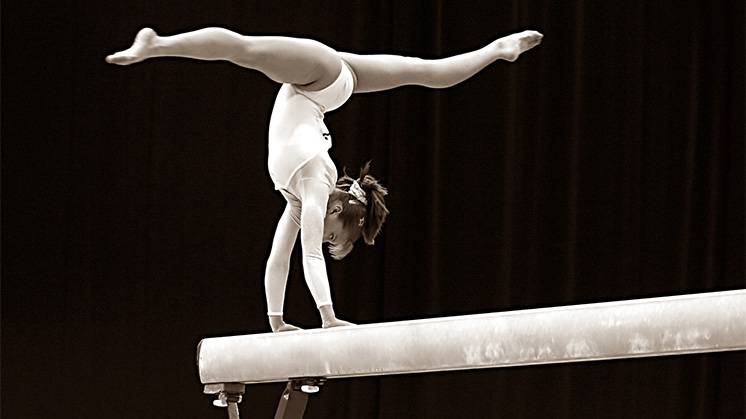
Women's participation has been relegated to inferiority in areas that have traditionally been considered public, such as the working world, politics and culture. Sport has not escaped this inequality and the integration of women in competitions such as the Olympic Games has been a long and slow process that has not yet achieved equality.
It was not until 1996 that the Olympic Charter – is the codification of the fundamental principles of Olympism, and the rules and bye-laws adopted by the International Olympic Committee (IOC) – recognised that one of the functions of the IOC is to "encourage and support the promotion of women in sport, at all levels and in all structures, in order to put into practice the principle of equality between men and women". But what has happened for the Olympic world to go from excluding women athletes from the outset to advocating for their participation? What are the milestones that have marked the path towards this potential equality?
History of Women in the Olympics
It is recorded that the first Olympic Games were held in 776 BC in Ancient Greece, specifically in the city of Olympia. They were events dedicated to the Greek gods, especially Zeus, and were seen as a celebration of masculinity and virility and a demonstration of strength and bravery. Greek society had very defined gender roles and women were significantly restricted in terms of participation in public events and sporting participation. The Olympic Games were no exception.
Women were forbidden to participate in these events as competitors, spectators or even as priestesses honouring the gods in the related rituals. The only women allowed to join a predominantly male audience were unmarried women.
Modern Olympic Games: effective progress; but slow...
At the end of the 19th century, the Frenchman Pierre de Coubertin set out to revive the Games in order to strengthen young people physically, and strongly opposed women's participation in the first Games in 1896. For the creator of the modern Olympic Games, the presence of women in a stadium was unsightly, uninteresting and improper: "The Games are the solemn and periodic exaltation of male sport – with the applause of women as a reward. De Coubertin was an opponent of women's participation until his death.
It was not until the second edition in Paris in 1900 that 22 women out of a total of 997 athletes took part in the competition. However, their presence was almost token and was limited to sports "of a feminine nature", according to the organisers – namely golf and tennis. There was a growing number of voices opposing this germ of equality in the most international sporting competition. However, pressure from the women's movement maintained a fierce backlash against the rejection of the women’s inclusion in sport.
The Amsterdam Olympics in 1928 was a turning point for the inclusion of women. Nearly 300 female athletes –almost 10 % of the total– were registered for this event and were allowed to participate in more sports. In the 1984 edition in Los Angeles, women were allowed to participate in a marathon for the first time –a symbol of endurance and perseverance.
Women's participation in the history of the Olympic Games
The first participation of women in the Olympic Games was in 1900. More than a century later, London 2012 was a historic moment –as it was the first edition in which every country had a woman among its athletes. Paris 2024 Olympics were the first in history to achieve numerical gender parity on the field of play, with the same number of female and male athletes participating.
 SEE INFOGRAPHIC: Women's participation in the history of the Olympic Games [PDF]
The consolidation of Women's Olympic sport
With the return of the Games to their birthplace, Athens, in 2004, women's participation increased to over 40 % of athletes. However, it was the London 2012 Olympic Games that marked a turning point –being considered the "Women's Games" due to the record participation of women to date. A total of 10,568 athletes took part in the British Games: 5892 men and 4676 women.
The Rio 2016 Games are also well remembered because 44 % of the Olympic medals were won by women –the highest percentage ever. They proved not only that they existed, but also that they could excel at the highest level.
In more than a century of history, the world's most important sporting competition has been reflecting and adapting to social changes. Thus, it has gone from building an Olympic movement that excluded women to a space that aims to be the vanguard of equality in the participation of men and women.
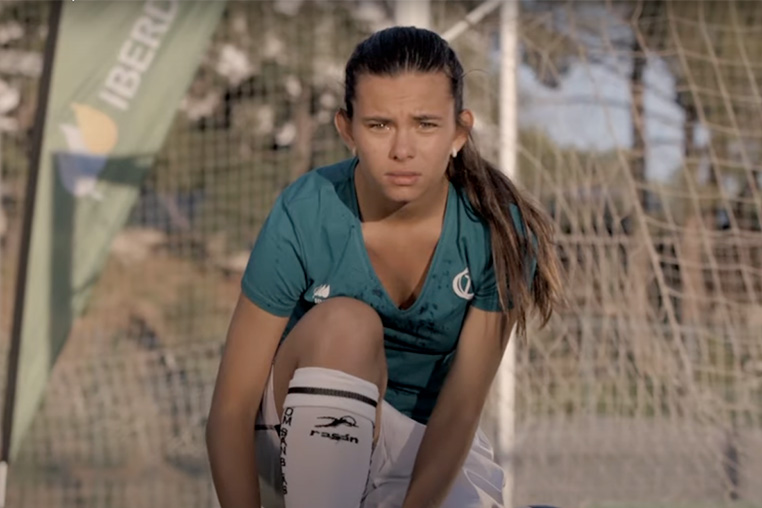
At Iberdrola we recognise the leading role of women in society and work to achieve equal opportunities.
Women's sporting events at the Olympics
Women have gained ground in the Olympic Games since their token participation in the first modern competition. However, their access has been unequal and it has taken them much longer to reach the Olympic podium in most sports. In the first Olympic competition they were allowed to compete; in 1900, they were only allowed to compete in tennis and golf. In Amsterdam 1928, they were allowed to compete in athletics, gymnastics and fencing.
It is only since the 1970s that there has been a gradual opening up to women's participation in the different categories; however, with slow inclusion. For the first time in history, women were allowed to compete in all different sports at the London 2012 Games.
The Olympic Games have 43 sports (35 in the Summer Games and 8 in the Winter Games); most of which have included women's sport years later. For instance, boxing –the sport that has waited 108 years to include women since its inauguration as an Olympic sport in 1904. Other sports, such as weightlifting, water polo, rowing and wrestling, have also taken a hundred years to allow women's sport in Olympic competition.


Women who made history at the Olympic Games
Most women were victims of discrimination throughout the history of the Olympic Games; however, with their achievements, they set a precedent in the sports track record, paved the way for other female athletes and continue to inspire new generations. These are just some of thewomen athletes who helped break down barriers in different sports:
-

Charlotte Cooper (United Kingdom, 1870)
She was one of the first women to participate in the Olympic Games, in Paris 1900, where she competed in tennis. She also became the first female Olympic champion in history. Prior to this achievement, she was already an accomplished tennis player who had won three Wimbledon championships, and after her Olympic medal won two more.
-

Gertrude Ederle (USA, 1905)
She is an American swimmer, and she won three medals at the 1924 Paris Olympics. In addition, in 1926 she became the first woman to swim across the English Channel –covering 560 kilometres in 14 hours and 34 minutes. With this milestone, she beat the record of the five men who had completed the challenge before her. Her record stood for 24 years.
-

Alice Coachman (USA, 1923)
This high jumper was the first African-American woman to win an Olympic gold medal. She won it at the London Games in 1948 after qualifying for the Games by breaking a record. Born into a humble family, during her training she had to combine her athletic scholarships with cleaning jobs at the facilities where she trained. She won 25 national titles in the high jump, 50m, 100m and 4 x 400m.
-

Enriqueta Basilio (Mexico, 1948)
She was the first woman to light the Olympic flame. She did so at the age of 20, at the opening of the Mexico City Games in 1968, where she was participating as part of the Mexican athletics team. At that time she was already the national champion in the 80-metre hurdles. She was considered the best athlete of her time.
-

Nadia Comaneci (Romania, 1961)
Nadia Comaneci's name will always be associated with perfection. She became one of the most important gymnasts in history by winning nine Olympic medals –five of which were gold. At just 14 years old, at the 1976 Montreal Games, she scored a 10 –the first ever "perfect" score in history– on the uneven bars. She set a new standard in the discipline and also became one of the youngest medallists.
-

Serena Williams (USA, 1981)
Any historical review of women who marked a milestone in the Olympics and sport – however brief it may be – would be incomplete without her name. Serena Williams has remained at the top of the tennis elite for more than two decades. She won four Olympic golds and a total of 39 Grand Slam titles – 23 of them singles. During her career, she advocated equal pay at major competitions such as Roland Garros and Wimbledon.
-

Simone Biles (USA, 1997)
Considered one of the greatest gymnasts of all time, Simone Biles is the most decorated gymnast in history in both men's and women's gymnastics. She has won ten Olympic medals, seven of them gold. Biles is, furthermore, one of the key figures in raising awareness of mental health issues at all levels – including top-level sport.


Our commitment to women's sport and inclusion
At Iberdrola, we see sport as a powerful tool for promoting inclusion, creating opportunities and contributing to a more diverse and inclusive society. That is why we support women's sport, with the aim of encouraging greater participation by women and girls, showcasing sporting talent and helping to remove the barriers that still hinder access to and development within sport.
We were the first company in Spain to make a broad, long-term commitment to women's sport and, since 2016, we have promoted initiatives that increase women's presence across sport, supporting both mainstream and minority disciplines. Today, we continue to work with sports federations, competitions and athletes to encourage participation, raise the profile of women's sport and help ensure that more women can see sport as a space for growth and opportunity. We also work with ambassadors in Spain and Brazil who embody the values of our Group through their achievements and commitment to sport.