


How to reduce your plastic consumption
Reduce your plastic consumption and mitigate its impact on the environment
The invasion of plastics across the planet is a reality. Just consider that there are five large garbage patches in the Pacific, Atlantic and Indian Oceans covering seven million square kilometres. If we want to preserve the planet, the time has come for each and every one of us to take action.
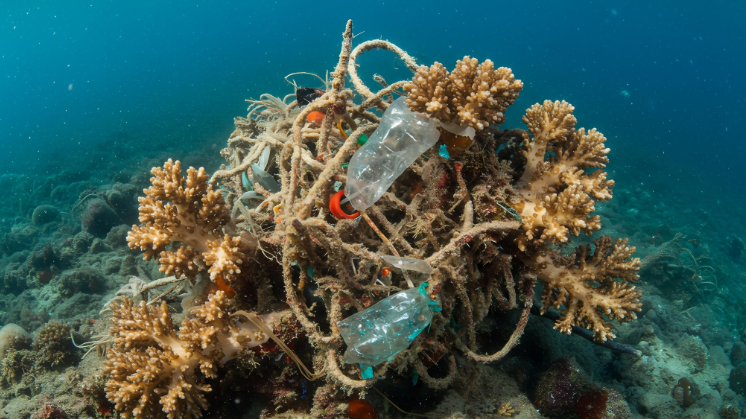
Plastic has become a constant in our lives. We find it everywhere: product packaging, cosmetic ingredients, textile materials, mobile phones… even the chewing gum you might be chewing right now. Its omnipresence is such that simply giving it up can feel overwhelming for many people. Reducing plastic consumption therefore requires not only a change in habits but also a shift in mindset.
Plastics, a global problem
The fact that plastics have become a major challenge for the planet is reflected in the growing number of governments proposing measures to reduce their environmental impact. In Europe, for example, the sale of single-use plastics such as straws, cutlery and cotton buds was banned in 2021. To put the scale of the problem into context, here are some key facts:
-
More than 400 million tonnes of plastic are produced globally each year, half of which is designed for single use.*
-
Less than 10 % of this amount is recycled.*
-
Each person consumes more than 50,000 plastic particles per year.
-
An estimated 11 million tonnes of plastic enter lakes, rivers and seas annually. This is equivalent to the weight of 2,200 Eiffel Towers.*
-
The annual social and environmental cost of plastic pollution is estimated at between $300bn and $600bn.*
-
By 2050, the oceans could contain more plastic than fish.**
Focusing on single-use plastics, which account for half of the plastic we use each year, their average lifespan is just 12 to 15 minutes, yet they can take up to 500 years to break down, according to Life Out Of Plastic (LOOP). Plastic outlives us and will outlive our children. The good news is that, as consumers, we have the power to reverse this situation. We can drive manufacturers to change how they produce. How? By changing how we consume.
*Source: United Nations. External link, opens in new window.
**Source: World Economic Forum.
How long does it take for single-use plastics to biodegrade?

Plastic bottle500 years

Toothbrush500 years

Plastic bag400 years

Plastic cutlery400 years

Drinking straw200 years

Plastic cup100 years
Source: Life Out Of Plastic (LOOP).

Tips to reduce plastic consumption
Minimising plastic consumption is much easier than it seems. Below are some practical tips that can make a difference to your life and to the planet:
-

Avoid single-use plastics
Single-use plastics, such as plates and cutlery made from this material, make our lives easier but seriously harm the planet. Viable alternatives exist and it is essential to choose them.
-

Bring a reusable bag when you go shopping
We go to the supermarket at least once a week to fill up the fridge. If we use reusable bags (cloth, mesh or wicker) every time, the planet will benefit. From now on, remember to take yours before leaving home.
-

Recycle chewing gum because… it also contains plastic
Most chewing gum currently on the market contains plastic. Try to reduce your consumption and dispose of it correctly. You can also opt for natural and eco-friendly alternatives.
-

Buy more bulk food and fewer packaged products
Disposable containers are inundating supermarkets (polystyrene trays, PET bottles, tetra paks, plastic containers, etc.). But there is an alternative: more and more establishments are offering the possibility to buy in bulk.
-

Replace plastic Tupperware for glass or steel containers
If you eat at work, a Tupperware container is part of your day. We suggest you change your routine and opt for glass or stainless steel containers. Not only will the planet appreciate it, so will your health because some of these plastic containers can release harmful substances.
-

When hanging out washing use wooden pegs instead of plastic ones
Even the smallest of actions can have a major positive impact on our planet. For example, something as routine as hanging out clothes can become an extraordinary act if we change from plastic to wooden pegs.
-

Make those around you aware of the importance of reducing the consumption of plastic
If, in addition to reducing your consumption of plastic, you manage to get your family, friends and co-workers to do the same by setting an example, the impact of your actions for the good of the planet will increase exponentially.
-

Pay attention and put your plastic waste in the correct recycling container
Our lifestyle sometimes prevents us from paying attention to details. Therefore, when it comes to recycling plastic waste it can end up in the wrong container. Before throwing your waste away, think where each item has to go.
-

Avoid using cosmetics that use micro-plastics, buy a biodegradable brush and wear natural fabrics
The market today offers an array of alternative plastic-free products and the options are increasing. From lipsticks free of micro-plastic or brushes made of wood to t-shirts made of natural fabrics.
-

Choose to reuse and give some of the packaging a new purpose
If you have no choice but to buy a plastic bottle or a plastic container at the supermarket, reuse it instead of throwing it away. A bottle can be filled up as many times as you like and containers can be used to store other food.



Circular economy model at the Iberdrola Group
At Iberdrola, we are working to be more respectful of nature through our three strategic sustainability priorities: climate action, biodiversity protection and the circular economy.
For this reason, our sustainable business model is based on circular economy principles, a resource-management system that prioritises reducing the use of new raw materials through process efficiency, extending product life cycles and promoting the reuse and recycling of materials.
We apply this approach throughout our value chain, building a decarbonised future alongside strategic partners who share our vision and values for environmental protection and preservation.
In 2025, we carried out circular economy initiatives related to wind turbine blade recycling, radioactive waste storage and reducing gas consumption.
Our circular economy targets
At Iberdrola, we have set a target of recycling more than 90% of wind turbine blades and solar panels by 2030. This goal is aligned with the new Nature Management and Protection Policy and its guiding principles.
| EFFICIENT USE OF RESOURCES | METRIC | 2025 | 2028e | 2030e |
|---|---|---|---|---|
| Blades and Solar Panels Recycling | Number (cumulative)1 | 947 | >3,000 | >5,000 (90%) |
(1) Estimate of recycled blades in 2030 according to the current operational plan and subject to revision depending on the evolution thereof. Target by 2030: 90% recycling of blades and panels.