Global Wind Day, a day to celebrate a unique resource
Iberdrola, a world leader in wind energy, joins, as in every year, the annual celebration of World Wind Day on Monday 15 June. This day was promoted in 2007 by the European Wind Energy Association to raise awareness and highlight the importance of wind which, in addition to having been a fundamental element in facilitating transport, inspiring different mythologies and changing the topography of the earth, is also an important generator of renewable energy through wind power.
At Iberdrola, we have been pioneers for decades in harnessing the power of the wind.
The wind is a vitally important phenomenon that has been used throughout history in many ways. Its power has inspired mythological tales and has given names to gods. Its existence regulates the Earth's temperature, shapes the relief, enhances biodiversity by dispersing seeds and, in addition, its thrust has become a source of energy, from the time when it pushed sailing ships across the seas to the present day, where it is an energy resource that is becoming more and more important.
Why is Global Wind Day celebrated?
In 2007 the European Wind Energy Association sought to celebrate the value of this precious resource by promoting 15 June as Global Wind Day with the aim of helping people discover the potential of wind as an energy source and its possibilities for changing the world.
Wind is a phenomenon that is generated when air warms up, expands and rises until its temperature is equal to that of the surrounding air. The curious thing is that the air is not heated directly by solar radiation but, in a way, absorbs heat from both the ground and water surfaces. The movement of the air, roughly speaking, is from the tropics to the equator and, as it cools, it returns through the upper layers to the tropics.
A wind turbine converts wind into electricity by transforming the kinetic energy of air currents into electrical energy. The rotor carries out the extraction process mainly, converting kinetic energy into mechanical energy, and the generator converts this mechanical energy into electrical energy. This makes wind energy a renewable, efficient and key source for the energy transition and the decarbonisation of the economy.
At Iberdrola we celebrate Global Wind Day because we believe in its importance as a driver of wind energy, an inexhaustible renewable energy source that can help to drastically reduce the use of fossil fuels and therefore greenhouse gas emissions.
Wind energy today: Why does it matter more than ever?
Wind power matters more than ever today because it is no longer just a decarbonisation technology, but a strategic component of energy security. In 2025 global wind power capacity reached a new record, with around 165 GW added – 40% more than the previous year – and a total of over 1,299 GW installed. In Spain, installed wind power capacity stands at around 33 GW and continues to grow, making it a key energy source in the country.
Beyond the energy capacity gained, wind power is essential for its role in energy resilience – that is, its ability to ensure a continuous and secure energy supply in the face of natural disasters or technical emergencies. This reduces dependence on fossil fuels and helps to diversify the energy supply.
Before celebrating Global Wind Day, it is important to understand exactly what we are celebrating. So, the first thing to know is that there are three types of wind depending on the scale of their movement. They are:
Planetary or global winds
These are caused by the Earth's rotation and form a sort of belt around the equatorial, subtropical and polar latitudes. Also known as trade winds or westerlies, they carry an enormous amount of energy.
Regional winds
These are determined by the distribution of land, terrain and tides.
Local winds
This category includes all winds caused by local factors, which are difficult to categorise, and which determine both their intensity and their frequency.
Iberdrola has maintained its pioneering role for two decades, first with onshore wind and now with offshore wind
Gisela Pulido, riding her kitesurfing board at the East Anglia One wind farm.
Wind energy and its types
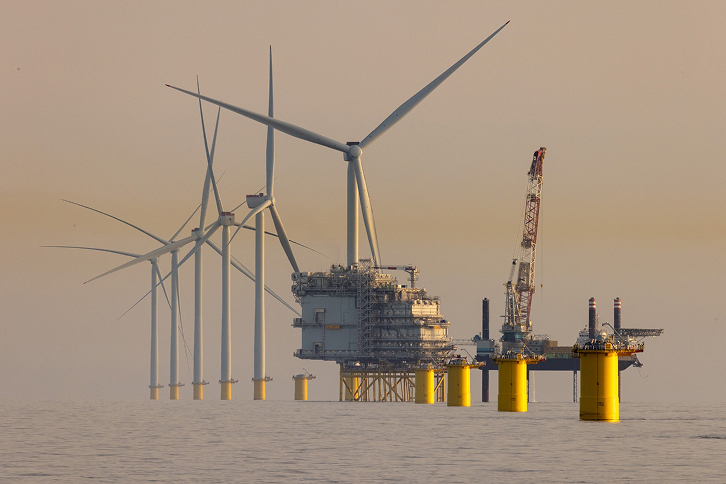
Wind energy is energy obtained from the wind, more specifically by harnessing the kinetic energy of air currents. This requires the use of wind turbines; imposing structures oriented in the direction of the wind that capture its force and first convert it into mechanical rotational energy and subsequently via a generator into electrical energy. This energy is transmitted via cables to a transformer substation, which in turn feeds it into the electrical networks so that it reaches the end consumer.
One of the reasons why it became necessary to celebrate Global Wind Day was because wind energy is currently experiencing a significant period of expansion, with several years running of record-breaking new capacity coming online. However, it is important to distinguish between two types of wind energy:
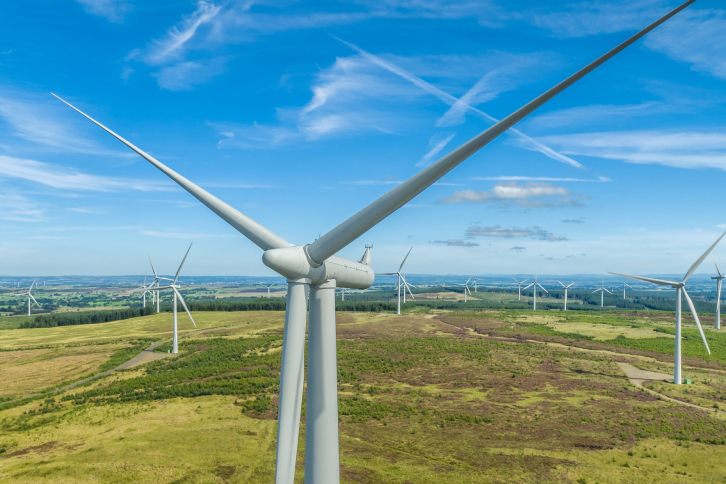
Onshore wind power
As the name suggests the wind farms are located on land.
Offshore wind power
This harnesses the wind generated on the open sea and is further divided into fixed and floating structures.
Approximately 1,299 GW in 2025. A record growth of 40% compared to the previous year.
New facilities at Iberdrola
Our planned investment of €21 billion, to be distributed across four technologies, of which 75% of the projects are already under construction. Thus 38% will be allocated to offshore wind, in projects such as East Anglia TWO and East Anglia THREE in the UK or Windanker in Germany; 24% to onshore wind and 10% to storage. Our Strategic Plan 2025-2028 aims to reach more than 60 GW of installed capacity by 2028, 90% of which will be emission-free.
Iberdrola's onshore wind capacity
We have 21,320 MW of installed capacity worldwide.
Iberdrola's offshore wind power capacity
At the end of the first quarter of 2026 we had 2,621 MW of installed offshore capacity, with plans to increase our offshore wind capacity by 3.5 gigawatts between 2025 and 2028.
Challenges and developments in the wind power sector
The wind power sector has experienced rapid growth in recent years but faces challenges that limit its expansion and efficiency. The large-scale integration of wind power requires upgrades to transmission networks and grid capacity alongside new infrastructure (substations, interconnections and control centres) to avoid bottlenecks and manage the variability of generation. In turn, the deployment of offshore wind power – and particularly floating wind power – depends on the adaptation of ports and port logistics for manufacturing, assembly, launching and maintenance, making port infrastructure a key factor for industrial competitiveness.
Regulatory processes and permits remain a significant barrier: access and connection procedures, environmental assessments and administrative authorisations are complex and often inconsistent, which makes projects more expensive and delays them.
The repowering of existing wind farms emerges as an efficient solution: replacing obsolete equipment with more powerful wind turbines allows for increased production without occupying new land and improves profitability and sustainability. Finally, offshore and floating wind power represent the greatest growth opportunity in terms of energy potential and avoiding coastal constraints, but its deployment requires stable regulatory frameworks, public and private support and rapid adaptation of infrastructure and the industry to consolidate a competitive value chain.
Iberdrola, the importance of wind energy
Wind energy covers approximately 5% of the world's electricity consumption and the International Energy Agency forecasts that it will reach 9% of the world's electricity demand and more than 20 % of European demand.
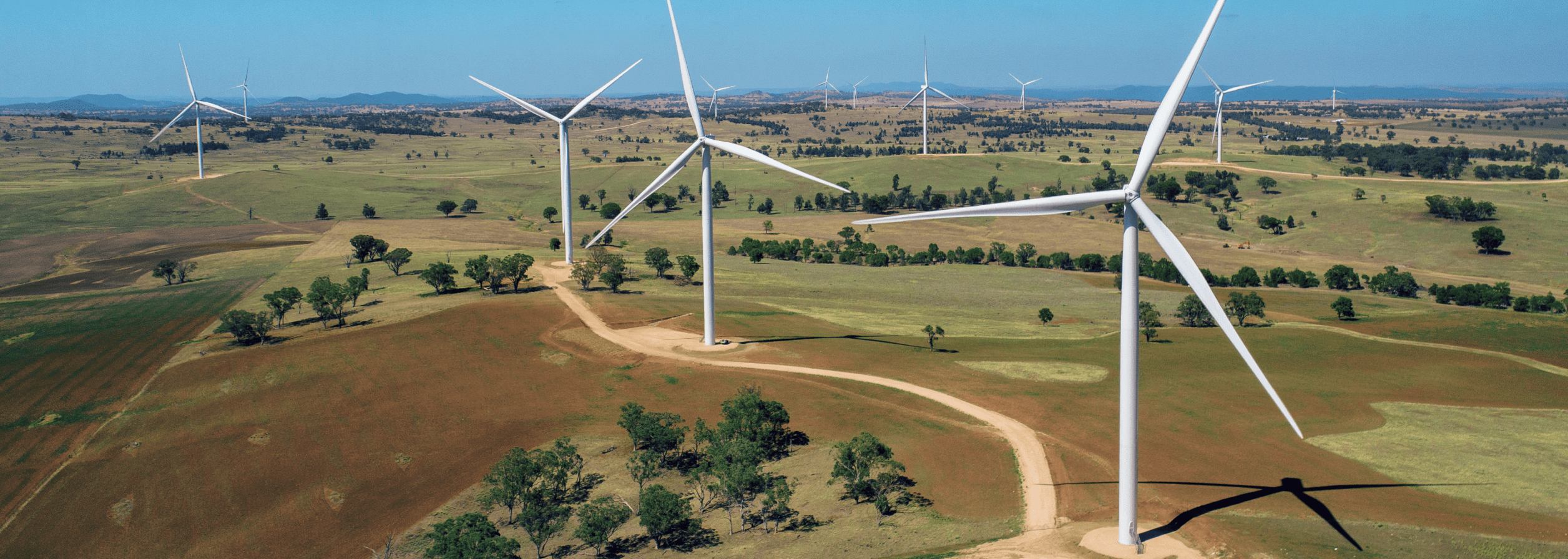
In the case of Iberdrola, it has maintained its pioneering role for more than two decades, first with onshore wind and now with offshore wind. In the former, the plan is to invest around €5 billion from 2025 to 2028, which will increase installed capacity by around 1.9GW. By the end of 2025, the company has 21.1 GW in operation and has wind farms under construction in Scotland, the US, Portugal, Greece and Australia.
And if we look to the sea, offshore wind has established itself as one of the company's most important growth vectors. At the end of the 2025 financial year, we have 2,516 MW of offshore capacity in operation, with plans to invest around €8 billion in the development of new offshore wind facilities by 2028.