


Social commitment
Creating value, progress and wellbeing
At Iberdrola, we are working every day to strengthen the initiatives that make up our social dividend, with the aim of ensuring that our activities contribute to the positive development of all the communities in which we operate.
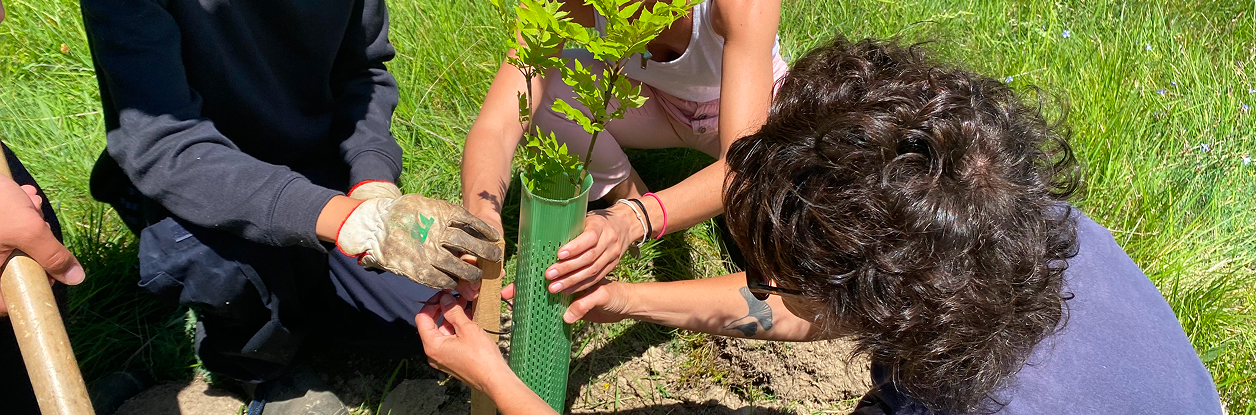
At Iberdrola, we believe that economic growth and social progress can coexist. That is why our strategy goes beyond supplying clean energy: we want to be a driver of development in the countries where we operate, creating quality jobs, fostering innovation, caring for the planet and supporting the communities, suppliers and shareholders who stand alongside us. This commitment takes the form of a tangible social dividend, reflected in decisions that integrate environmental, social and governance factors and embody the values that define our corporate culture.
Creating value for society
True to our firm commitment to creating sustainable value for all of society, the Iberdrola Group works every day to strengthen the initiatives that make up our social dividend, ensuring that our activities contribute to the positive development of all the communities in which we operate.
Our main areas of action include:
-

Investing to lead the electrification of the economy
Discover our Strategic Plan 2025-2028Iberdrola is undergoing a period of sustainable growth across its main geographical areas and business activities to continue addressing the challenges of electrification, providing the solutions that have established the company as the utility of the future thanks to its ability to anticipate industry trends.
-

We create value for our shareholders
ShareholdersWe maintain a constructive, ongoing and effective dialogue with our shareholders to understand their views and concerns and encourage their involvement in the life of the company. Over the last 25 years, we have created more than €55.8bn in value and distributed €44.5bn in dividends, significantly outperforming the total shareholder return of the average of the three largest US utilities by market capitalisation, the European sector index (Euro STOXX Utilities) and the Spanish market index (IBEX 35).
-

We create jobs and promote professional development
Work with usIberdrola hired 4,500 new professionals in 2025. Our commitment to the professional development of our more than 45,400 employees is reflected in more than 70 hours of training per employee per year. What’s more, we expect to create around 15,000 new jobs by 2028 and indirectly support 500,000 jobs through our supply chain.
-

We drive innovation and entrepreneurship
InnovationInnovation will continue to be an essential tool in keeping Iberdrola at the forefront of the sector's transformation, as reflected in our position as Spain’s most innovative energy company and the third most innovative in the world. We invested €425 million in R&D&I activities in 2025 and will continue to increase investment in the coming years.
-

We care for the environment and are committed to energy efficiency
Energy efficiencyIberdrola’s emissions have fallen to just 38gCO₂/kWh in Europe, five times lower than the average of its European competitors, and to 60gCO₂/kWh globally at the end of 2025. Iberdrola achieved the highest score in the Dow Jones Best-in-Class Index within the global utilities sector. What’s more, in 2025 the company completed 26 consecutive years in the Dow Jones Sustainability Index, remaining the only European utility to be included in this international sustainability benchmark throughout that entire period.
-

We strengthen our positive impact through suppliers
SuppliersIberdrola implements a responsible supply chain management policy, sharing sustainability best practices with all its business partners.
-

We offer products tailored to our customers’ needs
Sustainability reportOur commitment to our customers – the more than 100 million people to whom we supply energy worldwide – is reflected in the safe and high-quality service we provide through increasingly efficient equipment and technologies, together with the best and most innovative energy solutions, supported by the company’s extensive digital transformation.
-

Committed to society, education and research
Iberdrola Group foundationsThe Group’s foundations develop programmes in the fields of education and research, biodiversity conservation, the promotion of art and culture, and cooperation.


Our value creation in figures
We work every day to ensure that our activity has a positive impact on all the communities in which we operate.

shareholders with increasing remuneration

new professionals in 2025

allocated to R&D&i activities per year

carbon emissions by 2040

people worldwide supplied with our energy

beneficiaries through foundations

Iberdrola’s social impact. Energy that transforms lives.
Social commitment news

2026 Integrated Online Report
The Group's activity in 2025 and our outlook. Spanish version.
More about our social commitment

Human Rights Report 2025
Learn about the measures we implement to monitor and uphold respect for human rights across our activities and business relationships.
See PDF
Human Rights Report 2025
Learn about the measures we implement to monitor and uphold respect for human rights across our activities and business relationships.
See PDF