


Difference between green and blue hydrogen
The importance of the colours of hydrogen
Hydrogen is the most abundant chemical element in the universe, but it does not occur in its free form, so it must be produced. It is an energy carrier, capable of storing energy for later release. Depending on how producers obtain it and the energy source they use to produce it, hydrogen receives different names or colours such as green, blue or grey. Here we will review the main differences between them and, in particular, between green and blue hydrogen.
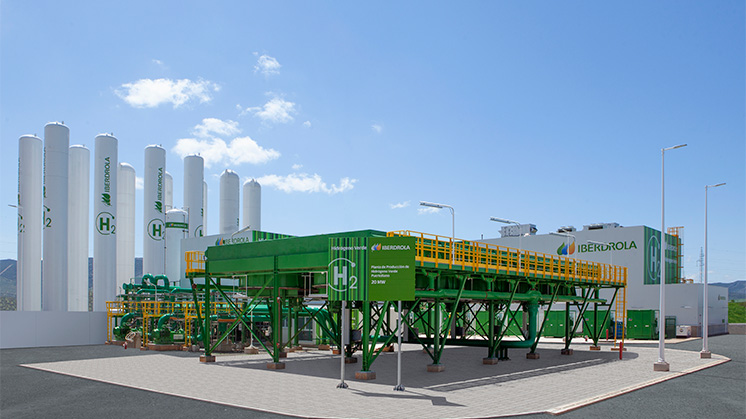
To use hydrogen as an energy carrier, we must produce it from naturally occurring compounds such as water, biomass or certain types of waste. The process employed and the energy source used in its production determine its characteristics and its environmental impact.
To easily identify how it has been produced, the so-called hydrogen colour-coding system is used. Each colour refers to the process used to produce it and, in some cases, to the energy source employed.
As such, there are different types of hydrogen, such as green hydrogen, produced from renewable energy sources, or grey and black hydrogen, associated with processes involving higher emissions. In this article, we will analyse the main differences between green and blue hydrogen, two of the main alternatives within this classification.
Blue hydrogen: what is it and how is it produced?
Producers make blue hydrogen from hydrocarbons, mainly natural gas, through processes that generate carbon dioxide (CO₂). Producers can capture some of these emissions to reduce their release into the atmosphere.
Hydrocarbons such as methane are used to produce it; methane is converted through a chemical process known as reforming to produce hydrogen and CO₂. The CO₂ generated can be captured, utilised or released into the atmosphere. The capture systems used in these processes have an efficiency of 60 to 65%, meaning that approximately 30 to 35% of the carbon dioxide produced is emitted into the atmosphere.


Green hydrogen: what is it and how is it produced?
Green hydrogen is produced by the electrolysis of water using electricity from renewable energy sources.
Electrolysis separates water molecules into hydrogen and oxygen using an electrolyser. Industries can store the hydrogen or use it subsequently in industrial processes and heavy-duty transport while the resulting oxygen is released into the atmosphere or can be utilised as a by-product. What’s more, the electrolyser generates heat that industries can recover and utilise through technologies such as heat pumps for district heating systems.
Differences between blue and green hydrogen
The main difference between green and blue hydrogen lies in the process of obtaining the hydrogen, and in its environmental impact.
-

Production process and emissions
Blue hydrogen does not reduce energy dependence on gas and perpetuates a development model based on fossil fuels.
In the case of blue hydrogen, the main problem is the carbon dioxide obtained from the reforming of natural gas (whit an efficiency of 60-65%), which has to be captured and stored. Moreover, the use of hydrocarbons means that renewable sources are not used, and emissions are not zero.
- Green hydrogen: 0 kgCO2 /kg H2.
- Blue hydrogen: 3.5-4 kgCO2 /kg H2.
- Grey hydrogen: 10 kgCO2 /kg H2.
Green hydrogen, however, is totally clean and is obtained from a renewable resource, using green energy sources.
-

Water consumption
Another relevant aspect is water consumption. To generate 1 kg of hydrogen from electrolysis requires 10 litres of deionised water; from natural gas reforming with CO2 capture requires 25 litres of deionised water and from natural gas reforming without CO2 reforming requires 23.5 litres. This means that generating green hydrogen from electrolysis technology is more efficient from the point of view of water, one of the essential raw materials along with renewable electricity.
-

Production cost
Another difference is economic. Blue hydrogen has a lower initial production cost due to the use of hydrocarbons, among other reasons; green hydrogen has a higher production cost for the time being, but the development of new green hydrogen plants and the convinced commitment to the generation of this element means that, little by little, the difference in terms of cost is beginning to fade.
-

Energy dependence
The last difference is strategic, as green hydrogen favours self-sufficiency by being able to use existing natural resources from all over the world, which limits or eliminates dependence on third countries. Blue hydrogen has the disadvantage of being dependent on natural gas producing countries.


The other colours of hydrogen
In addition, other hydrogen colours are defined. The most common is grey hydrogen, with an extraction process very similar to blue hydrogen, but in this case, carbon dioxide emissions are not controlled and pollution is higher.
Pink hydrogen uses electricity generated in a nuclear power plant for electrolysis, while yellow hydrogen is hydrogen where the electricity used for electrolysis comes from mixed sources, ranging from renewable energy to fossil fuels. In particular, green hydrogen obtained from solar energy is considered yellow hydrogen. Other more minor and polluting colours would be turquoise (from methane pyrolysis) or black (obtained from coal combustion).