Green ammonia
Green ammonia: the sustainable revolution in the chemical industry
Green hydrogen Decarbonisation
Green ammonia, also known as renewable ammonia, is a form of ammonia produced using renewable energy sources. It is proposed as a sustainable alternative that enables a significant reduction in emissions, with a wide range of applications in industry and other sectors.
What is green ammonia and how is it produced?
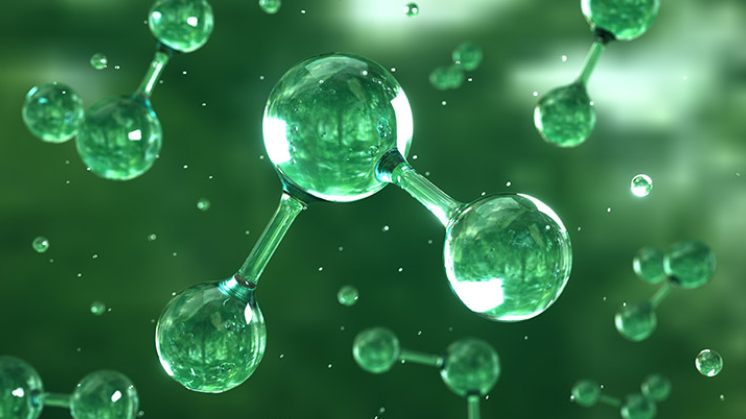
Ammonia (NH₃) is a nitrogen and hydrogen-based chemical compound widely used in the production of fertilisers and industrial chemicals. Ammonia is currently produced from natural gas and in its production process, emits 2 tonnes of CO₂ for every tonne of ammonia. For this reason, conventional ammonia is referred to as grey ammonia.
Green ammonia, on the other hand, does not emit CO₂ in its production process and is therefore expected to grow exponentially in production to replace grey ammonia and can be used for additional uses.
To produce green ammonia, green hydrogen must first be obtained through a process of water electrolysis. That is, water is decomposed into hydrogen and oxygen, using electrical energy generated from renewable sources. The hydrogen is then combined with atmospheric nitrogen through a process known as Haber-Bosch synthesis, which allows hydrogen and nitrogen to react at high pressure and temperature in the presence of a catalyst to form ammonia. The end result is the production of green ammonia using green hydrogen and atmospheric nitrogen.
What are the main uses of green ammonia?
This type of chemical compound is widely used in the production of agricultural fertilisers as ammonia is an essential source of nitrogen for plant growth. It is also used as a raw material in the production of a variety of chemical products, such as nitric acid, synthetic fibres, explosives, dyes and pharmaceuticals.
In addition to traditional uses, the emergence of green ammonia will give rise to new demand uses with high growth potential.
Current uses
-

Fertilisers and raw materials for the chemical industry
Most of the world's ammonia production is used to manufacture fertilisers for agriculture, as well as serving as a basic raw material for the synthesis of plastics, explosives and other chemicals.

Emerging uses
-

Hydrogen transport and storage
Ammonia facilitates the efficient transport and storage of hydrogen. Once at its destination, it undergoes an additional process called cracking, which involves breaking down the NH₃ molecule to recover the hydrogen it contains. The recovered hydrogen is used as a clean fuel, helping to reduce emissions from highly polluting industries such as glass, ceramics, concrete and steel production.
-

Alternative fuel for maritime transport
Another potential new use for green ammonia is its direct application as a fuel for ships, where it could play a significant role in the long-term decarbonisation of the maritime sector and other heavy-duty vehicles.


Applications in research or demonstration
-

Electricity generation
Green ammonia has the potential to be used as a fuel in boilers, turbines or engines to generate heat and electricity while reducing greenhouse gas emissions. This requires technologies to control such emissions, such as nitrogen oxides.

“Green” ammonia
Production and use cycle
- Renewable energy
- Electrolysis
- Ammonia synthesis (Haber-Bosch)
- Air separation
- Green ammonia
- Green hydrogen vector
- Chemical industry
- Fertilizers
- Ship fuel
- Electricity and heat generation

 SEE INFOGRAPHIC: "Green" ammonia. Production and use cycle [PDF]
What are the main benefits of green ammonia?
Among the main advantages of this chemical compound are the following:
- Emission reductions: Green ammonia, being produced using renewable energy sources, does not emit carbon dioxide (CO₂) during its production and therefore its use will be key to reducing emissions in the so-called "hard to abate" sectors that currently use conventional ammonia produced from carbon-intensive natural gas. Thus, by replacing it with green ammonia, dependence on fossil fuels is reduced and greenhouse gas emissions are reduced, thus contributing to climate change mitigation.
- Increased energy supply security: green ammonia reduces dependence on fossil fuels in general and Russian gas in particular in Europe. By using renewable energy sources, green ammonia is produced from local resources and reduces current exposure to fossil fuel price volatility (required in conventional ammonia production).
- Energy vector or hydrogen carrier: while hydrogen liquefies at a temperature of -253°C, ammonia only requires cooling to -33°C. Liquefaction is necessary to transport and store these compounds. The lower requirements for ammonia make this process much more competitive and energy efficient than H₂ transport. Thus, once the necessary infrastructure for import, storage and cracking of ammonia is developed, it will be possible to produce green hydrogen in locations with optimal conditions (competitive renewable energy) and then export it to other consuming regions. These characteristics make green ammonia an important alternative in sectors where electrification has not yet taken hold, such as heavy maritime transport or industrial processes involving high temperatures. In sectors such as aviation, green ammonia plays a key role in the production of synthetic fuels such as green hydrogen.
- Contribution to renewable energy deployment: Meeting future demand for green ammonia, it is necessary to upgrade the infrastructure for the production, storage and transport of hydrogen and other renewable derivatives. Without these adaptations, the expansion of renewable energy cannot be on a massive scale, making it more difficult to achieve the goal of decarbonising industry.