


Blade Lifter
Do you know Blade Lifter? The new transport system for wind turbine blades
Historically, transporting wind turbine blades has not been easy due to the increasing size and weight of the blades and the fact that wind farms are often located in remote and inaccessible areas. To reduce the environmental impact of this transport, Blade Lifter technology was developed, which uses the inclination of the blades to facilitate their transport.

Update: August 2026

Reading time: 11 minutes

Site Manager at Iberdrola Energía Internacional in Portugal

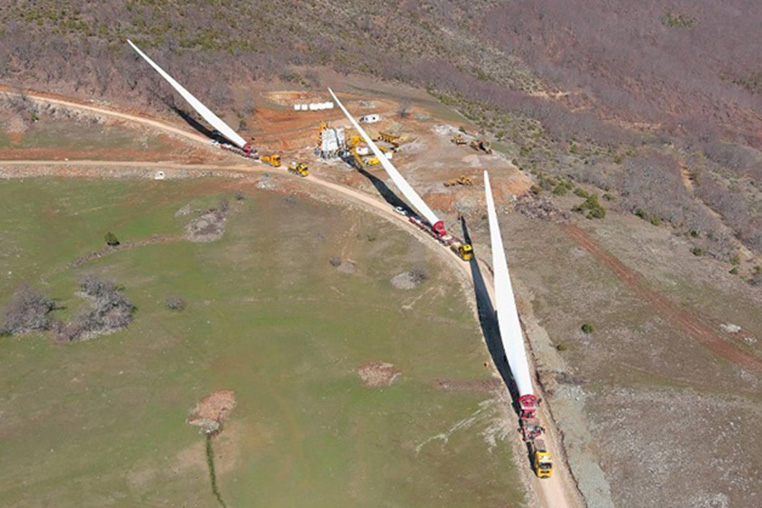
Transporting wind turbines using Blade Lifter technology.
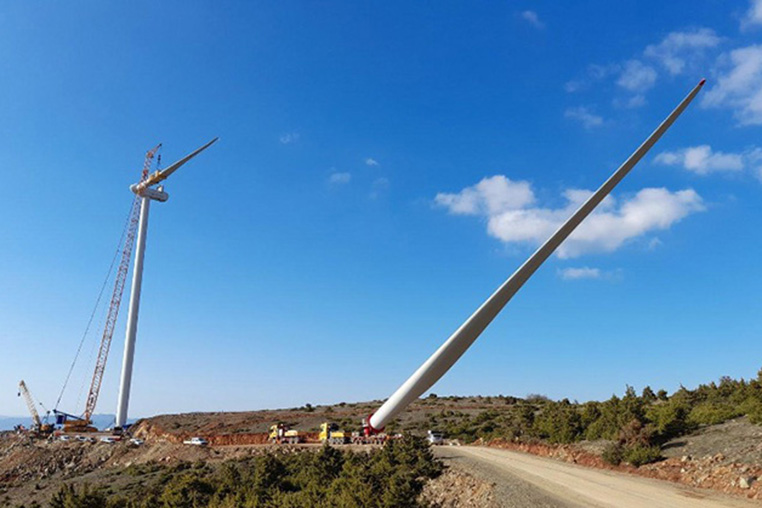
Transporting wind turbines using Blade Lifter technology.
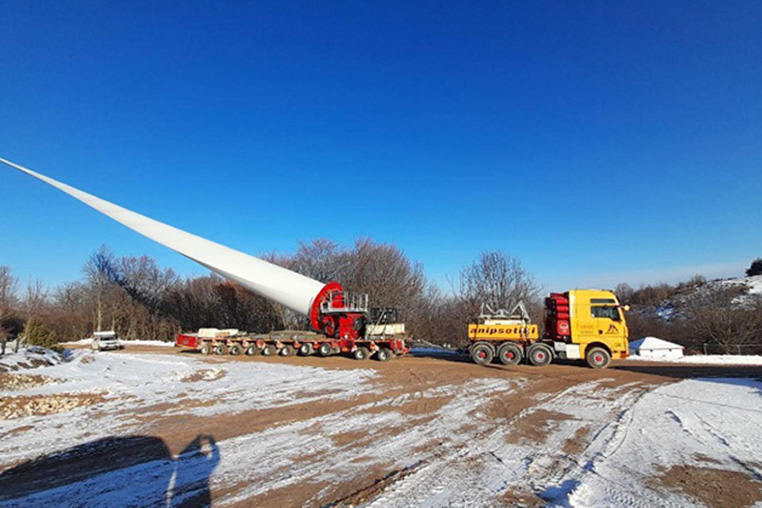
Transporting wind turbines using Blade Lifter technology.
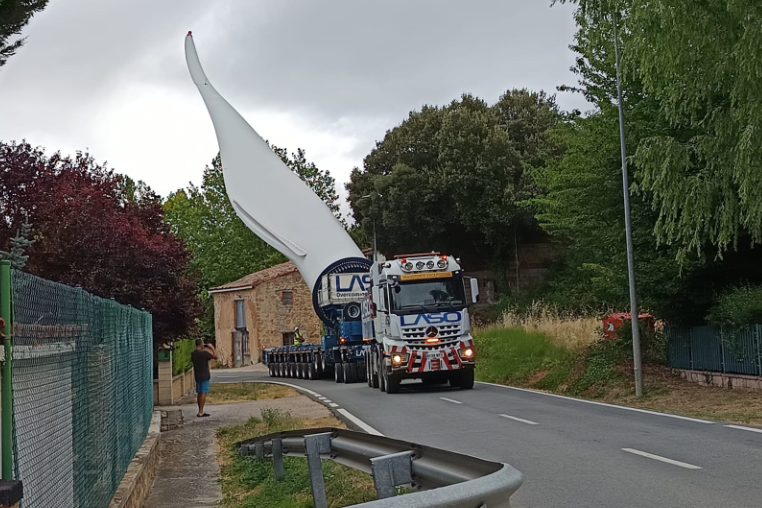
Use of the Blade Lifter system at the Labraza wind farm (Basque Country, Spain).
Typically, a wind turbine has three blades moving about a horizontal axis, which produce kinetic energy as they rotate.Each of these blades ranges in length from 5 metres to well over 100 metres and weighs several tens of tonnes. Considering that a wind farm can have more than 100 wind turbines, each with its own three blades, transporting these important wind giants is no easy task. Especially when many of these wind farms are located in rural areas that are difficult to access, often with narrow, winding mountain roads.
The increase in the size of wind turbines allows for the production of more renewable energy, but it also presents new logistical challenges. Transporting increasingly long blades to rural, mountainous or hard-to-reach sites requires solutions capable of minimising on-site disruption.
It is from this need that the Blade Lifter technology has emerged; it is a system capable of overcoming obstacles, winding bends and steep gradients without requiring any changes to the route or affecting local regions, thereby significantly minimising the environmental impact.
What is the Blade Lifter system and how does it work?
Blade Lifter is a pioneering technology in Europe that utilises the blade's tilt to facilitate its transport. Using a mechanism –usually a hydraulic lift– the system raises the blade to an angle of around 60 degrees or even rotates it on its own axis to avoid the wind sail effect, thus making it easier to navigate narrow roads, sharp bends or even urban centres.
Transport is carried out using a trailer with at least 10 axles. Mounted behind the tractor unit is this mechanism, which allows both the rotation of the blade and its vertical lifting whilst keeping the blade's base securely fixed.
Blade Lifter
This system of tilting the blades during transport reduces the environmental impact, avoiding changes in road layout.
The operator raises and tilts the blade on the most challenging sections of the journey where this is necessary, thereby adjusting its position to clear any obstacles encountered. This method allows the blade to be tilted 60 degrees from the horizontal axis provided the maximum wind speed is 10 meters per second and 20 degrees from the vertical. The system enables the transport of blades up to 85 metres in length along roads that even feature sharp bends, whilst an operator can adjust their position using a control. As for wind, the system is highly sensitive to gusts exceeding 10 to 12 metres per second.
 SEE INFOGRAPHIC: Blade Lifter [PDF]
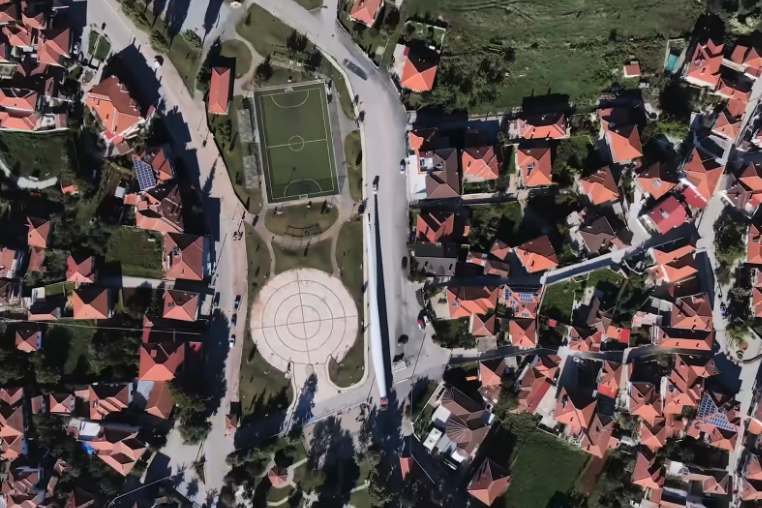
Blade lifter, an engineering challenge for moving blades (Spanish version).
Use of Blade Lifter technology by the Iberdrola Group
In the case of the Iberdrola Group this technique has been used at the Mikronoros wind farm and in Askio, both complexes located in Greece, as well as in Portugal at the Tâmega wind farm.
Furthermore, we have used this system at the Labraza wind farm (Basque Country) in which Iberdrola España holds a stake. The various components of the installation – including eight blades and nacelles – were transported to the wind farm site using two large cranes, employing the Blade Lifter technique. These operations required the opening of alternative routes to access the surrounding towns and villages.
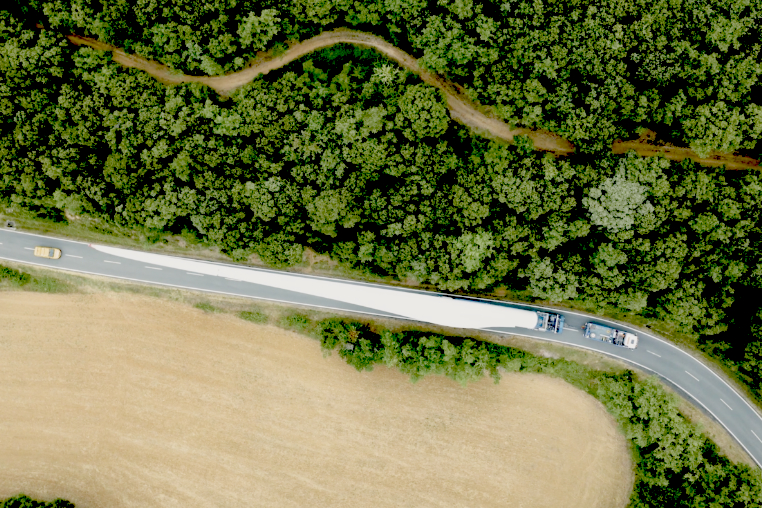
Use of the Blade Lifter system at the Labraza wind farm (Basque Country, Spain).
Significance of the Blade Lifter system: advantages
The use of the Blade Lifter system helps to address some of the main challenges associated with the construction of wind farms, optimising assembly processes and reducing the need for ancillary infrastructure. Its main advantages include:
-

Reduced environmental impact
By reducing the need for site preparation and facilitating access to locations with greater topographical constraints, the system helps to minimise the impact on the environment during the construction of wind farms.
-

More sustainable planning for nature and biodiversity
The use of the Blade Lifter system leads to better environmental planning of the project and a reduction in environmental impact.
-

Reduction in civil engineering works
The ability to transport the blades in a raised position makes it possible to overcome obstacles and better adapt transport routes, reducing the need to construct access roads, carry out major earthworks or modify existing infrastructure to facilitate compatibility with complex environments.
-

Greater efficiency
Optimising transport and installation operations speeds up assembly work, improves site planning and reduces the time required to commission the wind turbines.
-

Cost optimisation
By minimising certain infrastructure works and improving transport logistics, this technology contributes to more efficient management of the resources allocated to the construction of wind farms.
-

Wider range of potential sites
The system facilitates the installation of large wind turbines at sites with more complex access routes, broadening the scope for developing new renewable energy projects.


Blade Lifter: the evolution of a technology with some operational challenges
As with any technology under development, the implementation of the Blade Lifter system also presents certain technical and operational challenges that require specific planning during the transport and installation phases.
The operation requires continuous monitoring and precise coordination of manoeuvres to adapt to installation conditions and ensure the safety and efficiency of the process, as each section of the route may require specific adjustments to the blade's position.
Among these aspects, of particular note is the need to reduce the trailer's travelling speed to approximately five kilometres per hour when the blade is raised or tilted. What’s more, weather conditions, especially wind speed, are a determining factor in operations, as transporting the blade in a raised position requires compliance with safety limits and can only be carried out at wind speeds below 10 meters per second.
Managing these constraints through proper planning, weather monitoring and coordination of operations enables us to capitalise on the advantages of this technology and continue to make progress in the construction of more efficient wind farms.
Innovation for building a sustainable energy model
Technological innovation is a key element in the evolution of the energy model and in the development of solutions that enable renewable energy to be integrated more efficiently. At Iberdrola we are promoting new tools and technologies aimed at optimising clean generation, improving the management of renewable resources and overcoming the challenges associated with their integration into the electricity system.
Through digitalisation, research and the development of advanced solutions, the company is helping to drive progress towards an energy model based on electrification, renewable energy and efficiency. Technologies such as the Blade Lifter system reflect this commitment to finding new ways to make the construction and operation of wind farms more sustainable, promoting a cleaner, safer model that is prepared for the challenges of the future.