


Renewable energies in agriculture
Use of renewable energies in agriculture and livestock farming
Integrating renewable energy into agricultural and livestock farming environments enables more efficient and sustainable use of land: producing clean electricity, maintaining primary sector activities, boosting the rural economy and promoting biodiversity.

Global warming, driven mainly by the burning of fossil fuels and carbon dioxide emissions, has an obvious harmful impact on nature and biodiversity: it disrupts biological processes and degrades our planet’s ecosystems. Increasing the production of renewable and clean energy, together with promoting the electrification of energy uses, is essential to achieving the decarbonisation of the economy.
The expansion of renewable energy we are seeing must be planned carefully and sensitively, always prioritising appropriate integration into the local environment and the preservation of biodiversity. In this way, energy development can become an ally in reducing the environmental impact of the agricultural and livestock sectors while also helping to revitalise the rural areas where these activities are based.
What does integrating renewables into the primary sector mean?
Integrating renewable energy into the primary sector makes it possible to combine clean energy generation with agricultural and livestock activities, promoting more efficient and multifunctional use of land.
Some of the main approaches include:
-
Agrovoltaics = Crops + solar energy
Agrovoltaic plants make it possible to combine agricultural production with electricity generation through photovoltaic installations adapted to agricultural land. -
Solar grazing
Livestock farming and photovoltaic plants. Livestock activities can coexist with solar installations, making use of the land for both grazing and renewable energy generation. -
Beekeeping and aromatic plants
Biodiversity and the local economy. Introducing beehives and plant species that support pollinators can help preserve biodiversity and create new opportunities for rural communities. -
Renewable self-consumption
Electrification of farms. Generating renewable electricity on farms themselves makes it possible to meet part of their energy needs and advance their electrification.
Collaboration with farmers, livestock farmers, cooperatives and landowners
The coexistence of renewables and the primary sector is not only an environmental issue: it also has a social dimension. To ensure appropriate integration, it is important to involve farmers, livestock farmers, cooperatives and landowners from the earliest stages of projects, taking traditional land uses and the characteristics of each area into account. One example is the WineSolar initiative, a project exploring how renewable energy generation can support agricultural activities.
Dialogue and site-specific design make it possible to identify opportunities for collaboration and generate shared benefits. This, in turn, contributes to the economic and social development of rural communities. In addition, this dialogue and prior analysis of each site make it possible to determine that not all land or crops are suitable. Factors such as the climate, soil characteristics, existing biodiversity, water availability and the production needs of each farm must be assessed. Areas of high ecological value are also avoided to strengthen ecosystem protection.
For this reason, the integration of renewables into the primary sector is always approached on an individual basis, ensuring that the solutions designed can combine clean energy generation, agricultural and livestock activities and the conservation of the natural environment.
Advantages of the coexistence of renewables and the primary sector
The coexistence between primary sector activities and renewable installations is increasingly present, with important links to generate a more sustainable connection. The result? All sectors benefit from each other. Here are some of the advantages:
-

Less land needed for efficient production
The combined use of the land improves its yield, as energy and agricultural products are produced in the same space.
-

Greenhouse gas emissions are reduced
The convergence of energy and agricultural production makes it possible to achieve sustainable production. It also relieves pressure on ecosystems and biodiversity, which are the first to be affected when cultivation areas are expanded.
-

Self-sufficiency
On-site renewables allow for the promotion of self-consumption. Farms and livestock farms can use the energy generated by the power plants with a consequent reduction in electricity consumption costs.
-

Boosting local employment
The cohesion between renewables and rural development revalues traditional activities and stimulates the development of local businesses directly or indirectly related to the energy sector.
-

Energy savings
Agricultural and livestock farms can move towards self-consumption by generating renewable energy on their own land or at their own facilities. This helps reduce dependence on the electricity network and optimise energy consumption costs.
-

Climate adaptation
The integration of renewables, particularly through agrovoltaic solutions, can help protect certain crops from extreme heat. The shade provided by panels can also create more suitable conditions for crop development or animal welfare.
-

Biodiversity
Appropriate land management can help create spaces that support biodiversity through measures such as preserving vegetation cover and promoting habitats for pollinators. In this way, the coexistence of energy generation and agricultural activity can help maintain ecosystem balance.


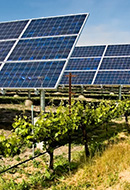


Agrovoltaic energy, an example of coexistence
Agrovoltaic energy, also known as agro-photovoltaics, consists of using part of a plot of land to obtain both solar energy and agricultural products. In other words, photovoltaic plants coexist with fruit, vegetables and cereal crops, among others. The aim is to achieve sustainable agriculture.
Various studies estimate that the electricity generated by solar panels increases the economic value of agrovoltaic farms by more than 30 % by improving the efficiency and yield of the land. In other words, the output of both sectors is considerable while occupying less space.
Agrovoltaic energy and its efficiency
Thanks to the combined application of agriculture and photovoltaics, the landuse efficiency of the agrovoltaic system can reach 186%.
Separate use of agricultural land
1 hectare of crops
1 hectare of solar panels

100% agricultural product

100% solar electricity
Combined use of agricultural land
1 hectare of crops
and solar panels

103% agricultural product + 83% solar electricity
Renewables and livestock farming: a beneficial union
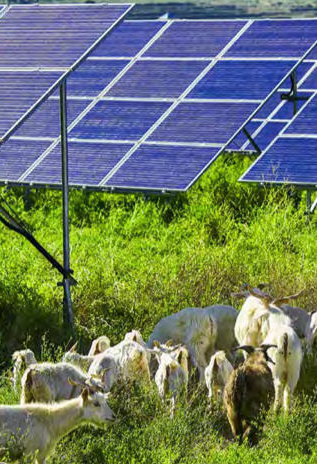
The benefits of the combination of renewable energies and livestock farming are extensive. On the one hand, livestock farmers benefit from the presence of extensive grazing fields, where their animals can feed safely. And the vegetation surrounding the power installations is free of pesticides and other chemicals. In addition, the shade that structures such as photovoltaic structures cast on the ground provide good space for animals to shelter from direct sun, rain or wind.
On the other hand, energy producers are assured of land maintenance. Grazing allows for the control of vegetation growth, for example, in the case of sheep herds that remove weeds and avoid the use of machinery.
More than 1,200 sheep graze on the grounds of the Núñez de Balboa photovoltaic plant (Spain), allowing the plant species to grow in rotation. A space where nature, livestock and solar production coexist. During the hottest months, the animals are accommodated in the shade of the panels.
Other initiatives focused on rural development
The combination of renewable energy production plants with activities related to the countryside extends beyond agriculture and livestock farming to other activities such as beekeeping or the cultivation of aromatic herbs.
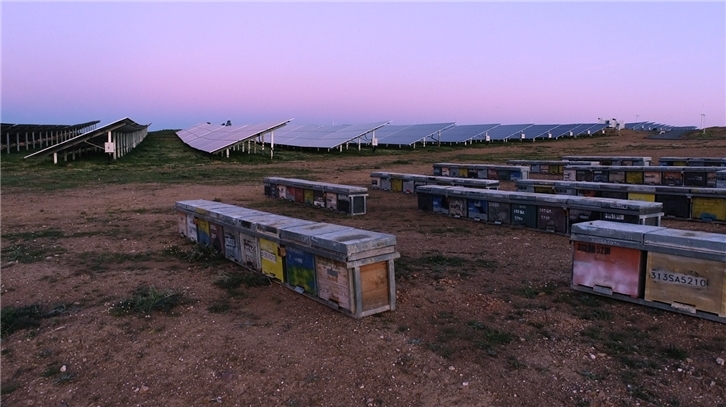
Iberdrola has already installed more than 300 hives in photovoltaic installations in southern Spain, such as Nuñez de Balboa (Badajoz) and Andévalo (Huelva). These initiatives generate ecological zones that allow the study of how the cultivation of aromatic plants - such as eucalyptus, rosemary or thyme - increases the quality of honey. In fact, in 2022, part of this ecological product produced in the Campo Arañuelo III photovoltaic plant (Cáceres) was harvested for the first time. This, like the rest of the projects, generates sustainable ecosystems and a beneficial combination for the environment.
Iberdrola projects connecting renewables and rural areas
Integrating renewable energy into rural environments makes it possible to develop new models that combine clean energy generation with agricultural, livestock and beekeeping activities. At Iberdrola, we promote various initiatives to encourage this coexistence and contribute to the socioeconomic development of local areas while protecting and enhancing their biodiversity. These actions form part of the Convive Programme, which brings together initiatives and partnerships designed to promote coexistence between renewables, local development and nature conservation.
WineSolar in Guadamur
Agrovoltaics in France

The Basque Country’s first agrovoltaic plant

Grazing at Núñez de Balboa
Solar honey and beehives at photovoltaic plants
Projects with beehives in Portugal

Biodiversity and rural development
WineSolar in Guadamur
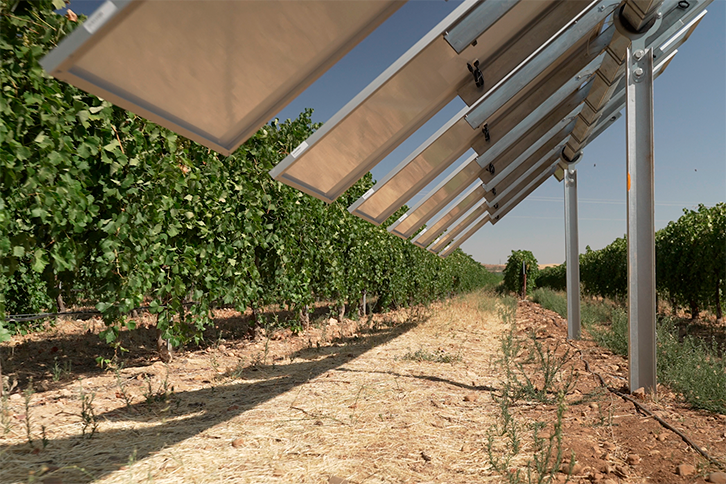
At the vineyards of González Byass and Grupo Emperador in Guadamur, Toledo, Iberdrola launched WineSolar, Spain’s first smart agrovoltaic plant. Its solar trackers, controlled by an artificial intelligence algorithm, adjust the position of the panels to the needs of the vines, regulating sunlight exposure and temperature. The 40 kW installation is used for the wineries’ self-consumption and helps improve land efficiency, reduce water consumption and increase the crop’s resilience to high temperatures.
Agrovoltaics in France
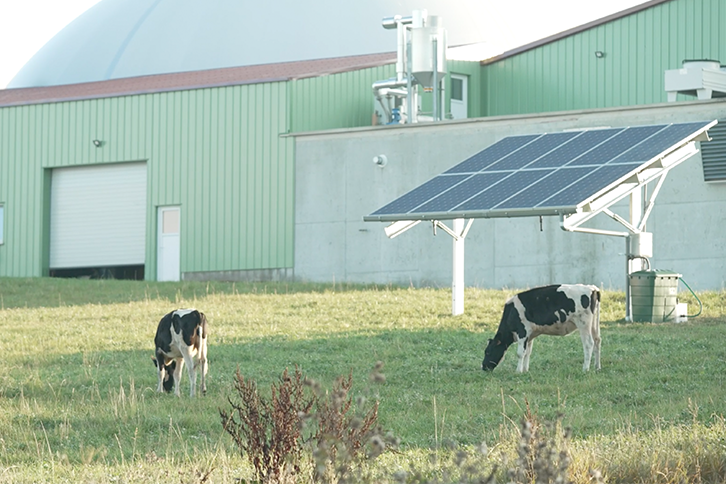
We have also developed agrovoltaic innovation projects in France to explore how solar generation can be combined with agricultural and livestock activities. The four selected projects, with a combined capacity of 12 MW, were awarded in renewable energy innovation tenders launched by the French Ministry for Energy Transition. They incorporate solutions adapted to the needs of each farm, from improving animal welfare to protecting and optimising different crops.
The Basque Country’s first agrovoltaic plant
Iberdrola España, as part of its commitment to promoting coexistence between renewable energy and biodiversity and contributing to socioeconomic development, will build a new agrovoltaic plant in Álava in the Basque Country. The project will support the cultivation of apples for the production of high-quality cider while also generating renewable electricity. It was the only agrovoltaic project in the Basque Country selected in the first call for investment aid programmes for innovative renewable energy and energy storage projects.
Grazing at Núñez de Balboa
Livestock farming can coexist with photovoltaic installations through controlled grazing. At the Núñez de Balboa plant in Extremadura, one of Europe’s largest photovoltaic plants, more than 1,200 sheep graze rotationally across the installation’s land, helping to maintain vegetation. At the same time, the photovoltaic structures provide shaded areas where the animals can shelter from the sun, rain or wind. From a human perspective, the installation’s 500 MWp of installed capacity enables clean energy to be supplied to 250,000 homes.
Solar honey and beehives at photovoltaic plants
Beekeeping is another activity that we integrate into our renewable energy installations. At Campo Arañuelo III in Cáceres, the Iberdrola Group and Tesela Natura harvested organic honey for the first time from 40 beehives installed alongside the photovoltaic panels. In addition, Iberdrola has installed more than 300 beehives at photovoltaic installations in southern Spain, including Núñez de Balboa in Badajoz and Andévalo in Huelva. These projects demonstrate how these areas can provide a suitable environment for bees while supporting pollination and biodiversity.
Projects with beehives in Portugal
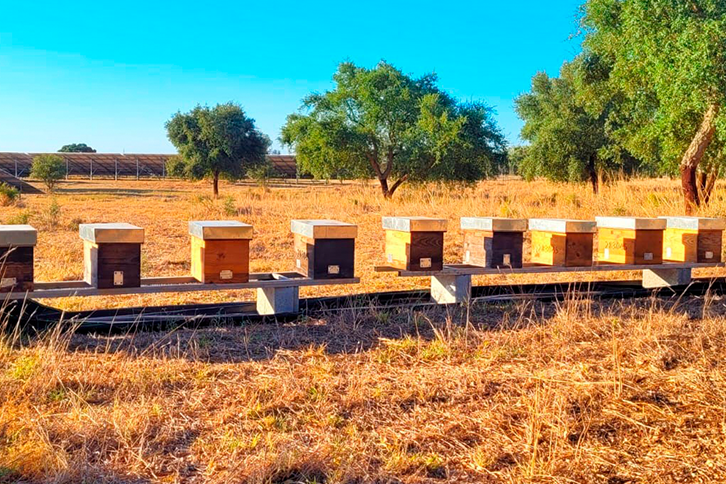
In Portugal, we installed 30 beehives, divided equally between the Conde and Algeruz II photovoltaic plants in the Setúbal district, through a collaboration agreement with a local beekeeper. As well as producing honey, the bees act as pollinators within a radius of at least one kilometre around their hives. They are tireless workers that help maintain the biodiversity of local flora. The initiative was developed as part of Iberdrola’s Environmental Plan to promote and preserve biodiversity and encourage the circular economy.
Biodiversity and rural development
To help create a system capable of meeting growing energy demand in a sustainable, efficient and emissions-neutral way, Iberdrola has also launched its Biodiversity Plan 2030. Through the plan, we seek to contribute from a conservation perspective by avoiding installations in areas of high ecological value, reducing pollution and restoring affected habitats. Examples include the East Anglia ONE project, where two floating containers were installed to collect plastic and some of the oils, detergents and fuels floating near the port of Lowestoft; and a project led by ScottishPower, an Iberdrola Group company in the UK, involving a tree-planting programme in Scotland to improve natural areas, promote biodiversity and generate long-term social benefits.