


Discover what thermal energy storage systems are and their types.
Energy storage: batteries vs. thermal
The strategic importance of energy storage
The success of decarbonisation and the establishment of a sustainable consumption model based on renewable energy sources necessitates storage solutions capable of managing their variable output and adapting generation to demand. Among these, BESS (Battery Energy Storage System) and thermal storage systems stand out as two technologies with different characteristics and applications.
 Update: September 2026
  Reading time: 30 minutes
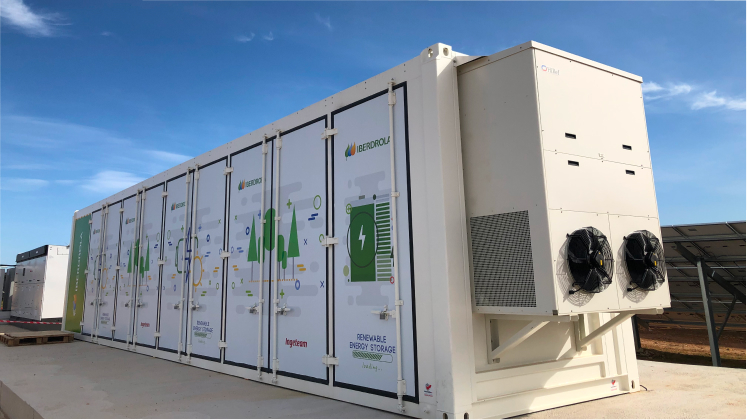
Battery storage at the Campo Arañuelo complex.
The transition to a cleaner and more sustainable energy model requires increasing the use of renewable sources, such as solar and wind power, to meet ever-increasing electricity demand. However, these sources depend on variable factors, such as the availability of sunlight or wind conditions, while demand also fluctuates throughout the day.
In this context, energy storage allows energy to be harnessed when it is available and used when it is needed, providing flexibility to the system and facilitating greater integration of renewable energy.
There are various technologies, two of which stand out:

Battery storage
It stores energy in the form of electricity and allows it to be supplied quickly and flexibly when needed.

Thermal storage
It stores energy in the form of heat or cold for later use as required.
Battery storage
It stores energy in the form of electricity and allows it to be supplied quickly and flexibly when needed.
Thermal storage
It stores energy in the form of heat or cold for later use as required.
The importance of energy storage for electrification
Electrification and the growth of renewable energy require storage solutions that provide flexibility to the system, enable generation to be adapted to demand, and strengthen security of supply.
Contribution to grid stability and resilience
Energy storage helps to improve the flexibility and stability of the electricity system and facilitates greater integration of renewable energy sources. Its main benefits include:
-

Facilitating the integration of renewable energy
It enables surplus generation to be stored and used at a later date, thereby better aligning renewable energy production with the system’s needs.
-

Bringing flexibility to the energy system
Storage systems can respond quickly to changes in generation and demand and contribute to services such as frequency and voltage regulation.
-

Improving energy security in the event of crises or shortages of fossil fuels
Furthermore, they ensure a continuous supply in the event of occasional service disruptions, thereby preventing economic losses and enhancing energy independence and decentralisation.
-

Reducing dependence on fossil fuels
The various renewable energy storage systems help to reduce the need to import and transport these raw materials for energy production, thereby promoting more environmentally responsible energy consumption.
Maximising the potential of renewable energy
The growing integration of renewable energy is driving the expansion of energy storage on a global scale. According to the International Energy Agency (IEA), installed battery storage capacity is now 11 times higher than it was in 2021, making this technology the fastest-growing among electricity generation and storage technologies.
In Europe, forecasts also point to strong growth in storage. The European Commission notes that various studies estimate energy storage capacity at over 200 GW by 2030 and 600 GW by 2050, compared with around 89 GW in 2024, mainly comprising pumped-storage hydroelectric power stations. Furthermore, an additional 128 GW/300 GWh of electrochemical storage is expected to be added to European electrical networks by 2030.
In this context, storage enables better use to be made of available renewable energy, shifting its use from periods of peak production to those when demand is highest or renewable generation is lower. In this way, it helps to integrate greater volumes of solar and wind energy and provides the necessary flexibility for an increasingly electrified power system.
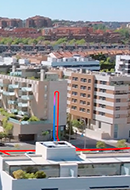
Battery energy storage systems (BESS): flexible energy on demand
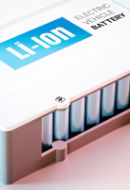
Battery energy storage systems (BESS) enable electricity to be stored and released when needed, providing a rapid and flexible response to the needs of the energy system. Although there are various battery technologies, lithium-ion batteries are currently among the most widely used due to their versatility, performance and modularity. Other technologies also exist, such as sodium-sulphur, lead-acid and vanadium batteries.
A BESS comprises various components, in addition to the batteries themselves, which enable the safe and efficient management of electricity storage and delivery. It operates by combining hardware and software to control the entire charging, storage and discharging process.
- Batteries: these form the basis of the system and are where the energy is stored. As well as lithium-ion batteries, BESS systems can utilise other technologies, such as flow batteries, depending on the requirements of each application.
- Battery management system (BMS): it controls the state of charge and discharge, as well as monitoring aspects such as temperature and life cycle.
- Power conversion system (PCS): it transforms the stored energy (direct current) into the form used by the grid (alternating current).
- Energy management system (EMS): it coordinates all these components, determines when to store and when to release energy, and ensures that everything works safely and efficiently.
A BESS: what it is and what it is made of
A Battery Energy Storage System (BESS) plays a crucial role in stabilising electricity grids, helping to integrate renewable energy and improve energy efficiency. These are its main parts.
Batteries
This is the main component of these systems, where energy is stored. They are made up of several elements.

Discharge
Charge
Power Conversion System (PCS)
These are devices that convert the direct current (DC) stored in batteries to alternating current (AC) for use by the grid or end consumers.

Electricity grid
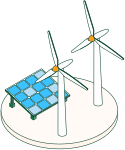
Renewable sources
An energy storage system can be combined with renewable sources to store energy and maintain grid stability despite unplanned fluctuations in electricity generation.
Energy Management System (EMS)
The core of the system, responsible for monitoring and managing the power flow between the equipment and the batteries. It coordinates the work between the different BMS, PCS and other auxiliary components.

 SEE INFOGRAPHIC: A BESS: what it is and it’s made of [PDF]
Advantages to battery storage
BESS systems stand out for their fast response times, flexibility and modularity, which allow them to be adapted to different needs and environments. Their main advantages include:
- Ability to act as power islands. Some batteries are connected to energy production systems such as solar or wind power, but others, known as stand-alone power systems, can operate independently. This means they can provide energy independently.
- Flexibility and modularity. Its modular design makes it easy both to adapt the storage capacity and to install it in different locations and applications.
- Autogenous start-up. BESSs can supply power almost immediately in the event of certain incidents, without requiring an external trigger to start delivering electricity.
- High energy density. Batteries allow a significant amount of energy to be stored in relatively small spaces, making it easier to integrate them into different types of installations.
Main applications for BESS batteries
BESS can be used in installations of various scales, ranging from large power stations to industrial, commercial and residential applications. Their main applications include:
- FTM (front-of-the-meter) applications, which typically exceed 10 MWh and are associated with public service facilities such as green energy production plants or critical infrastructure.
- BTM (behind-the-meter) applications in C&I (commercial and industrial). In the industrial sector, they have systems ranging from 10 MWh to 30 kWh, depending on each facility’s needs.
- BTM applications for residential use, which are usually less than 30 kWh to store power generated by photovoltaic installations for self-consumption or to power electric vehicle charging infrastructure.
These types of batteries can also be integrated into microgrids to distribute and supply power to more remote and difficult-to-access places.
Applications of BESS batteries
Front of the meter (FTM)

Public services
>10 MWh
- Storage and distribution of excess energy generated
- Price regulation
- Ancillary markets
Behind the meter (BTM)

Commerce and industry (C&I)
<10 MWh - > 30 kWh
- Adoption of photovoltaics for self-consumption
- Fast and uninterrupted power supply
- Energy cost savings
- Infrastructure for electric car charging points

Residential
< 30 kWh
- Adoption of photovoltaics for self-consumption
- Energy cost savings
- Infrastructure for electric car charging points
Thermal energy storage: understanding the basics
Thermal energy storage (TES) enables energy to be captured and stored in the form of heat or cold for later use. This can be achieved using various materials, such as water, molten salts, sand or ice, as well as phase-change materials, which are capable of absorbing and releasing energy during their transformation.
Although thermal storage has been in use for centuries, the development of new technologies and materials is expanding its applications in the energy sector. Today, it enables energy from sources such as solar and geothermal power, as well as industrial waste heat, to be harnessed to generate electricity or meet heating and cooling needs.
One of its key features is the ability to store energy for extended periods. While there are technologies that enable stored heat to be converted into electricity, its use is particularly efficient when the energy is utilised directly in the form of heat.
Types of thermal energy storage
Thermal storage can be categorised according to the mechanism used to store energy:
- Sensitive heat storage (SHS): stores heat in materials such as water or molten salts, widely used in solar thermal plants. The energy stored depends on the change in temperature of the material.
- Latent heat storage (LHS): uses materials that absorb and release energy through a phase change, from solid to liquid, for example.
- Thermo-chemical heat storage (TCHS): its operation is based on reversible chemical reactions that store or release heat.
These technologies can also be categorised according to their operating temperature, ranging from low-temperature systems to solutions capable of reaching several hundred degrees.
- Low: from sub-zero temperatures to approximately 100°C. A representative example of this type is aquifers for storing hot water.
- Medium: around 300°C.
- High: storing up to 1,000°C. Molten salt tanks, like those containing a mixture of sodium and potassium nitrate, whose usual operating range is between 285-565°C.
Materials used in thermal storage
Water is one of the raw materials that has been used for the longest time for thermal storage (both cold and hot). However, molten salts are one of the most common materials for large-scale applications thanks to their availability and ease of recycling.
There are also projects that use sand, stones, concrete or ceramics for their heat absorption and release properties. Meanwhile, thermochemical materials continue to be the subject of research due to their potential to achieve higher energy densities
Advantages to thermal storage
Thermal storage offers features that are particularly useful for applications requiring the storage and use of energy in the form of heat:
- Like all energy storage systems, it reduces dependence on fossil fuels and contributes to the better performance and stability of the electricity grid.
- It reduces industry’s operating costs. By harnessing waste heat and reusing it, energy costs are reduced.
- It can store energy for long periods of time.
- It’s versatile. It can store energy in the form of heat for later use or convert it into electricity.
- Highly scalable and adaptable, especially in large-scale projects.
- The initial investment is high, but the operating cost is low, especially when using molten salts or latent storage.
Main uses of thermal storage
One of the main applications of thermal storage is to store the heat generated in solar thermal power stations – particularly using molten salts – so that it can be used later and extend the duration of electricity generation.
Water-based storage systems can be used as heating systems for buildings, homes and residential areas, and for domestic hot water. This is the most widespread use of this technology because the heat delivery efficiency is very high – higher than if a battery were used.
Although it is not used to store surplus renewable energy, there are applications of this type of technology for building insulation, which contributes to indoor temperature regulation and, with it, energy savings.
Batteries vs. thermal storage: a comparative analysis
Batteries and thermal storage enable energy to be managed according to the system’s needs, but they have different characteristics and applications. BESS offer a rapid and flexible response for storing and supplying electricity, while thermal storage is particularly well suited when energy can be used directly in the form of heat or cold.
Furthermore, BESSes are more widely adopted and commercially mature, while thermal storage offers significant potential for long-duration applications, direct heat utilisation and a range of scales.
TES vs BESS

Use and versatility
TES
High: harnesses heat energy, which can be maintained as-is or converted into electricity
BESS
Low: exclusively uses electrical power

Energy density
TES
Varies depending on the tech used in the project
BESS
High

Cost
TES
High initial investment, but medium to low operating costs
BESS
Moderate or high initial investment, depending on the project size. Moderate maintenance costs due to battery degradation

Scalability
TES
High: especially in large industrial projects and solar plants
BESS
Medium: suitable for domestic or grid scales with technological limitations

Efficiency
TES
High when releasing heat, low when converting to electricity
BESS
High: notable for its rapid availability

Storage
TES
High: varies from days to weeks depending on the technology used
BESS
Medium-low: ideal for hours of supply

Maturity level
TES
Medium: rapidly developing technology, but low market adoption
BESS
Medium-high: technology widely established in the market

Environmental impact
TES
Low if easily recyclable materials are chosen
BESS
Medium due to mining for materials such as lithium, and challenges with recycling
SEE INFOGRAPHIC: TES vs BESS [PDF]
The fundamental distinction: electricity vs. heat
The main difference between the two technologies lies in the way they store energy. In the case of BESS, energy is stored and released as electricity, making them particularly well-suited to applications requiring a rapid response, demand management, the integration of renewable energy sources or grid backup.
Thermal energy storage, on the other hand, stores energy in the form of heat or cold and allows it to be used directly at a later stage or, in certain technologies, converted into electricity. It is therefore particularly suitable for heating, cooling, hot water and certain industrial processes, as well as for electricity generation in facilities such as solar thermal power stations.
Efficiency depends on the application and the conversion process. When stored heat is used directly as heat, the losses associated with converting it back into electricity (which amount to an efficiency loss of around 30 to 40%) are avoided. Conversely, when heat is converted into electricity, the overall efficiency is lower and depends on the technology and operating conditions.
Suitability for different needs: when to choose each solution
The choice of storage technology depends on factors such as the type of energy to be stored, the response time, the duration of storage and the end use.
Generally speaking, BESS is more geared towards the electricity system, whilst TES offers greater value in direct and industrial thermal applications. Some of the main applications of each solution, based on this principle, are:
- To stabilise the grid or respond within seconds: BESS. Battery systems offer a rapid and flexible response, making them suitable for applications that require managing fluctuations in generation and demand or providing electrical backup.
- To utilise industrial waste heat: thermal storage. This enables the heat generated in certain industrial processes to be captured and retained for later use, reducing energy waste and promoting its efficient utilisation.
- For heating, cooling or domestic hot water: thermal storage. When energy is needed in the form of heat or cold, thermal storage allows it to be retained and used directly, avoiding unnecessary conversions.
- To integrate renewables into solar or wind farms: BESS or hybrid solutions. The choice depends on the duration of storage, the response speed and the intended use of the energy. In certain projects, combining different technologies can enable the benefits of each to be harnessed.
- For long-term storage: thermal storage or other technologies. The most suitable solutions depend on the application, the required duration and whether the stored energy will be used as electricity or directly as heat. In long-term projects, thermal storage can be particularly advantageous where there is an associated thermal demand.
The future of energy storage: towards a synergistic approach
Technology is advancing every day, studying different possibilities to optimise the adoption of renewable energies and increase their penetration in the energy mix. But this investment in research and development is not being made to consolidate just one technology; all of them have a place in the present and future of energy consumption.
A good understanding of the characteristics and vulnerabilities of each of them will make it easier to choose the best ones for each project. This will create a scenario in which, to achieve the electrification of the economy, coexistence is not only possible but necessary. A synergistic approach to choosing the best energy storage is the only way to take firm steps towards a more sustainable future.
Hybrid solutions: when BESS and thermal storage complement each other
Combining different storage technologies makes it possible to meet diverse energy needs within a single system. For example, a project may integrate a BESS to manage electricity and respond rapidly to fluctuations in generation or demand, alongside thermal storage to conserve and utilise energy in the form of heat.
This approach can be extended to other solutions, such as pumped-storage hydroelectricity, depending on factors such as the required capacity, storage duration and the end use of the energy. The future of energy storage therefore lies in combining complementary technologies to tailor each solution to the system’s needs.