


Wind blade recycling
Wind turbine blade recycling: the circular challenge of wind energy
Energy efficiency Offshore wind Onshore wind
The expansion of wind energy presents a new challenge for the sector: managing wind turbine blades sustainably when they reach the end of their useful life. Their composition, based on strong and lightweight composite materials, makes them difficult to recycle, but also opens an opportunity to drive new industrial solutions aligned with the circular economy.
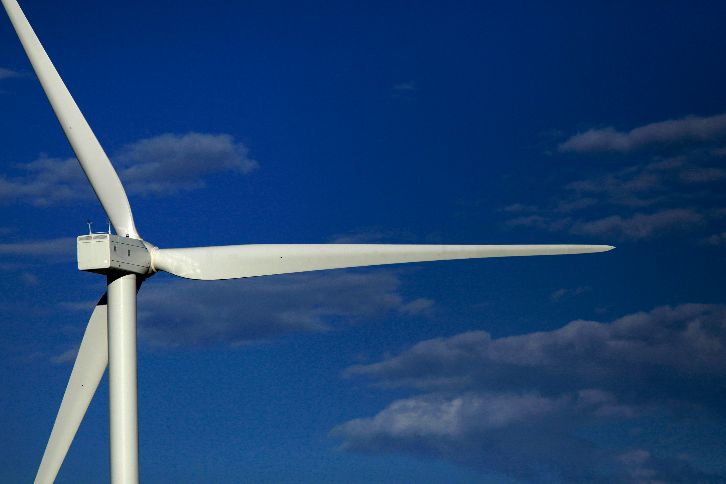
The wind energy sector is experiencing tremendous growth due to the global need for a clean energy supply. According to data from the World Wind Energy Association (WWEA), in 2025 global installed wind power capacity exceeded 1.34 terawatts (TW). This figure represents an annual increase of 14.3%, the highest growth recorded since 2020.
A clean, inexhaustible and safe energy whose best features are, moreover, that the cost of maintenance is low, that they are mobile and that they generate hardly any waste, thus helping to avoid climate change and move towards energy transition. It should be borne in mind that most of the environmental impact produced by renewable energies is concentrated in two stages: manufacture and dismantling. It is in this context that the importance of recycling wind turbine blades comes into play.
Recycling wind turbine blades involves processing their materials using mechanical, thermal or chemical methods so that they can be reused in sectors such as construction, the automotive industry or the wind energy sector itself, thereby preventing the disposal of non-biodegradable waste and ensuring that wind energy remains sustainable throughout its entire life cycle.
In Spain alone, and according to data from the Spanish Wind Energy Association (AEE), there are 1,454 wind farms in operation, housing around 22,500 wind turbines. Spain, one of the countries where this technology is growing fastest in Europe, ranks sixth worldwide in terms of installed capacity, behind China, the United States, Germany, India and Brazil.
The European wind energy industry remains committed to further progress in this area so that blades reaching the end of their useful life are reused, recycled or recovered, thereby promoting a circular economy.
The repowering of wind turbines
The service life of a wind turbine is around 25 years, although it is common for this to be extended to 30 years if sufficient investment is made in maintenance. In fact, at the Iberdrola Group, we anticipate a service life of 40 years for our onshore wind turbines thanks to the good maintenance and operational practices implemented at our sites. Most of its components are recyclable, although the challenge lies in recycling the wind blades efficiently. The materials from which they are made are mostly composites, such as fibreglass, carbon fibre or various resins, so separating them for recycling is particularly difficult and expensive.
Initially, and in keeping with the maxim of the circular economy, most of the wind turbine blades are being reused. This is part of the repowering strategy, as wind turbines are becoming increasingly more efficient and more powerful, so the old ones can be reassembled in other wind farms or in other countries. In addition, there are also initiatives that convert these blades into architectural or structural elements such as bridges or bicycle racks. However, it should be borne in mind that according to figures from WindEurope, by 2030 Europe could be generating around 55,000 tonnes per year of waste from dismantled blades, compared with around 20,000 tonnes in 2025. Given the pace at which wind energy is growing, it will be necessary to explore other alternatives in the coming years.
Types of wind blade recycling
While decommissioned blades are not classified as hazardous waste, sending them to landfill represents a loss of valuable materials and is at odds with the principles of circularity that guide the development of the wind energy sector. Associations such as the European WindEurope are therefore calling for years now for a Europe-wide landfill ban on wind turbine blades. This would mean that the wind industry would commit to 100 % recycling or recovery of out-of-service blades.
For this reason, different projects and initiatives are being developed to promote blade recycling through different technologies. There are currently three main types of recycling applicable to wind blade components:
-

Mechanical recycling
This involves shredding - usually after separation - the materials so that they can be reused, often as filler material, mainly in building materials or plastics. Techniques such as mechanical grinding or high-voltage pulse shredding are often used.
-

Thermal recycling
In this case, the blades are incinerated, producing energy and decomposing the composites. This process preserves certain characteristics of the fibrous materials, making them suitable for later use.
-

Chemical recycling
For chemical recycling, techniques such as fluidised bed or solvolysis are used which, by means of solvents and thermal processes, separate the resins from the fibres so that both materials can be reused.


What happens to wind turbine blades at the end of their useful life
The term wind turbine blade graveyard refers to the growing issue of disposing of retired wind turbine blades. As wind turbines reach the end of their operational life, their large, composite blades pose significant disposal challenges. Due to their size and material, which often includes fiberglass and resin, these blades are difficult to recycle and tend to be accumulated in landfills or specialized storage sites.
The industry is actively seeking sustainable solutions, such as developing new recycling technologies and finding alternative uses for these materials. Addressing the wind turbine blade graveyard is crucial for improving the environmental impact of wind energy and ensuring the long-term sustainability of the industry.
A second life for wind turbine blades
Before recycling a wind turbine blade, circular economy principles prioritise retaining the value of its materials and components for as long as possible. Therefore, where technical and safety conditions allow, efforts are made to extend the service life of wind turbines, reuse their components and repurpose the blades for new uses. Only when these options are no longer viable do operators resort to recycling their materials with the aim of preventing them from ending up in landfill.
This hierarchy allows resources to be utilised to the full and reduces the need to use new raw materials. In the wind power sector, blades can be reused in other wind farms or transformed into architectural and structural elements while recycling technologies enable materials such as glass or carbon fibres and resins to be recovered and given a new purpose.
New uses for wind turbine blades
Once they have served their purpose in a wind turbine, the blades can be given a new lease of life in various fields. Their strength and the properties of the materials they are made from mean they can be repurposed for infrastructure, urban spaces and construction projects, thereby extending their useful life and preventing them from becoming waste.
-

Bicycle parking facilities
The blades can be repurposed into structures to create bicycle parking and shelter areas.
-

Noise barriers
Some components can be used in solutions designed to reduce the impact of noise on roads and other infrastructure.
-

Architectural features
Their shape and strength allow them to be integrated into architectural designs and public spaces such as canopies, shelters or unique structures.
-

Construction components
Recovered materials can be incorporated into new products and applications within the construction sector.
-

Footbridges and bridges
Sections of blades can be reused as structural elements in footbridges and small-scale infrastructure.
-

Street furniture
The materials can be transformed into benches, tables and other items for public spaces.


Recycling of wind turbine blades at the Iberdrola Group
The Iberdrola Group recycles or reuses a high percentage of decommissioned blades. The solutions we currently employ are appropriate for the current volume of decommissioned blades and are in line with industry practices, although not all of them would be scalable.
We are pursuing various initiatives to move towards greater circularity in the materials used in our renewable energy facilities. We aim for these initiatives to combine the development of new industrial recycling solutions, the search for alternative applications for decommissioned components and the optimisation of wind farm decommissioning and renewal processes with the aim of reducing waste and maximising the value of resources.
Notable examples of these initiatives include EnergyLOOP, a pioneering solution for the recycling of wind turbine blades on an industrial scale in Spain; the project to reuse blades from the Barnesmore wind farm to create a new community space in Ireland; and the circular economy strategy applied to the refurbishment of wind farms in the UK, where ScottishPower Renewables has achieved high levels of recycling and reuse of materials following the decommissioning of its facilities.

EnergyLOOP: a solution for recycling wind turbine blades in Spain
-
EnergyLOOP is a company established in 2022 by Iberdrola through its PERSEO programme and FCC Ámbito to promote the recycling of wind turbine blades on an industrial scale in Spain and Portugal. Its aim is to recover the materials that make up these blades – primarily glass fibres, carbon fibres and resins – to convert them into reusable secondary raw materials for sectors such as energy, aerospace, automotive, textiles, chemicals and construction. In this way, EnergyLOOP contributes to closing the life cycle of wind turbines and moving towards greater circularity in the wind power sector.
-
The EnergyLOOP plant in Cortes (Navarre) opened on 1 June 2025 and is the first facility on the Iberian Peninsula specifically dedicated to the recycling of wind turbine blades. With a processing capacity of up to 10,000 tonnes per year, the facility enables components from the blades to be recovered for new uses, thereby addressing one of the wind power industry's main challenges: the management of materials at the end of their useful life.
The new community centre in Rathfarnham giving a second life to blades from the Barnesmore wind farm
-
The energy transition involves not only generating renewable energy but also finding new solutions to manage materials from renewable energy facilities at the end of their useful life. One example of this is the project by ScottishPower Renewables, the Iberdrola Group's renewable energy subsidiary in the UK, which involves reusing the blades from the wind turbines at the Barnesmore wind farm in Ireland. To give them a new lease of life, BladeBridge worked closely with South Dublin County Council (SDCC) to design a solution that would meet the region's needs and be in line with the council's Climate Action Plan.
-
The result is a new community centre in Rathfarnham where the blades have become part of a space designed for residents to meet, eat together or spend time after school. Some components that were previously used to generate clean, renewable energy are now fulfilling a new role at the heart of the community, demonstrating how the circular economy can combine environmental and social benefits.
Iberdrola strengthens its commitment to the circular economy in the refurbishment of its wind farms in the UK
-
ScottishPower Renewables has demonstrated the potential of the circular economy applied to the energy transition following the completion of the decommissioning of Hagshaw Hill 1, Scotland's first commercial wind farm. An independent analysis carried out by the consultancy firm Mott MacDonald confirms that 99.9% of the materials removed during the process have been recycled or reused, highlighting the importance of responsibly managing renewable assets at the end of their useful life and moving towards a model based on the maximum use of resources.
-
The refurbishment of wind farms not only helps to drive cleaner and more efficient energy generation but also creates new opportunities for local communities. In the case of Hagshaw Hill 1 the project has fostered collaboration with companies in Scotland and other regions of the UK, boosting employment, developing industrial capabilities and strengthening the local supply chain.
Circular economy model at the Iberdrola Group
At Iberdrola, we are working to be more respectful of nature through our three strategic sustainability priorities: climate action, biodiversity protection and the circular economy.
For this reason, our sustainable business model is based on circular economy principles, a resource-management system that prioritises reducing the use of new raw materials through process efficiency, extending product life cycles and promoting the reuse and recycling of materials.
We apply this approach throughout our value chain, building a decarbonised future alongside strategic partners who share our vision and values for environmental protection and preservation.
In 2025, we carried out circular economy initiatives related to wind turbine blade recycling, radioactive waste storage and reducing gas consumption.
Our circular economy targets
At Iberdrola, we have set a target of recycling more than 90% of wind turbine blades and solar panels by 2030. This goal is aligned with the new Nature Management and Protection Policy and its guiding principles.
| EFFICIENT USE OF RESOURCES | METRIC | 2025 | 2028e | 2030e |
|---|---|---|---|---|
| Blades and Solar Panels Recycling | Number (cumulative)1 | 947 | >3,000 | >5,000 (90%) |
(1) Estimate of recycled blades in 2030 according to the current operational plan and subject to revision depending on the evolution thereof. Target by 2030: 90% recycling of blades and panels.