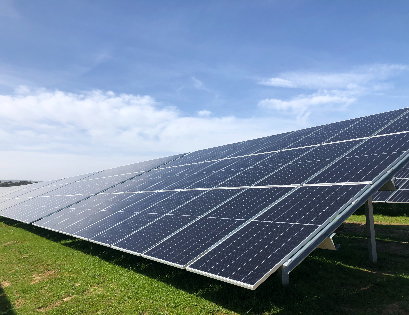
Recycling of solar panels
How does solar panel recycling work?
With the growth of photovoltaic solar energy, we wonder how the recycling of solar panels works - elements that according to data from the International Renewable Energy Agency (IRENA) could reach 78 million tonnes worldwide by 2050.

Solar photovoltaic energy is the third most important renewable energy source in terms of installed capacity globally, with growth of 22% in 2022, according to data from the International Renewable Energy Agency (IRENA). The same agency estimates that there could be 78 million tonnes of solar panels worldwide by 2050. For this reason, and to ensure that the environmental impact of this renewable energy is as low as possible, photovoltaic panels, which have a useful life of around 30 years, are recycled, although their efficiency is reduced by between 6 and 8% after 25 years.
These panels are mainly composed of silicon, glass, aluminium and semiconductor materials that can be reused and recovered through recycling. In fact, this recycling has been mandatory in the European Union since 2012, which stipulates that solar panel manufacturers must collect and recycle solar panels at the end of their life cycle. This is not the case in all countries; in the United States, for example, this obligation depends on the states.
What is the recycling process of solar panels like?
The solar panel recycling process is not always the same as it can vary depending on the specific technology used to manufacture the panel as well as the available recycling facilities and innovation. However, in general terms, the process usually follows these steps:
- Reception and sorting: The solar panels arrive at the recycling centre, where their condition is checked and they are sorted according to the type of technology and material they contain.
- Disassembly: This is one of the most important parts of the process. The main parts are disassembled, such as the glass, the PV cells and the aluminium frame which, for example, is 100 % recyclable. This can be done manually or with specialised machinery.
- Material separation: Part of this process includes thermal recycling whereby, once the aluminium and glass have been removed, the panel undergoes thermal processing at over 500°C to burn off any remaining plastics that may still be attached. The next step is a series of chemical processes called delamination to remove the polymer layer and separate the metal contacts. Finally, the wafers are etched from silicon, a material that is more than 80 % reusable, before being fused into reusable plates.
- Recycling: Recovered materials undergo specific processes to purify them and prepare them for final reuse or recycling. For example, silicon can be refined for use in the manufacture of new solar panels, as can glass or aluminium.

Circular economy model at the Iberdrola Group
At Iberdrola, we are working to be more respectful of nature through our three strategic sustainability priorities: climate action, biodiversity protection and the circular economy.
For this reason, our sustainable business model is based on circular economy principles, a resource-management system that prioritises reducing the use of new raw materials through process efficiency, extending product life cycles and promoting the reuse and recycling of materials.
We apply this approach throughout our value chain, building a decarbonised future alongside strategic partners who share our vision and values for environmental protection and preservation.
In 2025, we carried out circular economy initiatives related to wind turbine blade recycling, radioactive waste storage and reducing gas consumption.
Our circular economy targets
At Iberdrola, we have set a target of recycling more than 90% of wind turbine blades and solar panels by 2030. This goal is aligned with the new Nature Management and Protection Policy and its guiding principles.
| EFFICIENT USE OF RESOURCES | METRIC | 2025 | 2028e | 2030e |
|---|---|---|---|---|
| Blades and Solar Panels Recycling | Number (cumulative)1 | 947 | >3,000 | >5,000 (90%) |
(1) Estimate of recycled blades in 2030 according to the current operational plan and subject to revision depending on the evolution thereof. Target by 2030: 90% recycling of blades and panels.