




Effective governance: The crediting programme must be transparent and accountable.
Carbon credits
What are carbon credits?
Carbon credits are tradable certificates that represent one tonne of carbon emissions avoided or removed by a project. Companies generally purchase them as a complement to emissions-reduction efforts, or to compensate for or offset emissions that are difficult to eliminate while helping finance climate action.

Images from the Muçununga Project, in partnership with Biomas.
Decarbonisation is now a global priority and requires companies to take decisive action to reduce their carbon dioxide (CO₂) and other greenhouse gas emissions by deploying more efficient technologies such as renewable energy and electrification.
However, even with the best available technologies and the most ambitious emissions reduction plans, there will always be residual emissions that are difficult or impossible to eliminate in the short and medium term. In this context, carbon credits are a complementary and essential tool for advancing toward net zero emissions by channelling funding to projects that avoid, reduce or remove greenhouse gas emissions.
For this reason, in addition to reducing their carbon footprint as much as possible, an increasing number of organisations are taking responsibility for their remaining emissions by supporting high-quality climate projects that avoid, reduce or remove emissions wherever it is currently most effective to do so, enabling them to achieve net zero emissions. Among these, nature-based projects stand out for their ability to remove carbon while also generating additional benefits for biodiversity, ecosystems and local communities, contributing to a more effective and sustainable climate transition.
In this regard, it is important to emphasise that reducing emissions alone will not be enough to meet global climate targets. In addition to avoiding new emissions, it is essential to remove some of the carbon that has accumulated in the atmosphere over decades and to protect the natural ecosystems that act as carbon sinks while sustaining biodiversity.
At Iberdrola, we are promoting these types of climate action projects through Carbon2Nature, an initiative focused on developing nature-based projects that restore and conserve ecosystems, enhance carbon removal and deliver tangible environmental and social benefits in different regions around the world. These projects generate high-quality carbon credits that comply with recognised standards.
To issue carbon credits, a project must complete a validation, registration and verification process in accordance with the procedures established by a recognised independent standard. These standards may be administered by public or private organisations and ensure that carbon credits meet key quality principles, including additionality, integrity, permanence and sustainability of the underlying outcome, as well as the traceability and unique accounting of the credits issued.
10 Core Carbon Principles (CCPs)
To ensure the quality of carbon credits and combat greenwashing, the Integrity Council for the Voluntary Carbon Market (IC-VCM) has established a set of principles for verifying project quality.
1 of 10
 SEE INFOGRAPHIC: 10 Carbon Core Principles [PDF]
Who can issue carbon credits?
Carbon credits are issued by project developers, who implement activities designed to avoid or remove emissions compared with a baseline scenario. Two parties are involved in issuing these credits: the organisation that develops the carbon removal or emissions avoidance project, and the certification body that records the credits in the official registry. Broadly speaking, projects fall into two categories:
- Nature-based solutions: Reforestation and avoided deforestation place forests at the centre of climate action because of their ability to remove CO₂ from the atmosphere. As such, any project that promotes the development of forest or other natural ecosystems, or prevents their degradation, may be eligible to generate carbon credits.
- Technology-based solutions: Replacing fossil fuel energy sources with renewable energy, as well as projects involving direct air capture (DAC) technologies or carbon capture, utilisation and storage (CCUS), are among the initiatives included in this category.
Iberdrola and decarbonisation: discover our projects
Iberdrola is advancing its climate action through Carbon2Nature, a Group company created as a strategic catalyst to address the interconnected climate and biodiversity crises. Its core mission is to develop high-impact nature-based solutions (NbS) that not only reduce the global carbon footprint but also generate tangible environmental and social benefits, including enhanced biodiversity and stronger local communities.
With a global vision and a local approach, Carbon2Nature promotes conservation, restoration and sustainable management projects across a wide range of ecosystems. These projects remove carbon from the atmosphere and generate high-quality carbon credits that help companies achieve ambitious climate action, sustainability and positive local impact goals.
Carbon2Nature develops projects in several of the countries where Iberdrola operates, drawing on the Group's deep knowledge of local regions and extensive experience managing diverse regulatory, environmental and social contexts. Our current project portfolio is concentrated in Brazil, Australia and Spain. In each country, we adapt to the local framework, build strategic partnerships and work to ensure high-quality projects based on integrity, reliability and transparency.
Our portfolio includes projects focused on reforestation, improved forest management, forest conservation, coastal and marine ecosystem restoration and the development of innovative techniques such as soil carbon sequestration and regenerative agricultural practices. These are some of our flagship initiatives:
-

Talia Carbon2Nature
Learn more about the projectOur ecological restoration project on the Eyre Peninsula in southern Australia aims to restore 828 hectares of degraded land and recover the critically endangered Drooping Sheoak (Allocasuarina verticillata) woodland. In addition to enhancing biodiversity through the planting of more than 32 native tree species, the project is expected to remove 140,000 tonnes of CO₂ over 25 years.
 External link, opens in new window.
-

San Esteban de Gormaz project
Learn more about the projectIn San Esteban de Gormaz, in the province of Soria, Spain, we are restoring land that has been severely degraded by erosion and agricultural activity. The project will increase forest cover by planting more than 110,000 trees to create a mixed forest featuring species of high ecological and landscape value. This will reverse land degradation and improve local biodiversity. In total, the project will restore 104 hectares capable of removing 24,180 tonnes of CO₂.
External link, opens in new window.
-

Muçununga project
Learn more about the projectWorking together with Biomas, we are developing this reforestation project in Brazil, which will plant two million trees from more than 100 native species, expanding forest cover by 1,200 hectares and removing approximately 570,000 tonnes of CO₂. The project has already obtained VERRA certification and will incorporate advanced methodologies to ensure the generation of high-quality carbon credits with strong environmental integrity and market credibility. In addition to its environmental benefits, the initiative will generate positive social impacts by creating local employment and new income opportunities for 14 neighbouring communities.
External link, opens in new window.


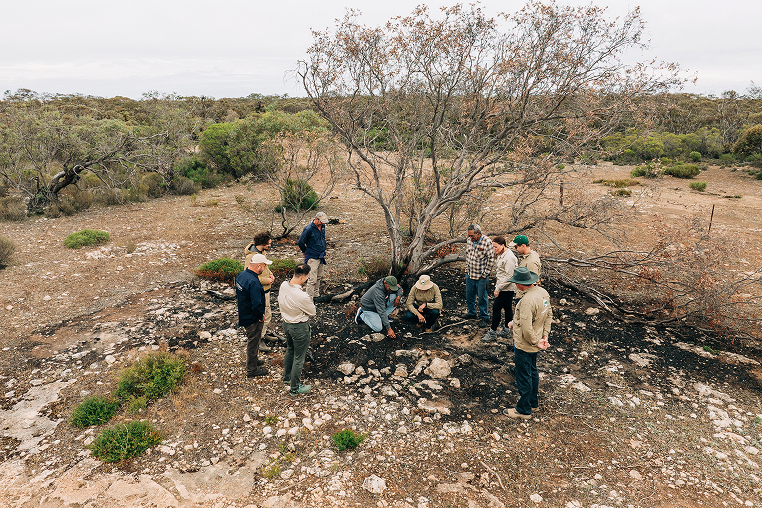
Talia project, developed by Carbon2Nature in southern Australia. Objective: to restore 828 hectares of degraded land by restoring a native forest ecosystem of high ecological and cultural value.
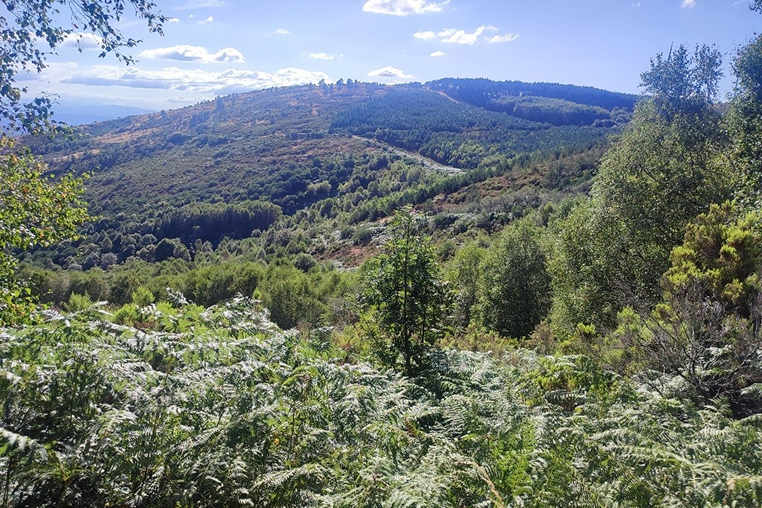
Cabeza de Meda project, in Ourense (Spain), carried out by Carbon2Nature. Objective: to restore 99 hectares of land affected by wildfires through the planting of nine native forest species.
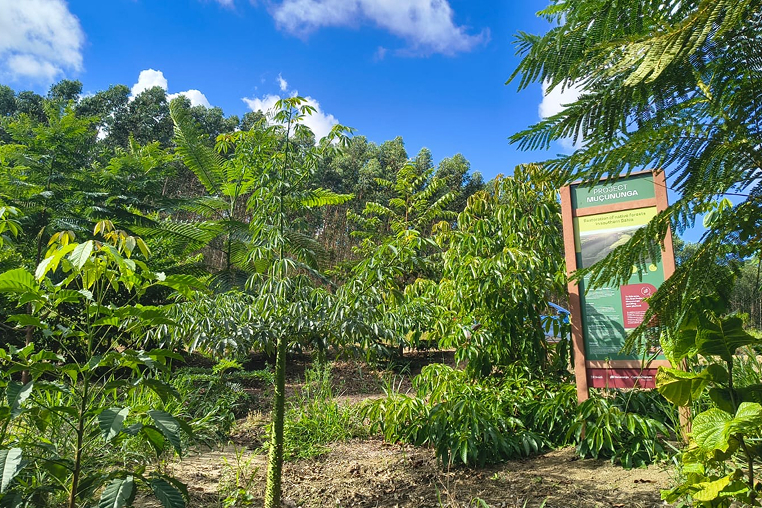
Muçunuga project, in Brazil, an initiative by Biomas and Carbon2Nature. Objective: to restore 1,240 hectares in southern Bahia, within the Central Atlantic Forest Corridor, one of the world's most biodiverse and ecologically unique ecosystems.
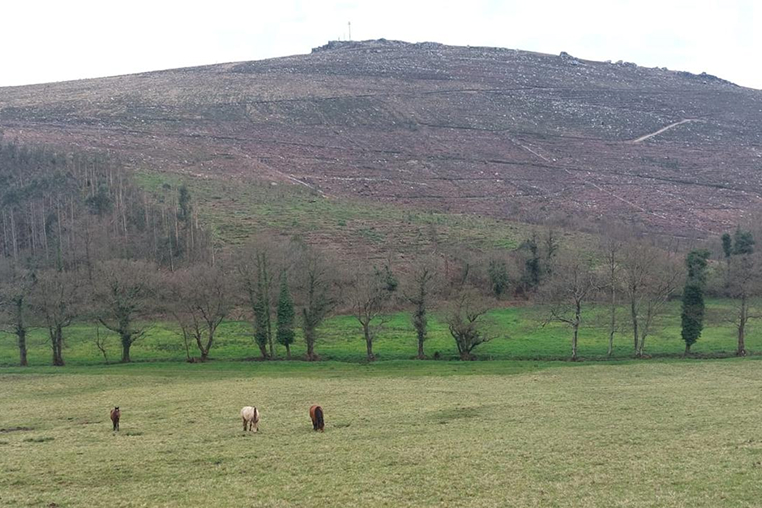
Ribadeo project, in Lugo (Spain), implemented by Carbon2Nature. Objective: to transform 175 hectares of degraded land into a mixed Atlantic forest of native broadleaved and coniferous trees following a major wildfire.
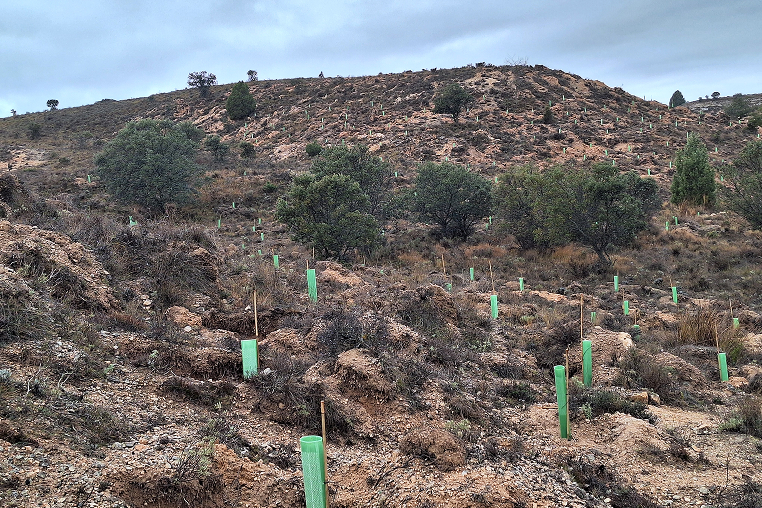
San Esteban de Gormaz project, in Soria (Spain), promoted by Carbon2Nature. Objective: to transform 169 hectares of degraded agricultural land into a mixed forest of broadleaved and coniferous trees.
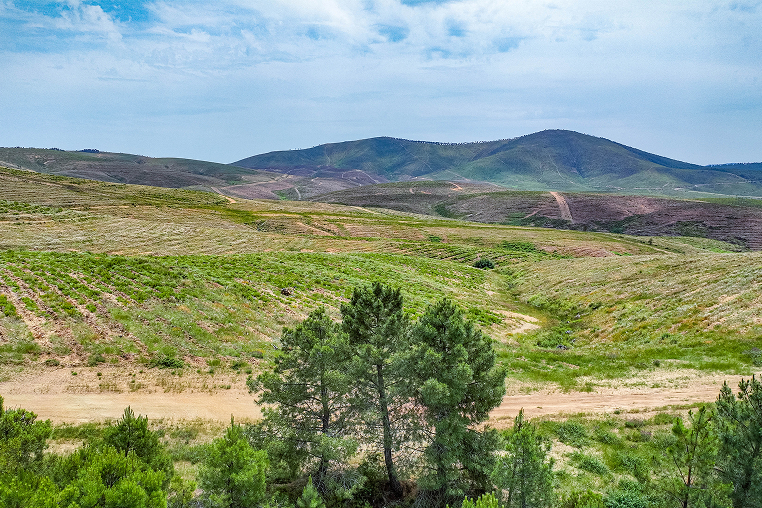
Serradilla project, in Serradilla del Llano (Salamanca), carried out by Carbon2Nature. Objective: to restore 278 hectares using native species following a wildfire.
All our projects are firmly committed to working with local communities, adapting each initiative to its cultural context so that its impact extends beyond environmental benefits and helps drive sustainable development in the regions where it operates.
How carbon credits are certified
For a project to issue transferable carbon credits, it must undergo a validation and certification process under a recognised accreditation programme or standard that applies an established accounting protocol within its own registry. These certification programmes may be administered by private organisations or public bodies. The main categories are:
- Mechanisms administered by international organisations. International treaties have led to the creation of organisations that regulate the issuance of these certificates. The Kyoto Protocol established the Clean Development Mechanism (CDM), while the Paris Agreement regulates the issuance of verified carbon credits under Article 6.4.
- Mechanisms established by national or regional governments. In Europe, the Carbon Removals and Carbon Farming Regulation (CRCF) has been introduced together with certification frameworks for its implementation. According to the World Bank, other regions with their own accreditation standards include Canada, Australia, Portugal, Spain, the United Kingdom and China, among others. In Spain, a national standard administered by the Ministry for the Ecological Transition is responsible for verifying whether a project is eligible to issue carbon credits. Projects must also be registered in the Carbon Footprint Registry.
- Independent mechanisms, private companies or non-governmental organisations. Four globally recognised standards stand out: VERRA, Gold Standard, American Carbon Registry and Climate Action Reserve.
Once a project has successfully passed the assessment carried out by one of these certification bodies, confirming that it complies with the relevant requirements, it is entered into the registry with a unique identifier and can begin issuing carbon credits. Before credits can be issued, however, an independent third party must verify that the corresponding tonne of carbon has in fact been avoided or removed.
Once issued, carbon credits may pass through several intermediaries before being purchased and retired by the end user. The final buyer may then claim the associated climate benefits either by using the credits to compensate for its own emissions or by financially supporting the decarbonisation efforts of other organisations.
How to acquire carbon credits
Companies wishing to acquire carbon credits as part of their sustainability strategy can do so through three main channels:
- Direct purchase from the project developer: either by entering into a long-term agreement with the developer to receive a specified volume of credits as they are generated, known as an offtake agreement, or by purchasing credits immediately from an operational project.
- Direct investment: Investing directly in a project to gain greater control over the carbon credits it generates.
- Intermediaries or exchanges: Digital platforms where companies can purchase carbon credits that have already been issued and verified from projects that are already in operation.
Regulated and voluntary carbon markets
Carbon credits are generally purchased voluntarily by companies, governments or individuals as part of their climate and sustainability strategies. In some cases, however, their purchase is driven by regulatory requirements or incentives.
The fact that most carbon credit purchases are motivated by voluntary action has given rise to what is known as the Voluntary Carbon Market (VCM). In practice, however, this term is often used as an umbrella term to describe all carbon credit transactions, regardless of whether they are voluntary or driven by regulation. For this reason, the terms Carbon Credit Market or Verified Carbon Market are often more accurate.
It is important to distinguish this from the regulated carbon market, which operates in several regions, including the European Union through the EU Emissions Trading System (EU ETS). Under these schemes, companies are required to pay for the greenhouse gas emissions they produce. These markets trade emissions allowances and may also permit the use of certain carbon credits as a flexibility mechanism for regulatory compliance.