The following has evaluated to null or missing:
==> mostrarTituloH2 [in template "20102#20129#105831" at line 4, column 40]
----
Tip: If the failing expression is known to legally refer to something that's sometimes null or missing, either specify a default value like myOptionalVar!myDefault, or use <#if myOptionalVar??>when-present<#else>when-missing</#if>. (These only cover the last step of the expression; to cover the whole expression, use parenthesis: (myOptionalVar.foo)!myDefault, (myOptionalVar.foo)??
----
----
FTL stack trace ("~" means nesting-related):
- Failed at: #assign hayH2 = getterUtil.getBoolean... [in template "20102#20129#105831" at line 4, column 1]
----
1<#assign title = .vars['reserved-article-title'].getData()>
2<div class="containerInterior">
3<#assign hayH1 = getterUtil.getBoolean(MostrarTituloH1.getData())>
4<#assign hayH2 = getterUtil.getBoolean(mostrarTituloH2.getData())>
5
6<#if hayH1>
7 <h1 aria-level="1" role="heading" id="titulo">${layout.getName(locale)}</h1>
8</#if>
9<#if hayH2>
10
11 <#if TituloContenido.getData()?? && TituloContenido.getData() != "">
12 <#assign contenido = TituloContenido.getData()>
13 <#else>
14 <#assign contenido = title>
15 </#if>
16
17 <#if hayH1>
18 <p id="subtitulo"
19 aria-level="2"
20 role="heading"
21 style="
22 color: #007f33 !important;
23 font-size: 45px;
24 font-family: 'IberPangea Medium', sans-serif;
25 line-height: 45px;
26 margin-top: .75em;
27 margin-bottom: .9em;">
28 ${contenido}
29 </p>
30 <#else>
31 <p id="subtitulo"
32 style="
33 color: #007f33 !important;
34 font-size: 45px;
35 font-family: 'IberPangea Medium', sans-serif;
36 line-height: 45px;
37 margin-top: .75em;
38 margin-bottom: .9em;">
39 ${contenido}
40 </p>
41 </#if>
42
43</#if>
44
45<#if getterUtil.getBoolean(MostrarCategorias.getData())>
46
47
48
49 <#assign journalArticleId = .vars['reserved-article-id'].data>
50 <#assign journalArticleLocalService = serviceLocator.findService("com.liferay.journal.service.JournalArticleLocalService")>
51
52 <#assign assetCategoryPropertyLocalService = serviceLocator.findService("com.liferay.asset.category.property.service.AssetCategoryPropertyLocalService") />
53
54 <#assign article = journalArticleLocalService.getArticle(groupId, .vars['reserved-article-id'].data) />
55 <#assign assetEntryLocalService = serviceLocator.findService("com.liferay.asset.kernel.service.AssetEntryLocalService")>
56 <#assign asset = assetEntryLocalService.getEntry('com.liferay.journal.model.JournalArticle', article.resourcePrimKey) >
57 <#assign layoutLocalService = serviceLocator.findService("com.liferay.portal.kernel.service.LayoutLocalService") />
58
59 <p class="tag-categorias">
60
61 <#list asset.getCategories() as category>
62
63
64
65 <#if assetCategoryPropertyLocalService.fetchCategoryProperty(category.getCategoryId(), "friendlyURL")??>
66
67 <#assign categoryFriendly = '/tag/' + assetCategoryPropertyLocalService.fetchCategoryProperty(category.getCategoryId(), "friendlyURL").getValue() />
68
69 <#if layoutLocalService.fetchLayoutByFriendlyURL(groupId, false, categoryFriendly)??>
70 <#assign categoryLayout = layoutLocalService.fetchLayoutByFriendlyURL(groupId, false, categoryFriendly) />
71 <#assign categoryLayoutURL = portalUtil.getLayoutFullURL(categoryLayout, themeDisplay) />
72
73 <a class="tag-categoria" href="${categoryLayoutURL}">${category.getTitle(locale)?cap_first}</a>
74
75 <#else>
76 <a class="tag-categoria" href="/tag/#">${category.getTitle(locale)?cap_first}</a>
77
78 </#if>
79 </#if>
80
81
82
83
84 </#list>
85
86 </p>
87
88</#if>
89<div id="contenidoEntradilla">${DescripcionDetalleContenido.getData()}</div>
90
91
92<#if ContenidoWebcofl.getSiblings()?has_content>
93 <#list ContenidoWebcofl.getSiblings() as cur_ContenidoWebcofl>
94 <#assign
95 webContentData = jsonFactoryUtil.createJSONObject(cur_ContenidoWebcofl.getData())
96 />
97
98 <#if webContentData?length gt 5>
99 <@liferay_asset["asset-display"]
100 className = webContentData.className
101 classPK = webContentData.classPK?number
102 />
103
104 </#if>
105
106
107 </#list>
108</#if>
109</div>
110<@liferay_util["html-top"]>
111<style>
112 #decPagination div.containerInterior p#subtitulo {
113 font-family: "Iberpangea Medium";
114 font-size: 45px;
115 line-height: 45px;
116 color: #007F33;
117 margin-bottom: 20px;
118 }
119
120
121 div.contenidoCentrado div.contenidoInterior div.containerInterior p.tag-categorias a.tag-categoria:focus{
122 outline: 2px solid rgba(0, 0, 0, 0.7) !important;
123 }
124 p.tag-categorias > .tag-categoria {
125 width: auto !important;
126 max-width: inherit !important;
127 }
128
129 div.faldon h2 {
130 width: 100%;
131 float: left;
132 font-size: 1.26em;
133 font-family: IberPangeaText Light, sans-serif;
134 margin-bottom: 2em;
135 border-bottom: 1px solid #e0e0e0;
136 padding-bottom: .8em;
137 color: #427314 !important;
138
139 line-height: 1.35em;
140 margin-top: .75em;
141 }
142 .contenidoInterior div.faldon h2+ul li:before {
143 margin: .15em 0 0 -1.75em;
144 font-size: 1em;
145 }
146 .cursiva_texto {
147 font-style: italic;
148 }
149 .contenidoInterior h1 {
150 font-family: 'IberPangea', sans-serif !important;
151 font-size: 32px !important;
152 border: none !important;
153 line-height: 36px !important;
154 letter-spacing: 0px !important;
155 color: #00402A !important;
156 padding-left: 0em !important;
157 margin-bottom: 14px !important;
158 }
159 p span.table a.enlace-actualidad[href*="/tag/"],
160 p span.table a.enlace-actualidad[href*="/label/"],
161 p.tag-categorias a.tag-categoria[href*="/tag/"],
162 p.tag-categorias a.tag-categoria[href*="/label/"]{
163 line-height: 23px !important;
164 }
165 .contenidoInterior #contenidoEntradilla p.entradilla {
166 font-family: IberPangeaText, sans-serif !important;
167 font-size: 17px !important;
168 line-height: 23px !important;
169 font-weight: 700;
170 color: #615D5A !important;
171 margin-top: 2em;
172 }
173
174 .contenidoInterior h2#subtitulo{
175 font-family: 'IberPangea Medium', sans-serif !important;
176 margin-bottom: 0.4em;
177 }
178 #decPagination div.containerInterior{
179 max-width:980px;
180 margin:0 auto 25px;
181 }
182 #decPagination div.containerInterior h1#titulo{
183 font-family:"Iberpangea Medium";
184 font-size:32px;
185 line-height:36px;
186 color:#00402A;
187 text-transform:none;
188 border-left:none;
189 margin-top:20px;
190 }
191 #decPagination div.containerInterior h2#subtitulo{
192 font-family:"Iberpangea Medium";
193 font-size:45px;
194 line-height:45px;
195 color:#007F33;
196 margin-bottom:20px;
197 }
198 #decPagination div.containerInterior p.tag-categorias{
199 margin-bottom:30px !important;
200 }
201 #decPagination div.containerInterior p.tag-categorias a.tag-categoria{
202 margin-right:20px;
203 color:#00402A;
204 }
205 #decPagination div.containerInterior div#contenidoEntradilla p.entradilla{
206 font-family:"IberpangeaText";
207 font-size:20px ;
208 line-height:26px;
209 color:#615D5A;
210 }
211 @media all and (max-width:500px){
212 #decPagination div.containerInterior h1#titulo{
213 font-size:26px;
214 line-height:36px;
215 }
216 #decPagination div.containerInterior h2#subtitulo{
217 font-size:35px;
218 line-height:35px;
219 margin-bottom:20px;
220 }
221 #decPagination div.containerInterior div#contenidoEntradilla p.entradilla{
222 font-family:"IberpangeaText Bold";
223 font-size:16px ;
224 line-height:24px;
225 }
226 }
227 @media screen and (max-width: 47.95em) {
228 .contenidoInterior h1 {
229 font-size: 26px !important;
230 }
231 .contenidoInterior h2#subtitulo{
232 font-size: 35px;
233 line-height: 35px;
234 color: #007F33 !important;
235 margin-bottom: 1em;
236 }
237 .contenidoInterior #contenidoEntradilla p.entradilla {
238 margin-top: 0.8em;
239 }
240 .contenidoInterior #contenidoEntradilla p.entradilla {
241 line-height: 24px !important;
242 }
243 }
244
245
246</style>
247</@>

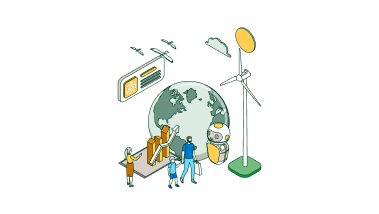
We talk about performing a reset when a system can no longer operate under its current parameters and needs to be restarted. It is the button that we press, for example, when our computer or mobile phone is malfunctioning or stops working. The crisis caused by the COVID-19 pandemic has exposed some systemic flaws, highlighting the need to reset the global economy and its models.
THE ECONOMIC AND SOCIAL CRISIS POST-COVID-19
According to data released by the International Monetary Fund (IMF), the global economy shrunk by 4.9% in 2020, but the losses were not uniform. While GDP fell by 7.2 % in the European Union (EU), in emerging countries as a whole the fall was more moderate at 2.4 %. This severe collapse has hit low-income earners, youth and women particularly hard.
The COVID-19 pandemic will leave deep economic scars in many countries. In addition to the severe upheavals in the labour market due to job losses, here are the large number of companies at risk of bankruptcy as their cash reserves are depleted and the impact on future human capital, as the education of more than 1 billion students in 162 countries has been disrupted.
The underlying problem is that the pandemic will probably increase poverty and inequality in the short to mid-term, revealing the deficiencies in health systems, the precarious nature of employment and the difficult outlook for young people when it comes to getting the opportunities they are crying out for. Which is why the World Economic Forum (WEF), is suggesting an alternative: A Great Reset of the world economy that would allow to adopt a different model.
WHAT IS THE GREAT RESET? AIMS
During the Davos 2021 Forum, an event organised by the WEF, laid the foundations for the Great Reset. The underlying idea is that the world was not prepared for a crisis like the current COVID-19 pandemic and that it needs to be more sustainable and resistant to sudden changes in external conditions, something that may be exacerbated by a phenomenon like climate change.
If the crisis caused by the pandemic is not addressed, the consequences will get worse and the world will become a more fragile place. To avoid such a scenario, Schwab assures that gradual measures and ad hoc solutions are not enough, and that new foundations must be laid to support the economic and social system. The veteran german economist described the three basic objectives of the Great Reset, inviting all countries and sectors to participate:
- The creation of stakeholder capitalism, which will replace shareholder capitalism. The idea of this system is that companies will work for the common good rather than immediate profits and benefits alone.
- The construction of a more resilient, equitative and sustainable system based on environmental, social and governance metrics (ESG criteria).
- Harnessing innovations innate to the Fourth Industrial Revolution for the public good, nourishing greener, smarter and fairer growth.
"The pandemic represents an unusual, short term opportunity to reflect, rethink and reboot our world"
Klaus Schwab, founder and President of the World Economic Forum
The Great Reset will not be easy, as the pandemic keeps the world in a state of uncertainty and our capacity to react is being hindered in a society based on interpersonal connections and where the economy, politics, the environment and technology are constantly influencing one another. Young people, particularly affected by climate change and a lack of opportunities, must lead this change, pushing companies to offer more sustainable products and services in the future.

SEE INFOGRAPHIC: The keys to the Great Reset [PDF] External link, opens in new window.
STRATEGIES TO DRIVE THE GREAT RESET
Kristalina Georgieva, managing director of the IMF, assures that human beings have a unique opportunity to transform the world and make it a better place: fairer and more equitable, greener and more sustainable, smarter and, above all, more resilient. To aspire to this, she believes that the following measures need to be taken:
"The best memorial we can build for those who lost their lives in the pandemic is a greener, smarter and fairer world."
Kristalina Georgieva, managing director of the IMF
Invest in people, in education, health and social protection, and in avoiding the sharp rise in inequality that this crisis could trigger.
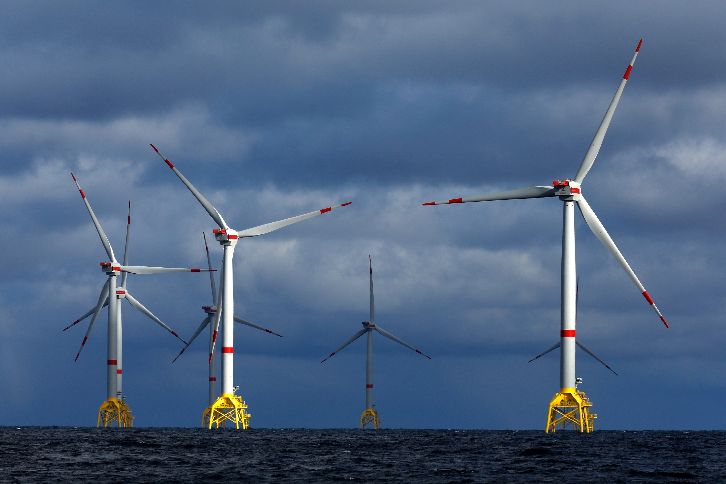
Promote low-carbon growth to help achieve climate neutrality, through, for example, a rational allocation of public expenditure.
Take advantage of the digital transformation, whether by expanding the use of e-government platforms to improve efficiency and transparency or by using distance learning or remote working.