


Distributed Energy Resources (DER)
What are Distributed Energy Resources (DER)?
Electrical network Renewable energy Energy storage
Distributed Energy Resources (DERs) are transforming the way electricity is generated, stored and consumed. Located close to where energy is used, they can help make electricity networks more flexible, resilient and efficient. From solar panels and batteries to electric vehicles and flexible demand, discover the main types of DERs, how they work and the role they can play in the energy transition.

Distributed Energy Resources (DERs) are small-scale energy resources usually located close to where electricity is consumed. They can include systems that generate, store or manage electricity, such as rooftop solar photovoltaic panels, batteries or electric vehicles. Many DERs are located on the consumer’s side of the electricity meter – known as behind-the-meter resources.
Unlike a traditional centralised electricity system, in which large power plants generate electricity that is transmitted over long distances to consumers, DERs are located closer to homes, businesses and other points of consumption. This distributed model can reduce the distance electricity needs to travel and enables consumers and businesses to play a more active role in the electricity system.
The role of DERs in electrification
DERs are becoming increasingly important as electricity networks evolve to accommodate more renewable energy, electrification and flexible demand. Digital technologies and smart grids are making it possible to monitor and coordinate these resources, helping integrate them into the wider electricity system. These resources can also contribute to decarbonisation when they use renewable energy sources such as solar and wind. However, their environmental impact depends on the technology and energy source used: combustion-based DERs, including those powered by fossil fuels, can still produce greenhouse gas emissions and other pollutants.
Difference between Distributed Generation (DG) and Distributed Energy Resources (DER)
Although the terms Distributed Generation (DG) and Distributed Energy Resources (DERs) can easily be confused, DG is a type of DER. The main difference is that distributed generation specifically refers to electricity generation located close to the point of consumption, whereas DERs encompass a much broader range of resources.
Solar photovoltaic panels installed on a home or small wind turbines connected to a local electricity network are examples of Distributed Generation.
Distributed Energy Resources have a broader meaning. In addition to distributed generation, DERs include energy storage, flexible demand and other resources that can respond to the needs of the electricity network. A home battery, an electric vehicle capable of vehicle-to-grid (V2G) operation or a controllable heating system can therefore be considered a DER, even though they do not necessarily generate electricity.
Main types and technologies of DERs
Distributed Energy Resources encompass a wide range of technologies. Some generate electricity, others store it, and yet others can adjust their consumption or production according to the needs of the electricity system.
Generation technologies: solar photovoltaic and distributed wind power
Solar photovoltaic (PV) systems
These are one of the most widespread types of Distributed Energy Resource. They convert sunlight directly into electricity and can be installed on rooftops, commercial buildings and other sites close to consumers.
Distributed wind power
This type uses smaller wind turbines located close to the point of consumption. Like solar PV, these systems can generate renewable electricity locally and reduce dependence on electricity supplied from distant generation facilities.
Because solar and wind generation depend on weather conditions, their output can vary over time. Integrating them with energy storage, flexible demand and digital control systems can help manage this variability.
Battery energy storage systems (BESS) and electric vehicles (V2G)
Battery energy storage systems (BESS)
These store electricity at times of high production or low demand so that it can be used later. At the local level, batteries can store electricity generated by renewable sources, provide backup power and help manage periods of high demand.
Electric vehicles
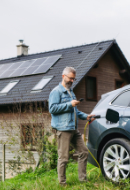
These can also become an important source of flexibility. With vehicle-to-grid (V2G) technology, compatible electric vehicles can send electricity from their batteries back to the electricity network when required. Although V2G deployment is still developing, pilot projects and commercial applications are demonstrating its potential to provide flexibility and support the integration of renewable energy.
Manageable generation: fuel cells, combined heat and power, and microturbines
Some distributed generation technologies can be controlled according to electricity demand and system requirements. These include fuel cells, combined heat and power (CHP) systems and microturbines. Although these technologies differ in their characteristics and environmental impact, their ability to adjust their output can make them valuable components of DER systems where flexibility and local energy supply are required.
Fuel cells.
Unlike weather-dependent sources such as solar and wind, fuel cells can generate electricity whenever needed and provided that fuel is supplied – including at times when solar or wind generation is unavailable. Via an electrochemical process, they convert the chemical energy of fuels such as hydrogen directly into electrical energy by combining them with oxygen. In the case of hydrogen, water and heat are produced as byproducts. Fuel cells can be highly efficient and produce fewer local air pollutants than combustion-based generation. Their overall environmental impact depends on the fuel used. When it is hydrogen, the electrochemical process produces electricity, water and heat, although the overall emissions associated with hydrogen depend on how it is produced.
Combined heat and power (CHP).
These systems produce electricity and useful heat from the same energy source, improving overall efficiency where there is a suitable demand for both. In a typical CHP system, a combustion engine drives a generator to produce electricity, while a heat exchanger captures waste heat produced during electricity generation rather than allowing it to be lost. This heat can then be used for space heating or hot water, or as process heat in industrial applications.
By producing electricity and useful heat simultaneously, CHP systems can make more efficient use of the energy contained in the fuel than systems that generate electricity and heat separately.
Their efficiency depends on the technology, fuel and operating conditions, as well as how effectively the available heat can be used. CHP systems can operate using different fuels, including natural gas, biogas or other renewable or low-carbon fuels.
Some systems can also operate with hydrogen, depending on the technology and equipment. As the energy transition progresses, the ability to use lower-carbon fuels can further increase the potential role of CHP in decentralised energy systems.
Microturbines.
These are small-scale turbines that can be used for distributed power generation. They are usually powered by fuels such as natural gas, propane and biogas, and operate in a similar way to a jet engine – but producing electricity and heat rather than thrust. They benefit from having a compact size, high rotational speeds and can often capture heat for hot water or heating, allowing them to achieve high efficiency, particularly when waste heat is recovered for useful purposes. They have few moving parts and a compact design, and can produce lower levels of vibration and noise than reciprocating engines.
Management and aggregation: Distributed Energy Resource Management Systems (DERMS), Microgrids and Virtual Power Plants (VPPs)
The growing number of Distributed Energy Resources makes effective management and coordination increasingly important. Digital technologies can connect individual resources and coordinate their operation, allowing them to contribute collectively to the electricity system. Three concepts are particularly relevant: Distributed Energy Resource management systems (DERMS), microgrids and virtual power plants (VPPs).
Distributed Energy Resource Management Systems (DERMS)
Distributed Energy Resource Management Systems (DERMS) are digital platforms that monitor and coordinate Distributed Energy Resources connected to an electricity network.
DERMS can bring together information from different resources, such as solar PV systems, batteries, electric vehicles and flexible loads. By analysing their availability and operating conditions, they can help coordinate their operation according to network requirements.
For electricity network operators, DERMS can support the integration of growing numbers of DERs and help manage issues such as congestion, voltage and changing patterns of electricity generation and consumption.
Microgrids and how they work
A microgrid is a local electricity system that brings together generation, energy storage, loads and control systems within a defined area. It can operate while connected to the main electricity network or, in circumstances such as an outage on the main grid, disconnect and operate independently.
For example, a microgrid could combine solar PV, battery storage and controllable loads to supply a group of buildings. Its control system coordinates these resources to balance local electricity supply and demand.
This ability to operate in different modes can improve the resilience of electricity supply and help integrate renewable energy at a local level, as well as serving as a resource for faster system response and recovery in the case of outages caused by extreme weather events such as hurricanes.
Virtual power plants (VPP)
A virtual power plant (VPP) is a digital system that aggregates multiple DERs and coordinates them as though they were a single, larger resource. A VPP might combine hundreds or thousands of batteries, solar installations, electric vehicles and flexible loads in different locations. Software coordinates these resources so that their combined capabilities can be offered to the electricity system. By aggregating many small resources, VPPs can enable DERs to participate more effectively in electricity markets and provide services such as balancing, demand response and network flexibility.
Benefits of implementing Distributed Energy Resources (DER)
The deployment of Distributed Energy Resources can bring benefits to electricity networks, consumers and the environment. The exact benefits depend on the technologies used and how effectively they are integrated and managed.
Grid resilience and reduction of energy losses
Generating and storing electricity closer to where it is consumed can reduce the need to transport electricity over long distances. This can help lower the losses associated with the transmission and distribution of electricity.
DERs can also contribute to network resilience. Local generation and storage can provide additional sources of electricity during periods of high demand or, when appropriately designed and controlled, support continuity of supply during certain network disruptions.
Economic savings
DERs can create economic benefits for both consumers and the wider electricity system. Generating electricity locally through solar or wind turbines can reduce the amount of power that some consumers need to purchase from the grid, while batteries and flexible demand can help users manage when they consume electricity, avoiding costly peak times.
At system level, DERs can help optimise the use of existing network infrastructure and, in certain circumstances, reduce or defer the need for costly network upgrades by managing peak demand and providing flexibility. They can also reduce the need to rely on some more expensive sources of electricity generation during periods of high demand.
Decarbonisation and environmental sustainability
The environmental benefits of DERs depend on the technologies and energy sources involved. Their contribution to decarbonisation is greatest when renewable generation, electrification, storage and flexible demand are effectively integrated.
For example, DERs can support the transition towards a decarbonised electricity system when they incorporate solar PV and wind power. Rooftop solar panels can make use of existing building space and reduce the need for additional land compared with some large-scale solar projects.
Local generation from DERs can also reduce the amount of electricity that needs to be supplied by large, centralised power plants, including those that use coal or natural gas, depending on how the electricity system operates. Generating electricity close to the point of consumption can also help reduce losses associated with transmitting electricity over long distances.
DERs can also make use of energy that might otherwise be wasted. For example, combined heat and power (CHP) systems recover heat generated during electricity production for uses such as space heating or hot water.
Demand flexibility
One of the main advantages of DERs is their ability to provide demand flexibility. This means adjusting when or how much electricity is consumed, stored or supplied in response to system conditions, helping balance supply and demand and potentially reducing energy costs for consumers.
For example, a smart system can delay the charging of an electric vehicle until a period when demand on the electricity network is lower, thereby saving money. Similarly, a battery can store electricity from solar generation when it is abundant and release it when demand is higher.
By shifting consumption or coordinating generation and storage, DERs can help balance supply and demand, manage peaks in electricity consumption and make better use of existing network infrastructure.


Frequently asked questions about Distributed Energy Resources
Is solar energy generated by a house a distributed energy resource?


Yes. A solar photovoltaic system installed on a home is a distributed energy resource because it generates electricity close to where it is consumed. If the installation also includes a battery or other flexible technologies, these can provide additional DER capabilities.
How do DERs interact with the main electricity grid?
DERs can generate, consume, store or adjust electricity in response to local or system-wide conditions. When connected to the electricity network, they can supply electricity to the grid, draw electricity from it or provide flexibility by changing when and how much electricity they consume or produce. Digital management systems can coordinate multiple DERs to support network operation.
Can commercial and industrial buildings use DERs?
Yes. Commercial and industrial facilities can deploy a wide range of DER technologies, including solar PV, battery storage, electric vehicles, combined heat and power systems and flexible loads. These resources can help businesses manage energy consumption, reduce peak demand, integrate renewable electricity and provide flexibility to the electricity network.