


Electric buses
The electric bus revolution
Sustainable mobility Electric mobility
Electric buses have become a sustainable electrified solution for road and urban transport. In a context where electrified transport modes are becoming increasingly established as a way of helping to protect the environment, public transport is the best alternative, particularly buses, as they help ease traffic congestion and reduce transport-related emissions.
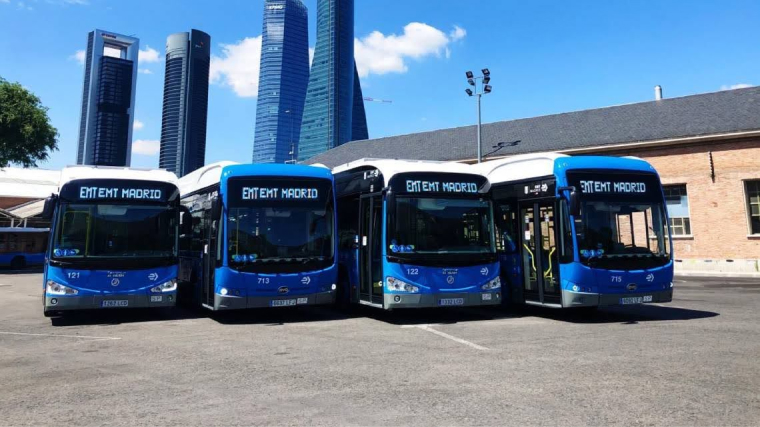
The electrification of transport has become one of the main ways of moving towards more sustainable mobility. Transport continues to be one of the sectors that contributes most to greenhouse gas emissions, making the replacement of combustion-engine vehicles with electric alternatives key to reducing their environmental impact and improving air quality in cities. In this context, public transport plays a particularly important role, as its ability to move large numbers of people multiplies the environmental and energy benefits of electrification. Among the different modes of transport, buses stand out for their ability to carry large numbers of people on each journey (as many as 145 passengers) and significantly reduce the number of cars on the road.
As part of this process, electric buses are playing an increasingly important role in public transport fleets in cities around the world. Advances in battery technology, the development of new charging solutions and the drive towards decarbonisation policies have accelerated their deployment in recent years.
How electric buses work
Electric buses operate in a similar way to other electric vehicles, although they are adapted to the greater capacity and range requirements of public transport. Instead of a combustion engine, they have one or more electric motors powered by a high-capacity battery, which converts stored energy into motion.
Energy is supplied to the motor immediately, providing smooth acceleration, quiet operation and greater energy efficiency. In addition, during braking and deceleration, the regenerative braking system recovers part of the vehicle's kinetic energy and returns it to the battery, helping to increase its range.
Electric buses use different charging solutions depending on the service they provide. The most common option is charging at depots during periods of lower activity, usually at night, although opportunity charging systems are also available at the start and end points of routes or at specific stops to extend the vehicle's range throughout the day.
Because public transport routes and timetables are defined in advance, charging can be planned more easily and efficiently, facilitating the integration of these vehicles into urban fleets without affecting the provision of the service.
Installation of smart recharging systems for electric buses
1 Feasibility study
Before kicking off the project, we have to check that the site is suitable for the installations

Installation in depots
Depots are equipped with recharging points and all the necessary infrastructure
2
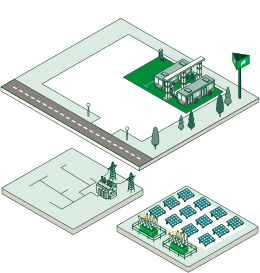
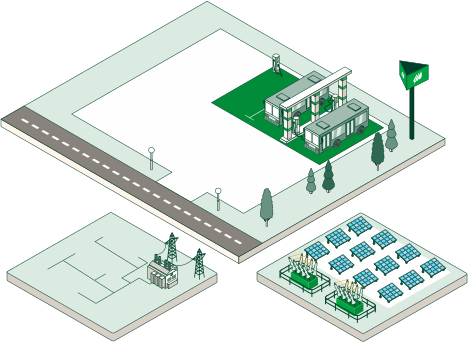
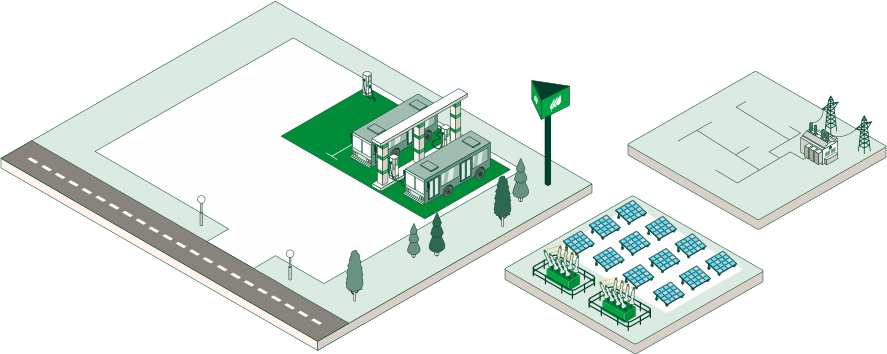
100% green energy
Electricity is generated from renewable energies

4 Smart charging system
Charging can be adjusted as required, monitoring the status of the batteries and the grid and maximising the use of renewable energy
 SEE INFOGRAPHIC: Electric buses [PDF]
Types of charging for electric buses
Electric bus charging can be adapted to the characteristics of each route, the vehicles' range and the fleet's operational needs.
- Overnight depot charging is one of the most common solutions, as it makes use of periods of lower activity to recharge the battery before the next day's service.
- Opportunity charging, meanwhile, takes place during operation, usually at the start and end points of routes or at strategic locations, using high-power equipment that can restore energy in a short time and extend the available range throughout the day.
These charging methods are complemented by smart charging management, which makes it possible to coordinate when and at what power the vehicles are charged based on timetables, battery status, energy demand and available network capacity.
These tools help optimise energy consumption and costs, avoid peaks in demand and ensure that buses are available to provide the service when needed.
Benefits of electric buses
The electrification of public transport fleets provides benefits for cities, operators and users alike. Some of the main advantages of electric buses include:
-

Reduced emissions
Electric buses significantly reduce transport-related emissions when powered by electricity from renewable sources, as they do not use fossil fuels while in operation. This helps improve urban air quality.
-

Lower noise pollution
Their electric motors produce much less noise than combustion engines, reducing noise pollution and improving comfort for both passengers and residents in the areas where they operate.
-

Greater energy efficiency
Electric motors make more efficient use of the energy they consume and can also recover some of it through regenerative braking, reducing the vehicle's energy consumption.
-

Lower operating and maintenance costs
Because they have fewer mechanical components and do not require elements such as a combustion engine, gearbox or exhaust system, they require less maintenance and can reduce operating costs over the long term.
-

A better user experience
Acceleration is smoother, vibrations are reduced and operation is quieter, providing passengers with a more comfortable journey.


Challenges of deploying electric buses
The widespread adoption of electric buses in a city involves a transformation that goes beyond replacing the fleet and requires depots to be adapted and suitable charging infrastructure to be deployed. The main challenges include planning routes and timetables based on vehicle range and charging times, ensuring that the electricity network has sufficient capacity to meet increased demand, as well as the high initial investment associated with purchasing these vehicles and infrastructure.
There is also a need to incorporate smart energy management systems to optimise charging and reduce operating costs, together with training for operators and adapting management and maintenance procedures.
In this context, the experience of energy companies such as Iberdrola is essential to addressing electrification comprehensively by integrating charging infrastructure, renewable electricity supply and digital tools for monitoring operations. This integrated approach facilitates a more efficient transition towards low-emission urban mobility and helps maximise the environmental and operational benefits of electrification.
The evolution of electric buses
Electric bus technology has undergone significant development in recent years, helping to drive its adoption in public transport networks around the world. Improvements in batteries have increased vehicle range, while advances in propulsion systems and smart energy management have enhanced efficiency and reliability. This has been complemented by the deployment of new charging solutions, both at depots and at strategic points along routes, facilitating their integration into daily operations.
At the same time, the expansion of this technology requires continued development of charging infrastructure adapted to the needs of fleets and careful planning of vehicle operations based on their routes and charging times. Continued innovation in batteries, charging systems and management tools is helping to address these challenges and progressively expand the possibilities of electric buses as an increasingly efficient solution for urban mobility.
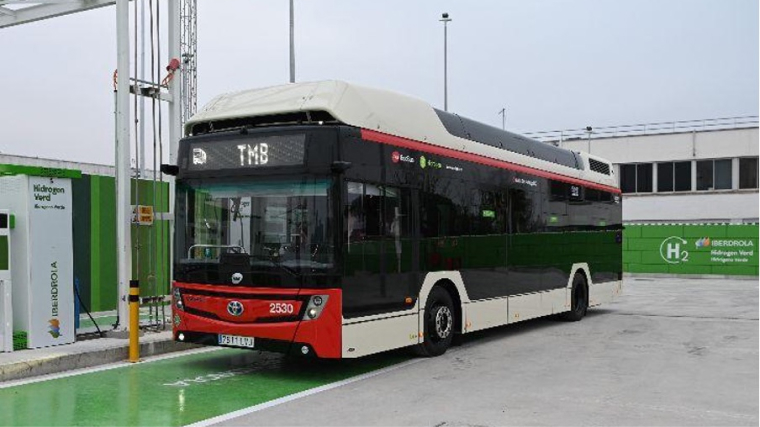
Iberdrola's electric bus projects
Iberdrola is involved in numerous projects to accelerate the electrification of public transport by developing charging infrastructure and energy solutions tailored to the needs of fleets.
In Spain, we are working with Madrid's Municipal Transport Company (EMT) to electrify its depots, analysing the electricity network and installing smart charging systems that optimise bus charging using electricity from renewable sources. In addition, the two organisations are promoting circular economy initiatives, such as a project to give electric bus batteries a second life by reusing them as energy storage systems to support charging.
Iberdrola's experience also extends to other countries. In Portugal, the company is involved in the electrification of public transport in Braga through the installation of charging infrastructure for its bus fleet. In the United Kingdom, Iberdrola's subsidiary ScottishPower has developed electric bus charging projects in Scotland, including facilities in Lockerbie and Houston, contributing to the decarbonisation of public transport.