Sustainable mobility
Sustainable mobility: what it is, its goals and the main initiatives at Iberdrola
Sustainable mobility has become one of the main drivers in the fight against climate change and improving the quality of life in cities. At Iberdrola, we are committed to leading this transformation by promoting innovative and sustainable solutions that integrate renewable energy and smart grids, as well as the electrification of transport. Our goal is to promote a respectful mobility model in line with our decarbonisation and sustainability strategy.

Electric vehicles are a sustainable alternative to combustion vehicles for private use or shared options.

Cycling is an alternative that helps improve air quality, reduce traffic and promote healthy lifestyles.

Achieving sustainability in public transport is key to reducing per-person emissions and optimising the use of energy resources.

Other individual mobility alternatives, such as electric motorcycles, contribute to a cleaner future.
Sustainable mobility has become a fundamental pillar of the electrification and a necessary alternative to find a new way of getting around. Road transport currently accounts for 30% of global energy demand, according to the International Energy Agency (IEA).
However, the drive towards the electrification of the economy is opening new opportunities to drastically minimise our dependence on fossil fuels and move towards a cleaner and more efficient energy model. This change helps to improve air quality in our cities, reducing the impact of pollution on people's health.
In this context, electric mobility plays a central role in this by enabling more sustainable transport that uses emissions-free energy sources. In addition, initiatives such as the development of charging infrastructure and the integration of smart technologies are essential to realising an efficient and accessible mobility ecosystem. This transformation is a global challenge that requires governments, businesses and people to work together to achieve climate goals and build a more environmentally friendly future.
What are the goals of sustainable mobility?
Sustainable mobility is not only about changing the way we travel, it’s also about completely transforming the transport system to make it more efficient, accessible and environmentally friendly. Its objectives are aligned with major global challenges, such as the electrification of the economy, improving air quality and building more liveable and accessible cities. These principles guide policies and actions towards a transport model that prioritises people, equality and sustainability.


Opportunities for sustainable mobility
Sustainable mobility is not just an alternative solution to environmental challenges, it also opens the door to a range of economic, social and technological opportunities that can make our society better.
-

Long-term cost reduction
Sustainable transport, especially transport based on electrification, utilises renewable energy sources that are more economical and stable than fossil fuels, significantly reducing long-term costs.
-

More technological innovation
Sustainable mobility is underpinned by new technologies and encourages the development of innovative projects, such as higher-capacity batteries, intelligent traffic management systems or even autonomous vehicles.
-

Green jobs creation
The development of sustainable and electric mobility infrastructure, the manufacture of environmentally friendly vehicles and the roll-out of renewable energy generate employment opportunities in these high value-added sectors.
-

Improved quality of life
By reducing air and noise pollution, sustainable mobility promotes a more sustainable urban environment that has a direct impact on people’s physical and mental well-being.
-

Strengthening urban resilience
By moving away from dependence on fossil fuels and embracing more flexible transport models, cities with sustainable mobility are better prepared to cope with climate-related and energy-related incidents.


Types of sustainable mobility
Sustainable mobility encompasses a variety of environmentally friendly alternatives. Each offers specific features tailored to different needs and contexts so that every individual can find the best mode of transport for every situation. Generally speaking, the main types of sustainable mobility can be divided into two broad groups depending on whether a motor is involved in the journey.













We are energy in motion.
Iberdrola's main sustainable mobility initiatives
We have various projects to promote sustainable mobility in several countries, focusing on reducing emissions and pushing for the electrification of transport.

Spain
-
At Iberdrola, we have developed a robust programme to deploy sustainable transport in Spain: our Smart Mobility Plan
 External link, opens in new window. . This comprehensive programme includes several key actions to facilitate the adoption of electric vehicles and reduce the environmental impact of the sector:
-
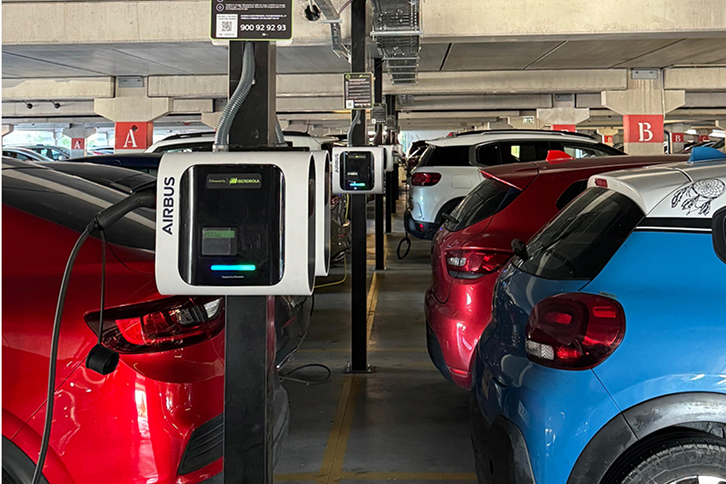
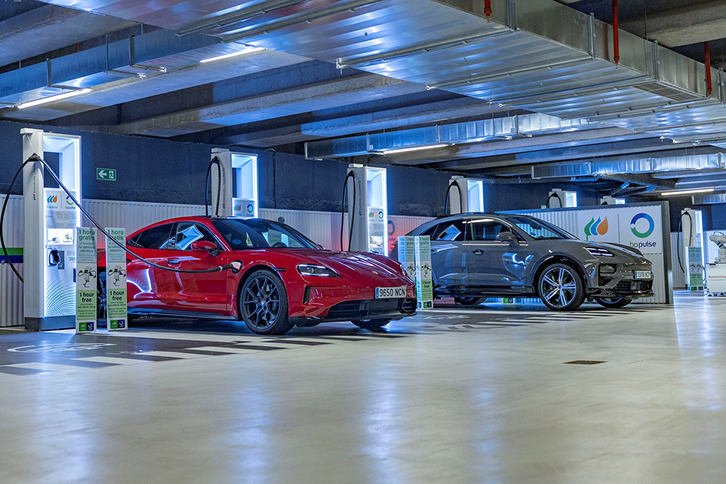
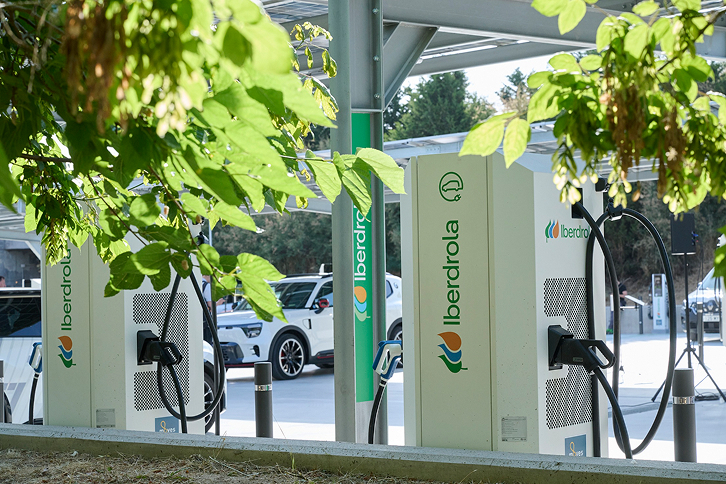
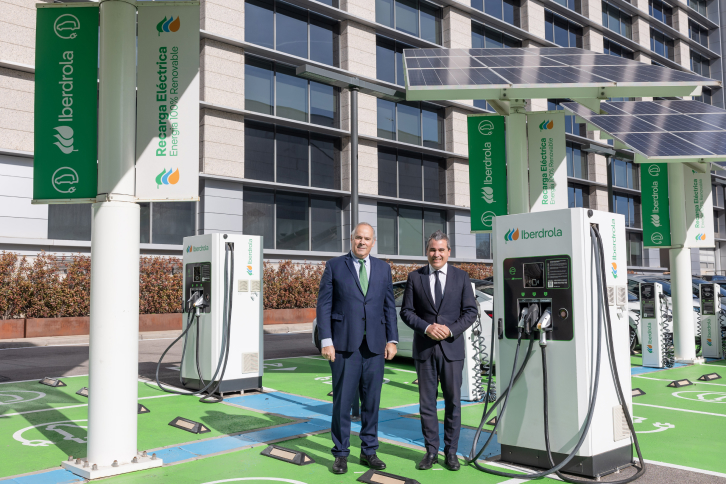
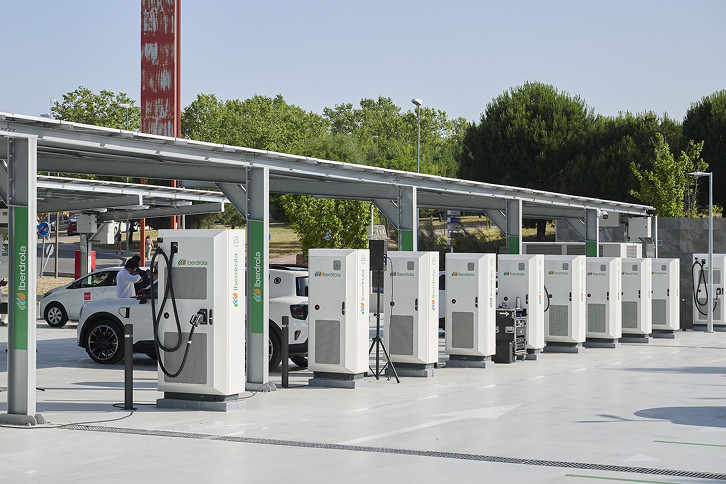
- Deployment of public charging infrastructure. We are committed to installing an extensive network of charging points or electric vehicle charging stations, with more than 12,000 points already set up across the country. We have also partnered with BP Pulse, a subsidiary of the British BP, to create the most extensive high-speed public charging network in the Iberian Peninsula, with plans to deploy more than 10,000 points by 2030. By 1 October 2026, more than 2,500 charging points had already been installed across Spain and Portugal.
- Development of the private charging network. We offer private solutions for both domestic (Smart Mobility) and business (Smart Mobility Empresa) use. This involves the installation of the charging infrastructure and its warranty, personalised supply plans and the possibility of remote, real-time operation via app. Our public and private network has over 60,000 charging points.
- Electrification of company car parks. We install the necessary infrastructure to adapt company car parks to electric solutions.
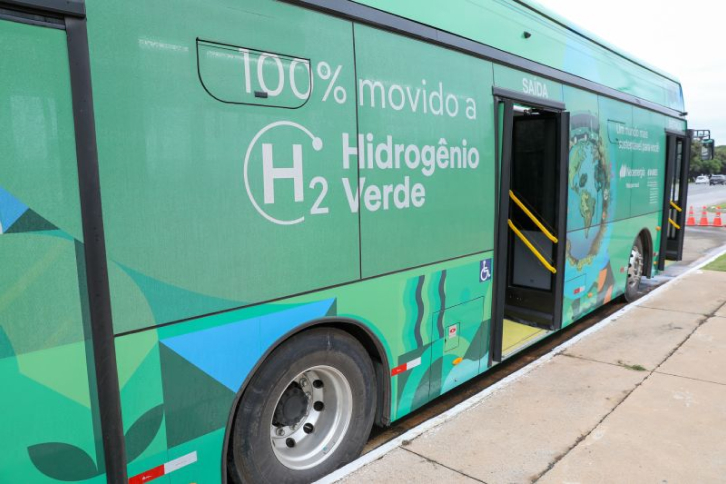
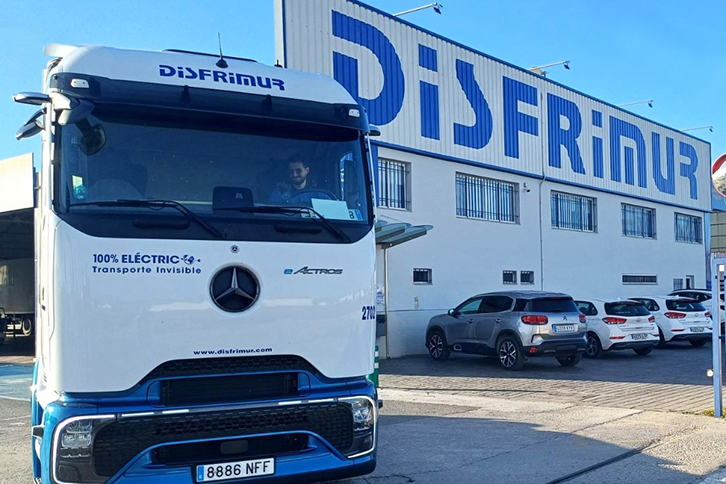
- Electrification of public and heavy transport. We provide solutions for electrifying public vehicles such as city buses. We continue to promote charging infrastructure with initiatives in Madrid, Barcelona, Valencia and Elche, among other cities. In addition, we are committed to helping electrify heavy road transport through partnerships with the Business Association for the Development and Promotion of Electric Mobility (AEDIVE), Disfrimur and Ingeteam, and a specific hub in Elche.
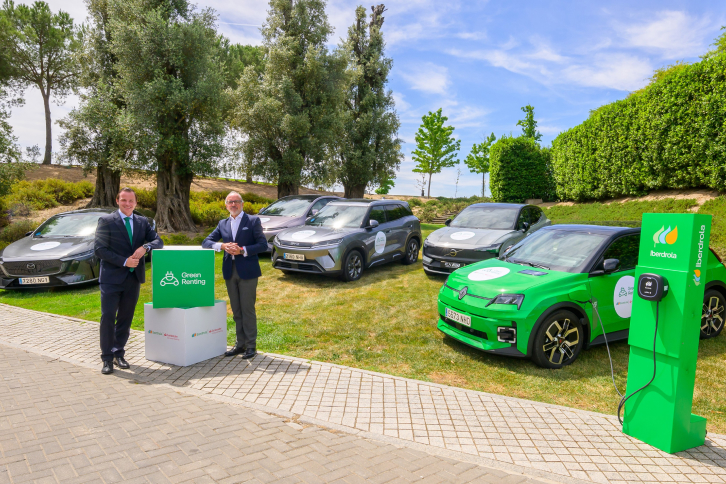
- Other strategic partners. We continue to sign agreements with key companies in the transport sector, such as major vehicle manufacturers (e.g. Renault, Mercedes Benz, Volvo, KIA, Hyundai, etc.) and various power purchase agreements (PPAs) with different businesses (Mercadona, Eroski, Burger King, McDonalds and Alcampo, among others). What’s more, we are committed to new comprehensive solutions such as the Green Renting Iberdrola project, which aims to facilitate access to a leasing scheme for electric vehicles and the necessary charging infrastructure.

The United Kingdom
-
Through our subsidiary ScottishPower in the United Kingdom we are advancing electrification in the domesticExternal link, opens in new window. and businessExternal link, opens in new window. spheres. For residential use, we offer electric vehicle chargers with installation, warranty, solar energy compatibility and after-sales service. For corporate use, we provide companies with fast and ultra-fast chargers, with customised installation adapted to safety regulations. We also have initiatives for corporate fleets. An example of Iberdrola's commitment to sustainable mobility in the UK is the installation of ultra-fast charging points in collaboration with the company TUAL.

Portugal
-
In Portugal, we offer a range of solutionsExternal link, opens in new window. for electric mobility. In residential, we offer the installation of private chargers with electricity plans tailored to our customers' needs. We are also committed to electrifying public and heavy transport. Our partnerships with major vehicle manufacturers and companies such as Mercadona, for whom we supply, commission and already operate more than 3,500 points in 800 supermarkets in Spain and Portugal, are particularly noteworthy

Australia
-
Through Iberdrola Australia, we offer a range of electric mobility solutions as part of our sustainable energy strategyExternal link, opens in new window. . These include installing and managing charging infrastructure for electric vehicles, combined with solar generation and battery storage. We have also implemented charging stations in projects such as solar car parks, improving accessibility to electromobility.
The future of sustainable mobility
Projections indicate that sustainable mobility will continue to expand in the coming years. A study by the Oliver Wyman Forum and the University of California, Berkeley Transportation InstituteEnlace externo, se abre en ventana nueva. estimates that by 2030, cities will be made up of a range of on-demand, shared and electric urban transport services that will generate a turnover of $660B worldwide, up from $260B in 2020.
For its part, the automotive sector suggests that over the next five years demand for electric vehicles and their components will rise by up to 30%, according to the results of a survey published by the consultancy firm PWC. Although the data indicate growth in the electric vehicle sector and predict a decline in demand for internal combustion engine vehicles, the reality is that this transition will vary across different regions, meaning the change will not be uniform globally.
The future of alternative mobility is therefore shaping up to be a combination of technological innovation, public policies that encourage its use and deployment, and changes in user habits to reduce environmental impact and improve quality of life in cities and on roads.
Urban mobility trends
Many of the trends in sustainable mobility are focused on cities, the main hubs of citizen movement. These are some of the key trends:
-

Micromobility
The use of light vehicles such as bicycles and electric scooters is driven by the need to find transport solutions that reduce congestion and emissions in cities. They are ideal for short journeys and to complement other mobility systems.
-

Mobility as a service (MaaS)
The integration of various forms of transport, public or private, into on-demand platforms allows users to plan and pay for different transport systems. This alternative mobility makes it easier to combine public transport, shared vehicles and micro-mobility.
-

Smart mobility
The integration of artificial intelligence (AI) into sustainable mobility is transforming the way we travel and manage transport. This is a cross-cutting trend that includes: systems to predict congestion, reduce travel times and fuel consumption; autonomous vehicles, with the potential to improve energy efficiency, optimise routes and reduce accidents; and operational efficiency in fleet management for logistics and transport companies, using traffic data, costs and carbon footprint information.


All the information about
Sustainable mobility
What is sustainable mobility? What is its objective?


The concept of sustainable mobility refers to that which satisfies the needs of moving freely, being able to establish relationships without sacrificing ecological and human values (current or future). It seeks to improve the quality of the environment, not only on the basis of reducing harmful emissions from transport, but also to protect pedestrians, cyclists and people with reduced mobility. It also provides universal access to key places through public transport and internalises the socio-economic costs of means of transport.
What is sustainable mobility?
Sustainable mobility arises to counteract the negative effects caused by a type of transport model that pollutes the air, consumes excessive energy and damages the health of citizens.
It is an energy and environmental challenge that will contribute to improving social, economic and also transport well-being in cities.
The aim is to travel in the most environmentally friendly way possible, moving away from fossil fuels (which are responsible for the largest emissions of CO₂ into the atmosphere and are to blame for 6.4 million premature deaths per year, according to the latest United Nations reports). To combine mobility and sustainability it is necessary to invest in electric cars, carsharing and public transport. For this to be possible, mobility policies in pro of the environment are needed, as well as the implementation of a mobility plan that supports the green fleet, restrictions on polluting vehicles in urban areas and the construction of roads and circuits for non-motorised vehicles.
Why is Iberdrola promoting sustainable mobility?
Iberdrola is committed to the transition towards sustainable mobility and the electrification of transport. Through solutions that promote public and domestic charging infrastructure the Group is seeking to facilitate the adoption of electric vehicles so that journeys – particularly long-distance ones – do not rely on fossil fuels and can be powered by clean energy. This step reinforces our commitment to energy independence and security, as well as to caring for and protecting the environment.
For our customers, both private individuals and businesses, we offer a wide range of solutions for installing charging points – we already have more than 12,000 – or for incorporating electric cars into their fleets through our Smart Mobility Plan. And for our employees, we offer financial assistance for the purchase of these types of vehicles and facilitate mobility through more sustainable means of transport.
What is the current state of electric mobility?
Automotive experts seem to agree that electric vehicles will account for 30% of production by 2030. Governments are offering ever-increasing subsidies for electric cars; and restrictions on polluting vehicles in urban centres are forcing the unconditional adoption of electric transport. Sales of fully electric passenger cars continue to rise, given the new European measures on CO₂ emissions: the number of electric vehicle registrations must increase, as this appears to be the only option to ensure that permitted CO₂ emissions are not exceeded; these emissions must be reduced by 55% – for new passenger cars – and by 50% – for new vans – for the period 2030 to 2034.
Also, in different urban areas around the world, there are zero emission vehicle options available to citizens to move around freely (electric cars, bicycles, scooters) at a reasonable price. The public electric fleet in cities is growing, and the number of charging points for this type of vehicle is increasing exponentially.
We tell you what the mobility of the future will be like.
What best practices can be promoted to achieve greater sustainable mobility?
Any practice that wants to combine mobility and sustainability must be committed to the promotion of public transport, non-motorised vehicles, and the reduction of the private car. To help lower environmental pollution rates, these measures are necessary as this type of transport is more environmentally friendly and more sustainable. Public transport has a much lower impact, and bicycles, scooters and other non-motorised vehicles have no impact.
If you want to continue to opt for your own vehicle, you must opt for electric vehicles (e-mobility) or hybrids. Currently, there are different incentives for sustainable cars. Iberdrola offers the Electric Vehicle Plan, which in addition to being for the good of the planet is also for the good of your pocket (90 % savings in consumption compared to a diesel or petrol vehicle).
The transport sector has to join the good practices for more sustainable mobility; changing its fleets to zero emission vehicles or readjusting the model (promoting carsharing, for example).
What financial support is available for buying an electric car?
Several countries around the world have introduced government incentives to encourage their citizens to adopt electric vehicles (EVs). For example, the Spanish Government offers schemes such as the Auto+ Programme, promoted by the Ministry of Industry and Tourism. Germany has its Grant Scheme for Electric Vehicles (EVs), while France offers a bonus to help people purchase an EV. Italy, meanwhile, has its Ecobonus scheme to promote sustainable mobility. Similar incentives are available outside continental Europe, including in the UK, which offers grants for different types of EVs.
At a private level, there are several companies that offer their stakeholders substantial aid and subsidies to get an electric car. In the case of Iberdrola, the Sustainable Mobility Plan offers economic aid to its employees who want a non-polluting vehicle and training in sustainable mobility.
The importance of transport management for the environment
Means of transport are essential to our freedom of movement and play a key role for society and the economy. However, transport is responsible for a large share of greenhouse gas emissions into the atmosphere, so its contribution to climate change is significant.
If other sectors (energy producers and industry) started to reduce their emissions in 1990, the same cannot be said of transport which did the opposite and increased them. Means of transport have serious environmental impacts and the ecological management of transport for the good of the environment is still pending, although the paradigm is beginning to change. It is true that air pollution from transport has decreased somewhat in the last decade, mainly due to new regulations for fuel quality and European standards governing vehicle emissions. But pollution is still high.
There is no other way. In order to eliminate the characteristic 'smog berets' of urban centres, it is necessary to manage mobility properly which means being committed to sustainable mobility. Being committed to electric vehicles, carsharing, non-motorised transport; public transport. Only in this way will we achieve these desired ecological effects, put an end to environmental pollution and be able to use the term sustainable development.
Related information

19 September 2025