


Smart urban mobility
Are we ready for the latest advances in urban mobility?
Smart urban mobility is changing the way people get around cities. Thanks to a combination of technology, data and connected infrastructure, this new model aims to create transport systems that are more efficient, sustainable and tailored to citizens' needs.

The growth of cities and the rise in daily commutes have made mobility one of the major urban challenges of the 21st century. Traffic congestion, pollution, rising energy consumption and the need to provide more accessible transport alternatives have driven the search for new solutions.
Against this backdrop smart urban mobility has emerged– a model that utilises technologies such as the Internet of Things (IoT), artificial intelligence, data analytics and advanced connectivity to improve the management of journeys. Its aim is not only to make journeys faster but also to create more sustainable, safer and more liveable cities.
Smart mobility forms part of the "smart city" concept, where various urban elements – from vehicles and traffic lights to public transport networks – are connected to enable more efficient decision-making and provide better services to citizens.
What is smart urban mobility?
Smart urban mobility is a transport model that uses technology and data to optimise journeys within cities. It is based on the connection between people, vehicles, infrastructure and management systems to create a more efficient and sustainable mobility system that is tailored to the real needs of the population.
Unlike traditional systems, which tend to operate independently, smart mobility embraces an integrated approach in which different modes of transport can communicate with one another and provide real-time information.
This approach improves route planning, reduces journey times, minimises environmental impact and makes it easier for citizens to choose between different mobility options according to their needs.
Data: the key to smarter urban mobility
Smart mobility relies on the ability to collect and analyse information about what is happening in cities in real time. Data enables us to understand how, when and where journeys take place and to tailor services to those needs. These are the main sources of data in smart mobility:
- Traffic sensors: these record vehicle volume and speed to monitor traffic conditions.
- Mobile phone data: this enables the analysis of travel patterns and provides insight into how the population moves through different areas of a city.
- Smart cameras: these provide traffic information and can identify situations requiring a rapid response.
- Public transport data: this helps to understand demand, occupancy, journey times and the operation of different routes.
- Mobility apps: these provide information on routes, journeys, parking and the use of different modes of transport.
The combined analysis of these sources enables authorities and operators to anticipate situations, optimise services and make decisions based on up-to-date information.
How does smart urban mobility work?
Smart urban mobility works by collecting, analysing and applying large amounts of data generated by sensors, connected devices and digital platforms. These systems provide real-time insights into aspects such as traffic conditions, the availability of public transport, free parking spaces and citizens' travel patterns. With this information, public authorities and operators can make better decisions and offer more efficient services.
Technologies that enable smart urban mobility
The transformation of urban mobility relies on various technologies that enable transport systems to be connected and managed.
-

The Internet of Things (IoT)
Connected sensors enable information to be collected from the urban environment and transmitted to management platforms to improve decision-making.
-

Artificial intelligence and Big Data
Analysing large volumes of data helps to identify mobility patterns, anticipate problems and optimise transport operations.
-

Advanced connectivity
Technologies such as 5G enable faster communication between vehicles, users and infrastructure, which is essential for the mobility systems of the future.
-

Electrification of transport
Electric vehicles help to reduce pollutant emissions and move towards more sustainable mobility models.
-

Mobility as a Service (MaaS)
Read more about MaaSThis integrates different transport options into a single platform so that users can easily plan and combine their journeys.


The connected vehicle: communication between vehicles, infrastructure and networks
The connected vehicle enables real-time information exchange with other vehicles, urban infrastructure and the electrical network. This communication improves safety and traffic management and opens new possibilities for integrating electric vehicles into the energy system.
- Vehicle-to-vehicle (V2V). Vehicles exchange information to detect potential risks, anticipate manoeuvres and improve journey safety.
- Vehicle-to-infrastructure (V2I). The vehicle communicates with traffic lights, roads and other urban infrastructure to receive information and optimise traffic flow.
- Vehicle-to-grid (V2G). Electric vehicles can exchange energy with the electrical network, turning their batteries into a flexibility resource for the electricity system. This connection also enables intelligent management of recharging through smart charging systems, which adapt the timing and power of charging to the vehicle's needs and grid conditions.
In this context, smart grids enable the generation, consumption and recharging of electric vehicles to be coordinated more efficiently whilst also facilitating the integration of renewable energy.
Multimodal mobility and MaaS: combining different ways of travelling
Smart urban mobility aims to connect different transport options to facilitate journeys that are more efficient, sustainable and tailored to each user's needs. Public transport, cycling, electric vehicles, shared mobility services and walking can all be combined within a single journey.
In this context, Mobility as a Service (MaaS) platforms enable the integration of different transport services into a single digital tool, making it easier to plan routes and combine different modes of travel.
The combination of real-time data, mobility apps and artificial intelligence also makes it possible to offer more personalised alternatives and optimise the use of transport infrastructure and services.

 SEE INFOGRAPHIC: From traditional mobility to smart urban mobility [PDF]
Smart mobility and energy: a connected ecosystem
Smart mobility is not just about managing journeys more effectively. It also involves managing the energy required to move people and goods more efficiently. The electrification of transport links mobility to electrical networks and enables us to harness renewable energy, manage demand and use vehicle batteries as an energy resource.
- Smart charging. These systems allow the timing and rate of charging to be adapted to the vehicle's needs and the conditions of the electrical network, promoting a more efficient use of energy.
- Integration of renewable energy. Electrification enables transport to be linked to renewable energy sources, making the most of periods of higher generation to charge vehicles and reduce the carbon footprint of journeys.
- Electric vehicles as an energy resource. Through technologies such as Vehicle-to-Grid (V2G), electric vehicle batteries can feed electricity back into the electrical network when necessary, providing flexibility to the energy system.
Benefits and challenges of smart urban mobility
The implementation of smart solutions brings benefits for both citizens and the cities themselves:
-

Less congestion and more efficient journeys
Traffic management using real-time data enables optimisation of routes and reduction of traffic jams.
-

Greater environmental sustainability
Smart mobility encourages the use of less polluting modes of transport and helps to reduce emissions.
-

Public transport better tailored to users' needs
Data analysis enables improvements to service frequencies, routes and services based on citizens' actual needs.
-

Safer journeys
Connected systems help prevent accidents and improve the management of high-risk situations.
-

More accessible and inclusive cities
New mobility solutions make it easier for different types of users to get around and improve connections between urban areas.
-

Better urban planning
The data collected enables local authorities to design more efficient cities and respond more effectively to future challenges.


Despite their advantages, the roll-out of these smart mobility systems also presents certain challenges. These include the need to invest in new infrastructure and technologies, the protection and management of data generated by citizens, the adaptation of existing cities to new mobility models, the importance of ensuring that these solutions are accessible to the entire population and coordination between public authorities, technology companies and transport operators.
Examples of smart urban mobility
Cities are already using various smart mobility technologies and solutions to improve traffic flow, optimise transport, manage urban space and make more efficient use of energy. Some examples include:
-

Adaptive traffic lights
These use real-time traffic data to adjust traffic light cycles, improve traffic flow and reduce waiting times. In Singapore the Green Link Determining (GLIDE) system uses a network of computers to control and synchronise traffic lights, adapting their timings to traffic conditions and coordinating different junctions to promote smoother traffic flow.
-
Smart parking management
Sensors and digital platforms provide real-time information on parking space availability, making it easier to find a space and reducing associated traffic. In Amsterdam users can check the availability of spaces at Park and Ride (P+R) facilities in real time, making it easier to combine private car use with public transport.
-

Smart priority for public transport
Connected systems can give priority to buses and other public transport vehicles as they approach certain junctions, improving journey times and the regularity of the service. In London, Transport for London uses traffic light priority systems to give way to buses at various junctions.
-

MaaS platforms
These facilitate the planning and combination of journeys. Helsinki was one of the first pioneers of this model with Whim, a platform that allowed users to integrate public transport, taxis, bicycles and other services within a single app.
-

Smart charging for electric vehicles
This allows the timing and power of charging to be adapted to the needs of the vehicles and the conditions of the electrical network, optimising energy use. In Madrid the Municipal Transport Company (EMT) has a smart charging system to automate and optimise the charging of electric buses.
-

Congestion forecasting using artificial intelligence
Analysing large volumes of data makes it possible to anticipate traffic situations, detect patterns and improve traffic planning and management. In Austin (Texas), the Mobility Management Centre uses data and analytical tools to move towards more proactive mobility management and improve traffic flow on its road networks – a trend that is spreading to other cities.


The future of smart urban mobility: emerging trends
Urban mobility continues to evolve towards a more connected, automated and efficient model, driven by the development of new technologies and greater integration between transport, data and energy.
Key trends include:
- Autonomous vehicles capable of incorporating advanced driver-assistance and communication systems.
- Improvements in smart charging for electric vehicles allow charging to be adapted to the needs of both the vehicle and the electrical network.
- Energy integration, which makes it easier to utilise electric vehicle batteries as a flexibility resource.
Technologies such as the following will also take centre stage:
- Urban digital twins, which enable the recreation and simulation of a city's operations to anticipate situations and improve planning.
- Predictive artificial intelligence applied to traffic management to detect patterns, forecast congestion and optimise traffic flow.
Meanwhile, MaaS platforms are expected to evolve towards more integrated and personalised services, capable of combining different transport options and offering mobility solutions tailored to the needs of each user.
Iberdrola and the electrification of urban mobility
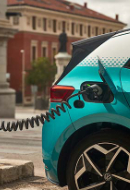
The electrification of transport is one of the key pillars of smart and sustainable urban mobility. The gradual replacement of combustion-engine vehicles with electric vehicles helps to reduce pollutant emissions in cities, improve air quality and move towards a more efficient mobility model.
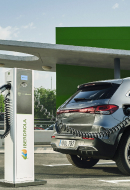
In this process energy and charging infrastructure become fundamental elements. For electric vehicles to establish themselves as a genuine alternative there must be a network of charging points that is accessible, fast and integrated into the urban environment.
In this regard, at Iberdrola we are promoting electric mobility as part of our commitment to electrification with a view to establishing a more sustainable energy model. At the Iberdrola Group we develop charging solutions for electric vehicles and promote the integration of renewable energy into transport, helping to create a cleaner and more connected mobility ecosystem.