














-
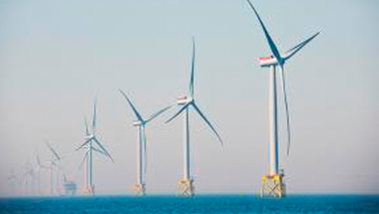
Iberdrola Group, through its subsidiary ScottishPower Renewables, has put into operation what is now the largest wind farm in its history and one of the world's largest of its kind: the East Anglia ONE offshore wind farm in British waters in the North Sea
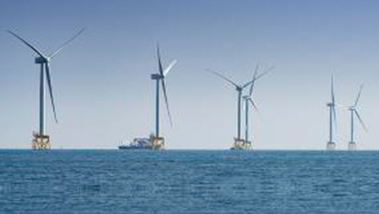
Iberdrola Group is building a macro offshore wind complex in UK waters: the East Anglia Hub. This undertaking will see the development of four projects capable of delivering total installed capacity exceeding 3.9 GW: East Anglia ONE, which is already in operation, East Anglia ONE North, East Anglia TWO and East Anglia THREE. The work, which represents an investment of GBP 10 billion, began in 2022 and is expected to take four years.
-
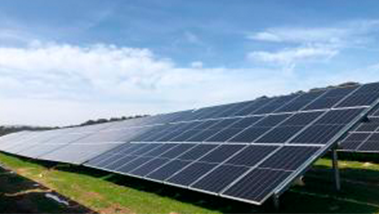
Iberdrola has installed one of its photovoltaic projects in Castilla y León (Spain), a new wind farm and photovoltaic plant in Villarino, which adds 50 MW of green energy to its portfolio. Once the infrastructure is up and running, it generates enough clean energy to power the equivalent of 27,000 homes and avoid emitting 12,000 tons of CO₂/year into the atmosphere.
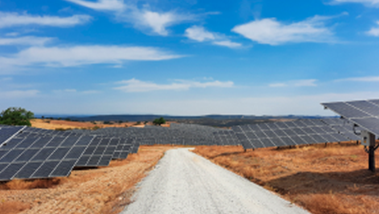
As part of our commitment to renewable energies in Spain, we have commissioned two photovoltaic plants in Cedillo, Extremadura, with a combined installed capacity of 100 MW, plus a new 375 MW plant currently under construction. These facilities are designed to have the lowest possible environmental impact.
-
 Facebook Photovoltaic plants in Cedillo, an engineering challenge with minimum environmental impact
-
 Twitter Photovoltaic plants in Cedillo, an engineering challenge with minimum environmental impact
-
 Linkedin Photovoltaic plants in Cedillo, an engineering challenge with minimum environmental impact
-
 Whatsapp
-
-
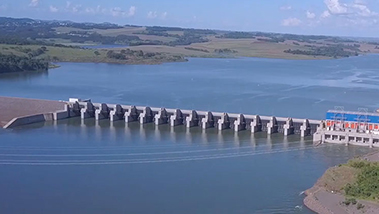
Iberdrola group, through its subsidiary Neoenergia*, has built the Baixo Iguaçu power station in Brazil. The facility, which was commissioned on December 2018, has an installed capacity of over 245 MW and supplies renewable energy to one million people.
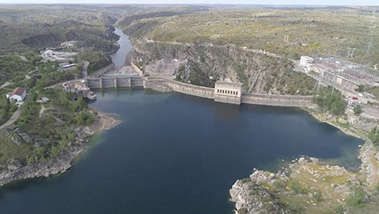
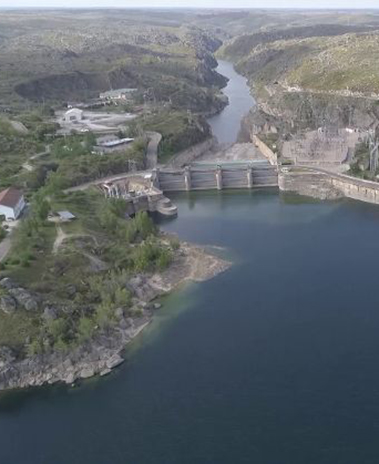
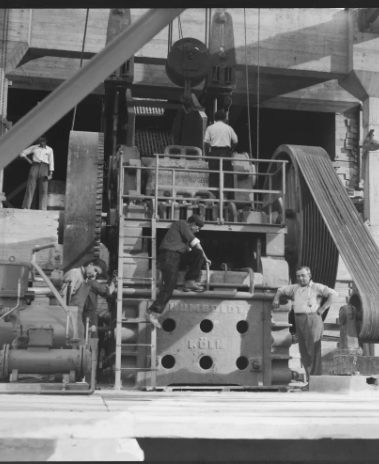
With almost a century of history, the Ricobayo I and Ricobayo II dams and hydroelectric power stations in Zamora were pioneers in electricity production in Europe. It was not in vain that the reservoir was considered one of the largest on the continent with its 1,148 hm³. Today, both plants have a total installed capacity of 328 MW.