


Stand-alone batteries: Energy storage for electrical independence
Battery Energy Storage Systems (BESS): Key concepts and off-grid operation
Photovoltaic self-consumption Energy storage Renewable energy
Stand-alone batteries are transforming the way electricity is stored and consumed, offering true energy independence through renewable sources to homes, businesses and communities. By bridging the gap between renewable generation and real-time demand, these systems ensure uninterrupted electricity supply that reaches off-grid areas of the network. From small villages to large-scale industrial sites, stand-alone Battery Energy Storage Systems (BESS) are proving to be essential for a reliable, sustainable and autonomous energy future.

What is a stand-alone battery and how does it work in an isolated system?
A stand-alone battery serves to store electrical energy and supply it to users on demand. These systems are invaluable in off-grid or remote locations, combining them with local renewable sources, because they offer true autonomous energy when these sources are not producing electricity.
Energy autonomy as a concept refers to the ability of a home, business or even an entire community to generate, store and use its own energy, thus minimising dependence on an external electrical network or a supply that is based on fossil fuels, such as a generator running on diesel or gasoline. Stand-alone batteries are a key part of energy autonomy because they bridge the gap between the production of energy and its supply when needed, as well as ensuring continuity.
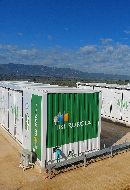
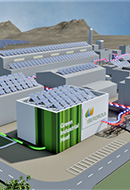
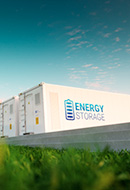
Stand-alone batteries are at the core of Battery Energy Storage Systems (BESS), which are a series of connected rechargeable batteries that have control units, converters and enclosures, among other hardware components, that safely manage the storage and delivery of electricity.
Off-grid, hybrid and grid-connected batteries – what’s the difference?
This article will focus on electrical systems that are isolated from the electricity network, but before doing so it’s important to differentiate between the three most-common types of battery set-up.
Photovoltaic installations with off-grid batteries
This system is completely independent from the electricity network, relying on solar panels and batteries to supply electricity. They are usually used in remote homes, farms, telecommunications towers or on islands where there is no access to the electricity network.
Hybrid installation with battery
This battery system is charged by solar panels but is also connected to the network. That way it can draw a supply if there is no sun or battery charge, and can feed excess electricity back into the network. It also provides backup during an outage and can keep costs low, as it can use the network to charge its battery at off-peak hours, such as during periods of excess renewable production, and therefore at lower prices. They are usually used in residential homes, SMEs, semi-rural communicates, agricultural installations and critical infrastructure such as hospitals or for telecommunications.
Grid-connected battery
These batteries are charged solely from the electricity network and do not depend on renewable sources such as solar power, and are known as stand-alone batteries. This type of system is mainly used to take advantage of cheaper electricity during periods of excess renewable production and therefore lower prices, which is then released during higher-cost periods. It is commonly found in urban homes and in offices or other commercial buildings.
The technology behind BESS: Essential components for isolated self-consumption
A Battery Energy Storage System (BESS) is an integrated solution that stores electrical energy. It is typically composed of a series of batteries, controls for the input and output of electricity and systems to optimize factors such as efficiency and scheduling.
In an off-grid or isolated system, BESS is the backbone of energy supply for consumers who do not have access to a centralised power network. In this context, the system acts as the primary storage system and regulator for local generation, and is often paired with renewable sources of energy such as solar panels and/or wind turbines. Unlike BESS units that are connected to the network, this is essentially a mini-energy system in an off-grid environment.
Off-grid Battery Energy Storage System (BESS): The key components
An off-grid electrical system combines local energy generation, battery storage and smart management to ensure a continuous supply in remote locations. The energy generated by solar panels, wind turbines or even micro-hydropower stations is stored in a BESS, which then regulates delivery according to consumption demand. This approach allows homes, communities and small businesses to operate completely autonomously, even in extreme weather conditions or during prolonged supply interruptions. These are the key components:
 SEE INFOGRAPHIC: Off-grid Battery Energy Storage System (BESS): The key components [PDF]
Advantages, disadvantages and the potential of stand-alone solutions
Stand-alone systems offer a route toward energy autonomy and resilience. They allow users to generate, store and manage their own power independently from the network, often through renewable sources such as solar, but also wind and even hydro. While like any technological innovation, stand-alone solutions have their advantages and disadvantages, their increasingly sophisticated development has strengthened their benefits.
Advantages of stand-alone batteries
-

Sustainability
A stand-alone battery system not only gives the user energy autonomy, but can also be configured to run from photovoltaic, hydroelectric and wind renewable sources.
-

Energy optimization
Thanks to their intelligent management of energy, a stand-alone system can improve efficiency compared to a standard grid connection.
-

Modularity
Stand-alone BESS systems can be adapted to any size of installation or configuration, depending on the needs of the final user.
-

Remote monitoring
The sophisticated software systems used for stand-alone systems allow for offsite monitoring, assuming that there is an internet connection in place.
-

Falling installation costs
As BESS technology gains popularity throughout the world, installation costs are falling, meaning that the initial investment required for an off-grid system is getting progressively cheaper.
-

Security of supply
Having BESS, whether in off-grid systems or not, ensures an uninterrupted electricity supply and improves overall system reliability.


Disadvantages and challenges of stand-alone batteries
-

High initial investment
Although an initial financial outlay is still required, technological advances are progressively reducing installation costs.
-

Battery degradation
As with any battery, storage capacity decreases over time depending on charging and discharging cycles, which can lead to additional costs, both for replacement and for end-of-life management. Technological advances are extending the service life of these batteries.
-

Performance variability
External factors such as extreme environmental conditions can affect system performance. Insulation systems are designed to preserve the functionality of stand-alone batteries.
-

Safety
Advances in the engineering and design of BESS are greatly reducing failure rates and thermal overheating, which is the most critical risk for this type of equipment. Safety systems ensure the stability and protection of these installations.


The potential of stand-alone batteries
In remote communities, off-grid tourist sites, islands or any infrastructure without access to electricity, stand-alone BESS solutions have enormous potential. This will grow even further as technology improves and costs fall, mitigating many of the current disadvantages.
They will need to be combined with renewable sources such as solar or wind to offer energy autonomy and sustainability. When connected to the network, they help reduce costs by charging during low-demand hours, such as at night or during the day in periods of excess solar generation. Advanced functions such as artificial intelligence-based control and predictive maintenance will further increase the efficiency, reliability and environmental value of these solutions.
Real-world applications: Where and how stand-alone batteries are used
Stand-alone battery systems are increasingly being deployed in places where a reliable electricity supply is essential but difficult to guarantee. Their versatility makes them suitable for many situations, from remote communities to industrial sites far from the main electricity network.
They are also essential in emergency and resilience applications, ensuring continuity during outages or extreme weather events. These examples show how stand-alone batteries provide autonomy, stability and cost-efficient operation where conventional connections are limited or non-existent.
Storage in off-grid systems: from rural areas to critical backup solutions
The Iberdrola Group is committed to developing innovative energy storage projects as part of its drive to accelerate global electrification. Electrification is one of the great challenges of the 21st century and efficient energy storage is key.
Iberdrola España has already installed large-scale batteries at its renewable plants, such as in Cuenca, where the Olmedilla solar plant has a BESS with a capacity of 25 MW / 2 h, or at the Valdecañas reservoir in Cáceres, where a hybrid battery helps optimise the operation of the hydropower plant.
But Iberdrola has also focused on stand-alone batteries for remote communities. i-DE, Iberdrola’s distributor in Spain, has installed a battery to protect the 300 inhabitants of the isolated Navarrese village of Valcarlos from power outages.

Valcarlos, which borders France, is one of the most depopulated areas in the Navarran Pyrenees and is subject to extremes of weather, such as heavy snowfall, as well as having complicated terrain that limits access. The battery counts on 1.2 MW of power and 4 MWh of storage.
Beyond Spain, Neoenergia, Iberdrola Group’s Brazilian subsidiary, began in 2025 the construction of a 22 MWp solar project with an integrated 49 MWh battery system on Fernando de Noronha. The archipelago, a UNESCO World Heritage Site in the state of Pernambuco, lies 500 kilometres off Brazil’s northeast coast. Its 3,000 inhabitants – as well as the thousands of tourists who visit each year – currently rely on electricity generated by burning fuel in a thermoelectric plant. The plan involves installing more than 30,000 photovoltaic solar panels integrated with BESS, with the aim of decarbonising the archipelago’s energy generation during the first half of 2027. The 49 MWh supplied by the batteries will be equivalent to the consumption of 9,000 mainland homes.
H4 Innovative use cases in electrification of difficult-to-access areas
One of the most striking examples of stand-alone battery systems in hard-to-reach locations is the Fekola Hybrid Power Station in Mali. Serving a remote gold mine, the facility combines solar generation, a lithium-ion battery energy storage system and thermal generation to provide a continuous and reliable power supply where extending the conventional electricity network would be prohibitively expensive.
The battery system not only stores excess solar energy for use during periods of low sunlight, but also stabilises the network, ensuring uninterrupted operations for critical mining infrastructure. This hybrid approach demonstrates how advanced energy storage can deliver autonomy, resilience and sustainability in locations that are otherwise difficult to electrify, providing a model for remote industrial sites and isolated communities worldwide.
Regulation and the future of storage: What you need to know
International regulations on stand-alone batteries are evolving rapidly to cover the entire life cycle of these systems, with growing emphasis on sustainability, traceability and the social responsibility of the supply chain. In the European Union, Regulation 2023/1542 has replaced Directive 2006/66/EC and sets uniform, binding rules for all operators involved, from manufacturing and design to waste management and mandatory recycling, a framework known as the Battery Passport.
At the global level, as electrification and advanced storage gain prominence, regulation is shifting toward responsible and efficient battery management. Countries such as the United States, China, Japan and Korea have established regulatory frameworks that include strict limits on the use of hazardous substances, efficiency standards for recycling and take-back schemes for depleted batteries. The trend is to harmonise rules to support free commercial circulation, ensure traceability and promote the integration of batteries into off-grid or renewable solutions, always under criteria of safety and durability.
Meanwhile, elsewhere in the world and on a very different scale, there are major battery storage projects underway.
In China, the first phase of a huge standalone battery energy storage project was commissioned in July 2025. The Huadian Xinjiang Kashgar project comprises 100 lithium iron phosphate storage units, and currently boasts 500 MW of power and 2 GWh of capacity, and is expected to double its size to 1 GW and 4 GWh when complete.
More of these massive stand-alone installations are on their way. According to a report in the Financial Times, in 2022 there was only one 1 GWh facility on the planet. As at October 2025 there were 42, with five times as many gig-projects due to come online in the following years, in places as far-flung as the UK and Chile, or the Netherlands and the Philippines.
Whether they are small or large, battery storage systems are on course to play a key role in the electrification of the economy, the decarbonisation of the power sector and large-scale integration of renewable energy.