Data Center
What’s a data center?
Data processing centers have become fundamental for all organisations. We’ll tell you what they are, how they work and why electrical power is so important to them that it’s led to the size of the centers being measured in MW.

February 2026

Approximately 6 minutes

Technology at Iberdrola


For some time now, data centers, also known as data processing centers, have been gaining prominence because they are critical infrastructures that support the significant amount of data generated by organisations in today’s digital era. They’ve also gained prominence because of their significant energy consumption and their cooling and ventilation needs, especially large centers. In fact, electrical power is so key that the size of data centers is measured in MW according to their energy needs. But what are data centers and how do they work? Let’s have a look.
What’s a data processing center and how does it work?
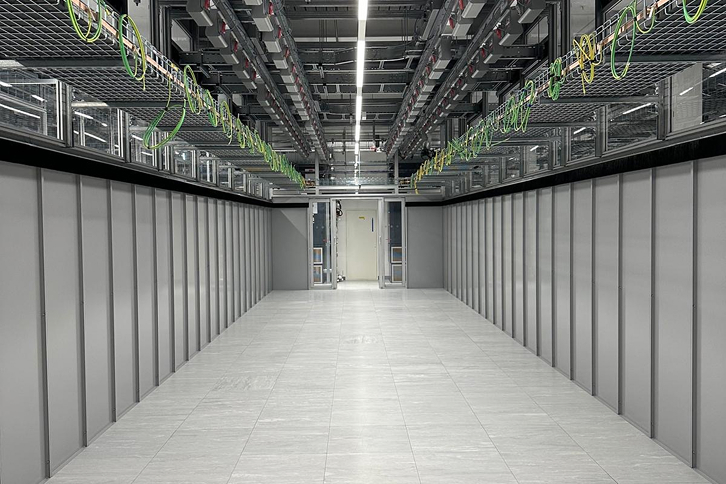
Data processing centers (DPCs) are facilities specially designed to house computer systems and telecommunications equipment as well as to store, process and distribute large amounts of data efficiently and securely. They typically house a large number of servers for processing, storage and networking to provide services such as data backup and recovery that allow their owners to protect their files against losses of any kind.
A typical DPC is made up of a number of key components that work together to provide data processing services. These components fall into several major categories:
-

Computing
These resources are the drivers of data centers and refer to various types of servers with varying degrees of internal memory and different processing powers.
-

Storage
Here we find block storage devices such as hard disks or physical drives and network attached storage (NAS) devices.
-

Networks
This category includes components responsible for the connection between the outside and the data center, at high speed and with reliable and fast connectivity, such as cables, switches, routers, etc.
-

Security
Because these centers store sensitive and critical data, security is a fundamental concern, ranging from IT security in the form of firewalls, intrusion detection and prevention systems (IDPS), data encryption, etc., to the more physical with access controls and the prevention of problems such as power outages or natural disasters.


Data center
A Data Center (or Data Processing Center, DPC) is a facility specifically designed and equipped to house data servers and communications systems under appropriate security conditions to operate with no interruption of service.

Components of a Data Center:

Server rooms
They have standard servers and storage units. Racks are usually located in an enclosed space to allow for optimal cooling.

Security
Physical infrastructure (gates, video surveillance) to protect assets.

Fire extinguishing
Special extinguishing gases to reduce the oxygen content in the air.

Back-up generator
UPS and diesel for power supply and compensate for voltage fluctuations and distortions.

Cooling systems
Air or water cooling, air-conditioning to the outside via heat exchangers in the ceiling.

Control/monitoring stations
Network Operations Center (NOC).

Meet-Me Rooms (MMR)
To enable connectivity in an easy and convenient way, by distributing it to the server room.
Data centers work 24 x 7 x 365 ensuring supply availability. Electrical power is so key that the data centers’ size is measured in MW according to its energy needs.
Source: Schneider Electric.

Types of data centers
As we’ve said, data centers are facilities with a specific design and equipment to house data servers and communications systems under adequate conditions of security to operate without service interruptions. Although these characteristics are common to all, there are different types of data centers, which can be classified as follows:
- Hyperscale: These data centers house shared infrastructure used to offer cloud computing services to external clients. They are the largest (in Spain they’re 20 to 50 MW in size, although centers of more than 250 MW are being developed) and among the best known are Microsoft, Meta, AWS and Google. In addition to operating their centers, they also rent them to third parties.
- Colocation: These are companies that lease servers to third parties, such as fast-growing cloud service companies like Netflix, Spotify, Uber, etc. They are smaller than the previous ones (in Spain, they’re 10 to 20 MW) although large projects of up to 100 MW are being developed.
- Private: These data centers are owned and operated by companies or institutions to meet their own data processing needs. Although typically the smallest, they can range in size from small server rooms to large-scale facilities taking up several buildings.
What does a data center do?
The function of data centers may vary depending on the needs of the owner and the infrastructure, but the fundamental ones fall into the following categories:
- Data processing: This is done by running different computer applications, processes and algorithms on the servers and on the various computing devices available in the data center.
- Storage: In addition to processing, large volumes of data are also stored in a secure and scalable manner.
- Distribution: DPCs facilitate the distribution of data over high-speed communications networks to end users, connected devices, cloud applications or even other data centers.
- Resource management: Data centers manage and optimise computing resources such as processing power, storage and bandwidth to efficiently meet workload demands.
- Security and data protection: Data security is an indispensable and critical function of data centers, as these infrastructures host sensitive information belonging to companies, public administrations, and millions of end users..
- Monitoring and maintenance: They continuously monitor equipment performance, resource utilisation, service availability and infrastructure security in real time. In this way, performance or security problems can be identified and resolved, and preventive maintenance tasks can be carried out to ensure the data center’s optimal operation.

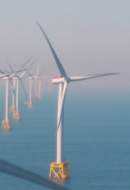
Why are energy and CPD key to the economy’s digitalisation and electrification?
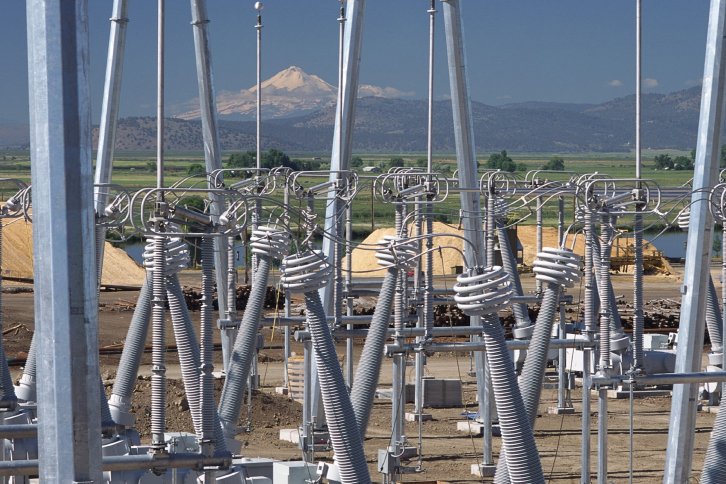
Data centers consume a significant amount of energy, not only because servers are operational 24/7, but also because cooling is very important to prevent the equipment from overheating. This may involve the use of air-cooling systems, liquid cooling, immersion cooling systems or other cooling technologies.
It is precisely for this reason that work is being done on reducing their electricity consumption through energy efficiency measures such as the use of more efficient equipment, better insulation, implementing energy management systems to optimise consumption and, fundamentally, using renewable energy sources to reduce the data centers’ environmental footprint.
A recent European directive sets out a number of requirements for data centers that include the use of renewables and the reuse of waste heat. Therefore, data centers are currently looking for locations where there may be heat demand such as industries or heating networks that can utilise the dissipated heat.
At Iberdrola España, we know that we are a major player in this industry thanks to our installed renewable capacity, which guarantees 24/7/365 renewable electricity supply. That’s why we have worldwide agreements with companies like Meta, Apple, Google, Microsoft, AWS, Equinix, Telefónica, Vodafone and Orange for future data centers. In addition, as part of our commitment to energy efficiency, we also have agreements for the use of waste heat generated by data centers in future heating network projects.
Iberdrola España and our commitment to data centers
In addition to the agreements and contracts we have at Iberdrola España with data center operators, and in view of the growing need to develop this type of infrastructure to serve cloud computing and AI, Iberdrola is positioning itself at the forefront of the sector. We aim to accelerate the large-scale development of data centres alongside strategic partners, initially focusing on Spain. To this end, we have undertaken several initiatives, including the creation of CPD4Green, a company dedicated to developing electrified land with more than 730 MW of secured grid connection capacity. Furthermore, we have established the largest partnership between a data centre operator and a European electricity company through our strategic alliance with Echelon Data Centres.
This new alliance adds more than 700 MW of secured capacity and a potential development portfolio of up to 5,000 MW. The first project will be Madrid Sur, a data centre with a processing capacity of 144 MW and is expected to generate approximately 1,500 jobs. This initiative will enable us to consolidate our position as a leading energy partner for data centres, supplying more than 11 TWh annually to technology companies and operators worldwide.